
 Algeria
 Egypt
 Libya
 Morocco
 Sudan
 Tunisia
 Benin
 Cabo Verde
 Côte d'Ivoire
 Ghana
 Guinea
 Guinea-Bissau
 Liberia
 Mali
 Mauritania
 Niger
 Nigeria
 Senegal
 Sierra Leone
 The Gambia
 Togo
 Cameroon
 Central African Republic
 Chad
 DR Congo
 Equatorial Guinea
 Gabon
 Republic of the Congo
 São Tomé and Príncipe
 Burundi
 Comoros
 Djibouti
 Eritrea
 Ethiopia
 Kenya
 Madagascar
 Malawi
 Mauritius
 Mozambique
 Rwanda
 Seychelles
 Somalia
 South Sudan
 Tanzania
 Uganda
 Angola
 Botswana
 Eswatini
 Lesotho
 Namibia
 South Africa
 Zambia
 Zimbabwe
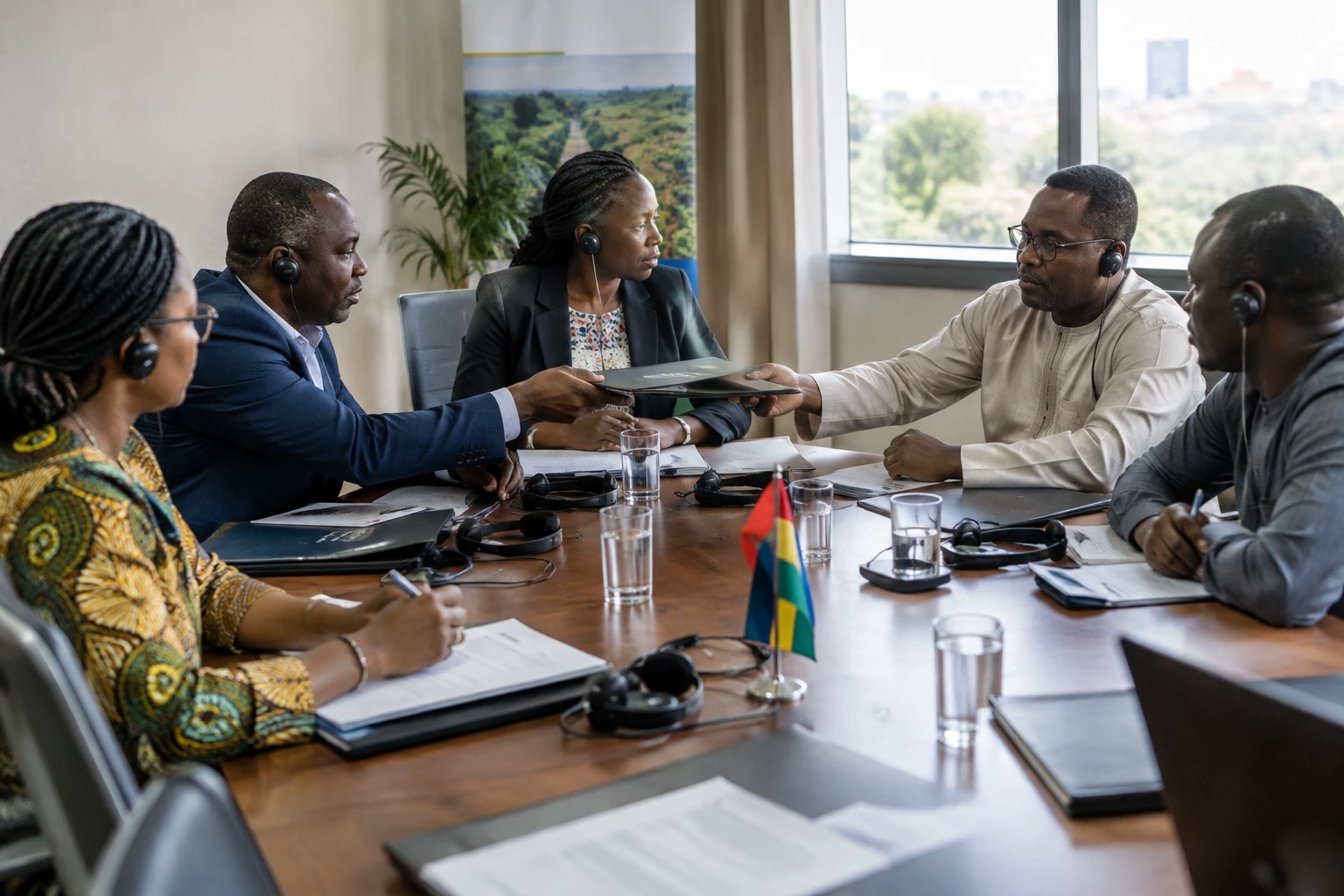
For rural households, a biodigester can reduce the use of firewood and produce biogas. For Burkina Faso, these results also raise an economic question: who controls the carbon credits generated, and how do the revenues reach the communities concerned? A new law aims to set the rules of the game.
A national framework to track carbon projects
On 9 November 2026, the People’s Legislative Assembly adopted a law regulating carbon initiatives in Ouagadougou. The text comprises 24 articles divided into seven chapters. It provides, in particular, for a national register to record and track projects, as well as rules on transactions and the distribution of their benefits. These details are reported by the People’s Legislative Assembly and corroborated by the Burkinabè daily Sidwaya.
Presenting the text, the Minister Delegate for Animal Resources, Amadou Dicko, estimated that the market could mobilise up to 300 billion CFA francs a year, or about $510 million. This is an announced potential, not revenue already secured. The amount will depend on the number of eligible projects, the quality of verified emissions reductions and the prices at which credits can be sold.
A carbon credit generally corresponds to one tonne of emissions avoided or removed from the atmosphere, measured using a recognised method. Reforestation and biodigesters are among the activities that could generate them. But registering a project does not guarantee either its certification or the sale of its credits.
The framework comes as the country already has a climate portfolio. The national mapping of climate actions lists 117 projects and initiatives related to mitigation, adaptation or capacity-building. The new register should help distinguish between projects, track their results and prevent the same reductions from being counted more than once.
Real benefits, but so far limited to certain projects
The national biodigester programme provides a concrete example. Between 2014 and 2025, it is reported to have enabled the recovery of more than 284,000 tonnes of CO₂ equivalent and generated more than $3 million in revenue from the sale of credits to the World Bank. Burkina Faso’s Information Agency reports these figures, while World Bank documents on the programme confirm the existence of a carbon credit purchase agreement and specify that disbursements depend on verified results. The revenues cited therefore do not mean that the annual potential announced for the entire market has already been realised.
For families using them, the value of biodigesters is not measured solely in credits sold. A biodigester can provide biogas for cooking and organic residue that can be used as fertiliser. Financial benefits, meanwhile, will depend on installation and maintenance costs, how revenues are distributed and local stakeholders’ ability to access projects. The sharing rules announced in the law will therefore be crucial for households, local authorities, the state and businesses.
The government presents the framework as a way to attract investment, encourage technology transfer and support green jobs. For these promises to translate into results on the ground, funding will also be needed to prepare projects, measure their effects over time and make payments clear to communities. Transparency around contracts and verification fees will matter as much as the existence of the register.
Carbon sovereignty put to the test by international rules
The law asserts the state’s sovereignty over initiatives and credits generated on its territory. This approach addresses a practical issue: emissions reductions can be sold to external buyers, but they also contribute to the country’s climate commitments. It is therefore necessary to specify which reductions can be transferred and how they are accounted for.
Under the Paris Agreement, Article 6 governs international cooperation and certain exchanges of emissions reductions. Countries must, in particular, prevent the same climate result from being claimed simultaneously by the host country and the foreign buyer. The United Nations Framework Convention on Climate Change describes these mechanisms and their monitoring requirements. The practical application of Burkina Faso’s law will therefore need to align with accounting rules and national climate commitments.
At regional level, the issue extends beyond Burkina Faso’s borders. ECOWAS, the Economic Community of West African States, has announced work on a regional carbon market platform to mobilise climate finance. This initiative could open up opportunities for cooperation, but it also underlines the importance of compatible national rules and reliable methods for verifying reductions. ECOWAS presents the platform as a regional financing tool.
The next challenge will now be implementation: registration procedures, project oversight, publication of transactions and rules for sharing revenues. Burkina Faso has put a quantified ambition on the agenda. What remains is to establish, project by project, the quality of the reductions, the amounts actually paid and the share that goes to the populations concerned.



