Algeria
 Egypt
 Libya
 Morocco
 Sudan
 Tunisia
 Benin
 Cabo Verde
 Côte d'Ivoire
 Ghana
 Guinea
 Guinea-Bissau
 Liberia
 Mali
 Mauritania
 Niger
 Nigeria
 Senegal
 Sierra Leone
 The Gambia
 Togo
 Cameroon
 Central African Republic
 Chad
 DR Congo
 Equatorial Guinea
 Gabon
 Republic of the Congo
 São Tomé and Príncipe
 Burundi
 Comoros
 Djibouti
 Eritrea
 Ethiopia
 Kenya
 Madagascar
 Malawi
 Mauritius
 Mozambique
 Rwanda
 Seychelles
 Somalia
 South Sudan
 Tanzania
 Uganda
 Angola
 Botswana
 Eswatini
 Lesotho
 Namibia
 South Africa
 Zambia
 Zimbabwe
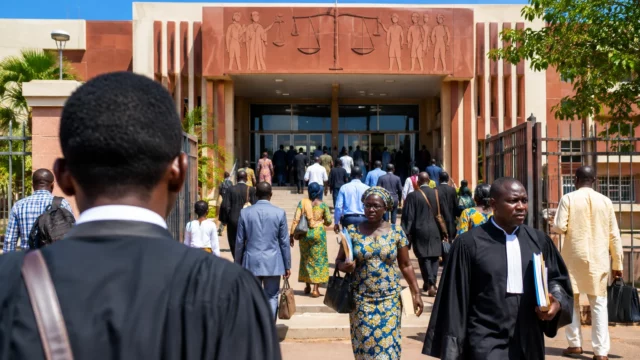
In Siguiri, the halt to artisanal gold mining is no longer playing out solely at mining sites. It is now moving into the courts of Conakry and Lower Guinea, while workers’ families and neighbouring countries face the consequences of the evacuation operations.
From Siguiri to the courts of Conakry
On 29 October 2026, the authorities in Siguiri suspended artisanal gold mining until further notice. On 2 November, five government ministries announced a ban on artisanal gold mining in the region. The authorities cite, among other reasons, environmental damage and security concerns. The decision has turned a local policing measure into a large-scale judicial operation. The suspension announced in Siguiri was reported by several Guinean media outlets.
According to a statement from the ministries of defence and security, 1,263 people arrested in Siguiri were handed over to the justice system. A separate operation, carried out on 7 and 8 November in Kérouané and Siguiri, led to 149 further arrests. The announced total therefore stands at 1,412 people. These figures were provided by the authorities and do not constitute a final judicial tally. The government statement on the arrests details these two operations.
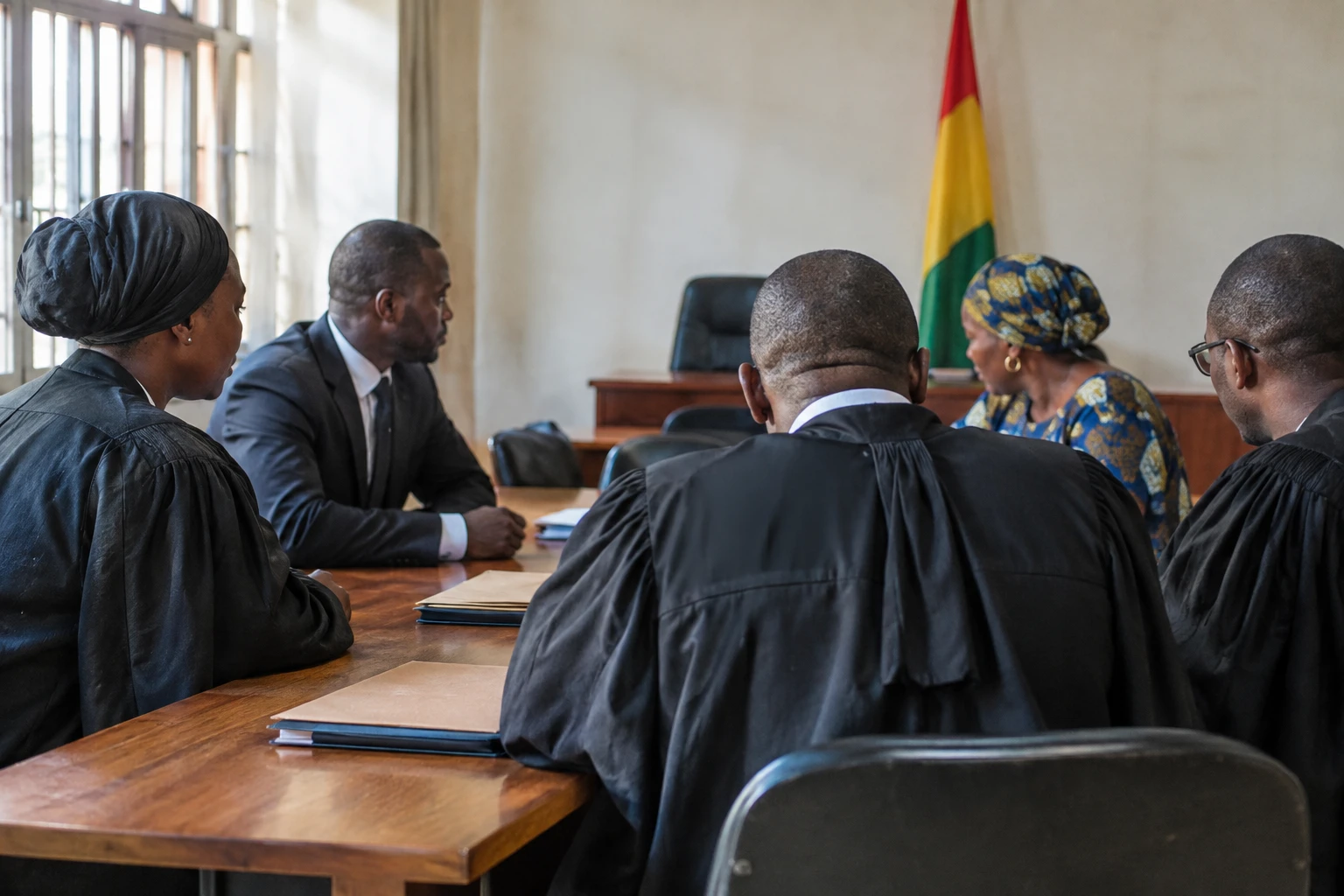
On Tuesday 10 November, 202 defendants appeared before the Court for the Repression of Economic and Financial Offences (CRIEF) in Conakry. This specialised court considered charges of illegal mining, environmental degradation, destruction and water pollution. Hearings are due to resume on Wednesday 11 November. The other people concerned have been assigned to several courts, including those in Coyah, Dubréka and Forécariah. The Conakry juvenile court is to examine the cases involving minors.
Guinean media report that some of the defendants admitted to the allegations at the hearing. This does not amount to a final judgment: the proceedings must still allow the cases and individual responsibilities to be examined. A court-appointed lawyer is reported to have represented the group heard by the CRIEF. He asked that the specific safeguards owed to children be taken into account. A Guinean report on the hearing says that 202 people were present and that 150 had admitted to the allegations at that stage. The report by the daily newspaper Le Lynx provides these details.
A measure that also affects local incomes
The suspension aims to enforce mining regulations and limit the reported damage to land and water. But artisanal gold mining also provides a livelihood for workers and households in the region. The closure of the sites can therefore swiftly cut off a source of income, including for people who are not facing prosecution. The consequences are uneven: the authorities are seeking to regain control of the sites and sales channels, while day labourers and small local businesses may lose their livelihoods without an immediate alternative.
The case involves Guinean nationals and people from several West African countries. Guinean media cite Burkinabè, Malians and Togolese among those facing prosecution. However, it is important to distinguish between those arrested, those appearing in court and those whose guilt has been established by a judgment. A single overall figure does not, on its own, show how many defendants have been identified, heard or tried in each court.
The situation of minors requires particular attention. One hearing report mentions 12 minors among the defendants presented that day, while the announced judicial arrangements provide for about 160 cases to be handled by the juvenile court. These figures do not necessarily refer to the same group. It is therefore important not to conflate them. Age, access to appropriate legal representation and individual examination of each case will be crucial as the proceedings continue.
Guinean media also report that Burkinabè and Togolese nationals received prison sentences and bans on staying in Guinea in separate cases. These decisions should not be extrapolated to everyone arrested: each conviction relates to a particular case and court.
A judicial and regional case
The decision to try a large share of the defendants in Lower Guinea rather than in Siguiri was reportedly motivated by the volume of cases and public-order concerns. This arrangement brings the hearings closer to Conakry, but further from the places where the alleged offences took place. For defendants and their relatives, the distance may make travel and monitoring the proceedings more difficult. Dividing the cases among several courts also presents a practical challenge: ensuring that hearings are understandable and that cases are handled consistently, despite the pace required by the scale of the operation.
The CRIEF has also decided to join this case with that of 22 local officials who were dismissed and are being prosecuted for allegedly facilitating prohibited gold mining. They reportedly include a governor and four prefects. This procedure extends the inquiry to the role of alleged public officials, beyond the workers present at the sites. The accusations remain to be established in court.
The effects extend beyond Guinea’s borders. The Malian government has arranged support for nationals who arrived after the operations in Guinea, and Malian officials have discussed the situation with their Burkinabè counterparts. Bamako has also described the movement of people as an “uncoordinated pushback”, according to media reports. This disagreement highlights the diplomatic stakes: an operation carried out on Guinean territory can trigger displacement and administrative tensions in neighbouring countries. The Malian government reported consultations with Burkina Faso.
Guinea is a member of the Economic Community of West African States (ECOWAS), which brings countries in the region together around economic and political cooperation. ECOWAS lists Guinea among its member states. The case highlights a cross-border challenge: regulating mining and protecting the environment while ensuring fair treatment for workers who move between neighbouring countries. The next hearings, the decisions concerning minors and developments in support for people in Mali will show the real scope of this large-scale operation.