Algeria
 Egypt
 Libya
 Morocco
 Sudan
 Tunisia
 Benin
 Burkina Faso
 Cabo Verde
 Côte d'Ivoire
 Guinea
 Guinea-Bissau
 Liberia
 Mali
 Mauritania
 Niger
 Nigeria
 Senegal
 Sierra Leone
 The Gambia
 Togo
 Cameroon
 Central African Republic
 Chad
 DR Congo
 Equatorial Guinea
 Gabon
 Republic of the Congo
 São Tomé and Príncipe
 Burundi
 Comoros
 Djibouti
 Eritrea
 Ethiopia
 Kenya
 Madagascar
 Malawi
 Mauritius
 Mozambique
 Rwanda
 Seychelles
 Somalia
 South Sudan
 Tanzania
 Uganda
 Angola
 Botswana
 Eswatini
 Lesotho
 Namibia
 South Africa
 Zambia
 Zimbabwe
For Accra, historical justice is not limited to recognising the crimes of the past. It also raises a pressing question: how can education, health and economic transformation be funded when borrowing costs squeeze governments’ room for manoeuvre? Ghanaian President John Dramani Mahama wants to link these two debates.
From recognition to concrete measures
Ghana has taken a central role in diplomatic efforts on reparations. On 25 March 2026, the United Nations General Assembly adopted a resolution put forward by Accra on the transatlantic slave trade and the enslavement of Africans. The text received 123 votes in favour, three against and 52 abstentions. Among other things, it calls for reparations and the return of cultural artefacts to be considered. The resolution does not, by itself, require states to pay financial compensation.
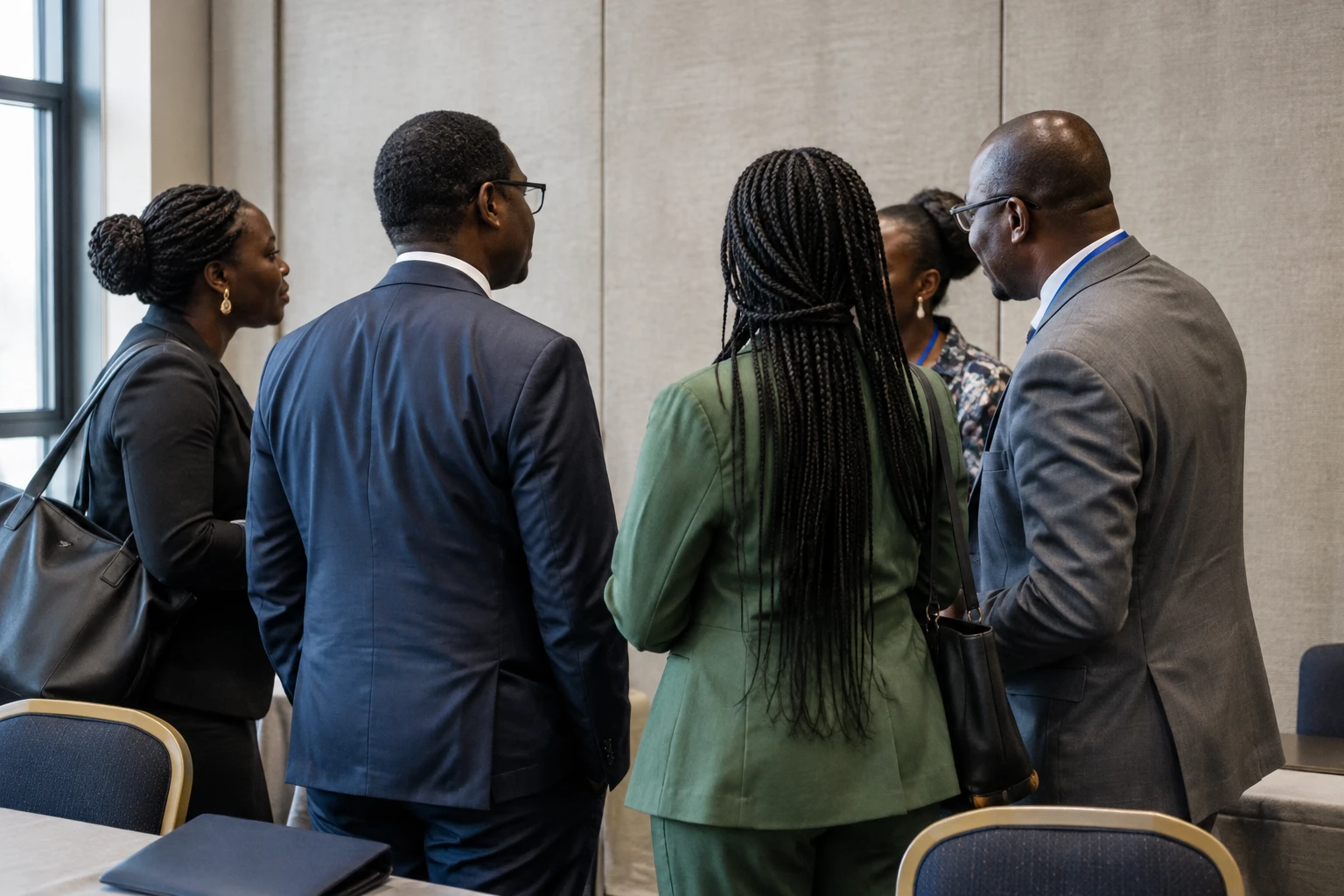
A few months later, a conference held in Accra sought to turn this political advance into a roadmap. African and Caribbean officials called on countries involved in the slave trade to apologise and discuss reparation measures. The debate thus concerns societies on both sides of the Atlantic, including African countries from which millions of people were deported and diaspora communities that still bear the consequences.
Mahama advocates an approach that is not limited to the payment of individual compensation. He cites lasting partnerships, investment in education and health, and cheaper access to finance. In his view, these measures could help repair historical harms while addressing present-day development needs.
This broader approach expands the debate but does not resolve fundamental questions: who would contribute, who would benefit, according to what criteria and under what governance arrangements? Economic cooperation does not automatically constitute reparation. The distinction between aid, investment and acknowledgement of historical responsibility will therefore remain central to the discussions.
Debt, an immediate challenge for public services
The Ghanaian president links this demand to reform of the international financial architecture — the rules and institutions that determine the terms on which governments can access finance. He denounces the risk premiums which, he argues, make African borrowing more expensive. He puts the cost of financing at about 11%, a figure that should be understood as his estimate, not as a uniform rate applied to every country on the continent.
Mahama has also referred to Ghana’s budgetary situation. According to remarks reported on his return from international trips, the country will need to mobilise nearly 50 billion cedis in 2027 to meet debt repayments, equivalent to about five billion dollars at the conversion rate cited. This figure announced by the head of state should be distinguished from budget projections published by financial institutions, which are based on their own assumptions.
Debt pressure is not unique to Ghana. The United Nations Development Programme estimates that 3.4 billion people live in countries whose governments spend more on debt interest than on health or education. At national level, budgetary trade-offs affect public services and investment. For households, the effects can be felt in access to healthcare and schooling; for businesses, in the cost of credit and energy.
Accra broadens partnerships but announces no nuclear timetable
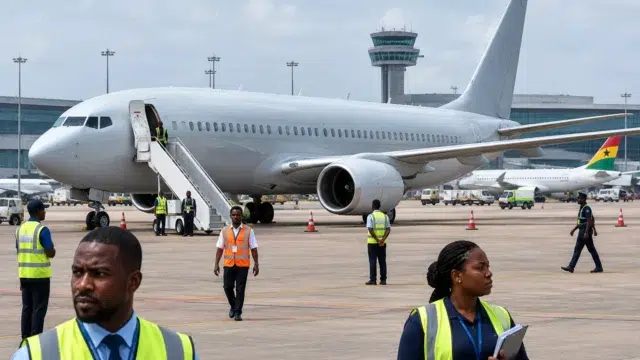
Ghanaian diplomacy is also seeking to diversify its cooperation. Following the Russia-Africa summit, Ghana’s foreign ministry announced that Moscow would work with Accra on a 2,000-megawatt nuclear power plant project. A Ghanaian media outlet also reported this commitment. This is a project to be prepared, not a power plant that has been approved, financed and is ready to be built: the technical, regulatory and financial stages remain decisive.
Such infrastructure could contribute to energy security if it proves feasible. But it would require substantial investment, independent oversight and robust safeguards on safety, financing and waste management. The stakes are particularly concrete for manufacturers, which need a reliable electricity supply, as well as for households exposed to electricity costs.
Ghana’s ministry also mentioned an expansion of scholarships in Russia and other areas of cooperation. Mahama says this outreach is part of a policy of non-alignment: Ghana intends to diversify its relations without joining a single bloc. This strategy will have to be judged by the agreements actually concluded, their costs and their benefits for the country.
A continental milestone in 2027
The timing gives these issues regional significance. Ghana is due to take over the rotating chairmanship of the African Union in 2027. In that role, Accra could help coordinate African states’ position on reparative justice and development finance. The UN resolution and the Accra conference have already strengthened this momentum, but divisions between states and reservations voiced by some countries show that negotiations will be lengthy.
For the Economic Community of West African States (ECOWAS), which brings the countries of the region together around economic and political cooperation, the issue of debt is intertwined with integration: financing conditions influence infrastructure, trade and public services beyond national borders. Ghana’s experience can inform this debate without representing the paths of its neighbours on its own.
The next step will be less symbolic: to define reparation mechanisms, secure their funding and establish who will benefit. At the same time, Ghana will need to make the costs and commitments of its new partnerships clear. The significance of the agenda championed by Accra will be measured against this dual challenge — delivering historical justice while preserving budgetary choices.