Algeria
 Libya
 Morocco
 Sudan
 Tunisia
 Benin
 Burkina Faso
 Cabo Verde
 Côte d'Ivoire
 Ghana
 Guinea
 Guinea-Bissau
 Liberia
 Mali
 Mauritania
 Niger
 Nigeria
 Senegal
 Sierra Leone
 The Gambia
 Togo
 Cameroon
 Central African Republic
 Chad
 DR Congo
 Equatorial Guinea
 Gabon
 Republic of the Congo
 São Tomé and Príncipe
 Burundi
 Comoros
 Djibouti
 Eritrea
 Ethiopia
 Kenya
 Madagascar
 Malawi
 Mauritius
 Mozambique
 Rwanda
 Seychelles
 Somalia
 South Sudan
 Tanzania
 Uganda
 Angola
 Botswana
 Eswatini
 Lesotho
 Namibia
 South Africa
 Zambia
 Zimbabwe
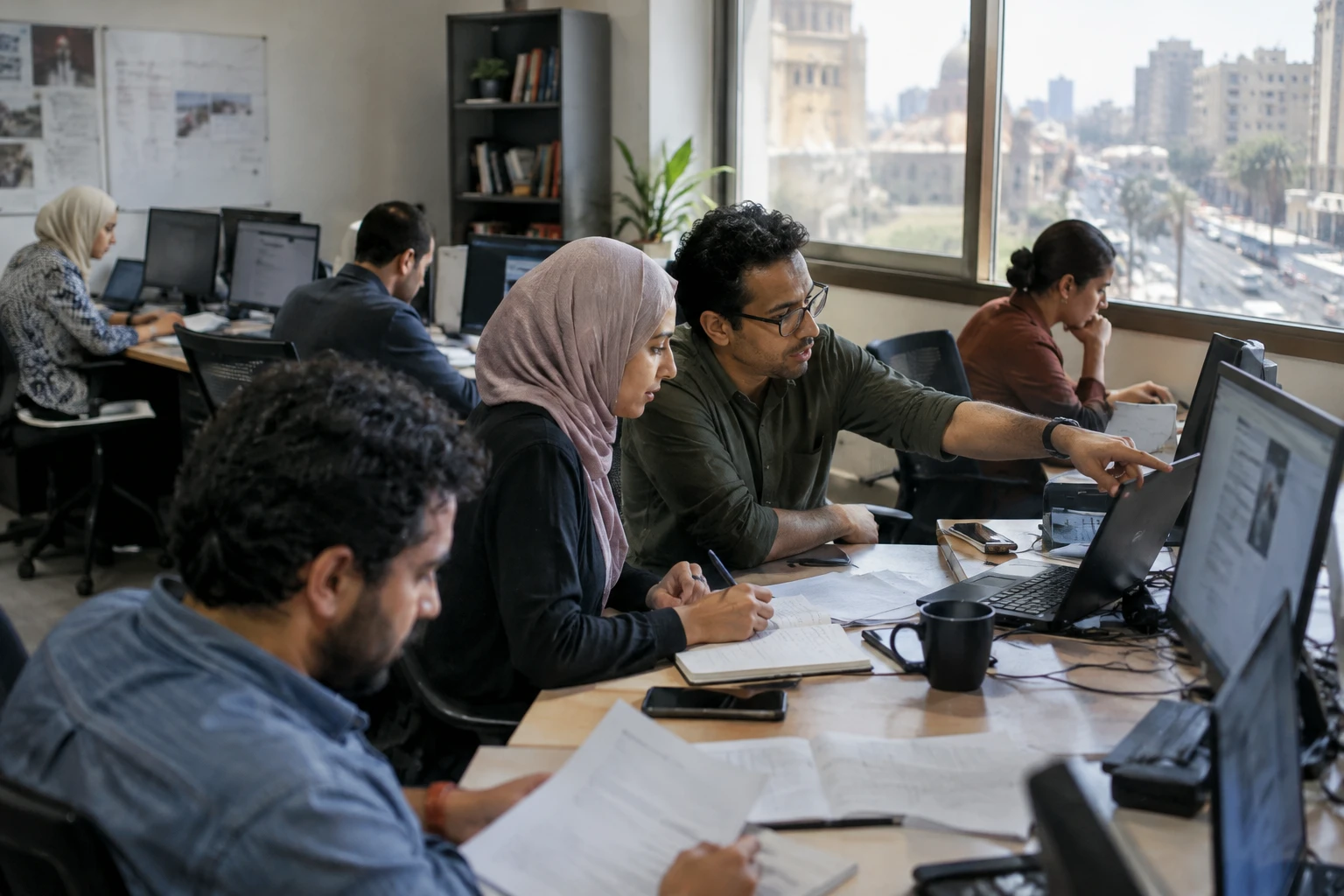
For an independent newsroom in Egypt, the right to exist online also depends on administrative authorisation that the authorities have not granted to Mada Masr. This leaves its team facing two constraints: access to the site is already blocked in the country, and legal proceedings now threaten its operations.
A licence case with immediate consequences
On 27 October 2026, a misdemeanour court in New Cairo sentenced Lina Attalah, editor-in-chief of Mada Masr, to a fine of three million Egyptian pounds. It also ordered the site to be shut down and its equipment confiscated for operating a website without a licence. Released after more than seven hours in detention, she is challenging the decision. Her appeal hearing is scheduled for 25 November, according to Egyptian outlet Al-Manassa and the Associated Press.
She faces another proceeding on 11 November. It concerns a one-year prison sentence handed down in absentia in 2024 for operating a website without a licence and publishing false information. A retrial is to allow her to appear in court. The two cases are separate: the first concerns Mada Masr’s operations, the second allegations relating to its publications.
The rule cited by the court stems from Egypt’s 2018 press and media law. It requires news websites to obtain a licence from the Supreme Council for Media Regulation. Mada Masr says it submitted an application in 2018, followed by further approaches, but received no response. The site has also been blocked in Egypt since 2017, according to Human Rights Watch and the International Federation of Journalists.
Contested legal framework, unanswered applications
The dispute therefore goes beyond Lina Attalah’s case alone. It concerns how the licensing requirement applies when a media outlet says it has sought authorisation but received no decision. Egyptian journalists and press freedom advocates criticise the uncertainty created by pending applications, which leaves newsrooms exposed to prosecution for unauthorised activity.
The Egyptian Journalists Syndicate is directly affected. Its president, Khaled El-Balshy, has voiced his support for the editor-in-chief and described the case as a wake-up call, the Associated Press reports. In May 2025, he was re-elected to head the syndicate in a vote in which an independent candidate defeated a former state media executive. The syndicate thus remains a professional forum where tensions over freedom of information are expressed.
The Egyptian authorities present media regulation as a matter of compliance with the law, national security and the fight against disinformation. Rights organisations, meanwhile, are concerned about the use of criminal proceedings and digital restrictions against critical media. These positions are not enough to settle the legal allegations: they do, however, show what is at stake in the debate over procedural safeguards and access to effective authorisation.
In Cairo, the effects are felt beyond the courts
For Mada Masr, founded in 2013 after the 2011 uprising that toppled Hosni Mubarak, the shutdown order threatens the day-to-day work of a newsroom of around 50 people, according to reports. For readers, the site’s previous blocking had already limited direct access to its investigations and analysis. The new decision adds legal uncertainty to an access restriction that has lasted for nearly a decade.
The impact is not evenly distributed. Journalists and their sources may be exposed to the effects of the proceedings; readers in Cairo and the regions lose an independent news channel. For Egyptians in the diaspora, online availability does not replace access for people inside the country. And for the formal media economy, uncertainty over licences complicates planning; digital newsrooms have less room to manoeuvre than established major groups.
The case comes as Egyptian fact-checking platform Matsadaash is also under scrutiny. Six of its journalists have been arrested, according to the Associated Press and Egyptian outlet Al-Manassa. The authorities accuse them, among other things, of links to the Muslim Brotherhood, an organisation banned in Egypt; Matsadaash rejects the accusations. These arrests, like the Mada Masr case, underscore the need to distinguish established facts from allegations still contested before the courts.
A regional press freedom issue
Egypt, whose capital is Cairo, holds a major political and diplomatic position in North Africa and within the African Union. It is also a member of the Arab Maghreb Union, a North African regional organisation. Proceedings against Egyptian media outlets therefore resonate beyond the country’s borders: they raise questions about the place of independent journalism in a region where digital restrictions and prosecutions linked to publications remain matters of concern.
The next court dates will show the case’s practical impact: the retrial on 11 November, followed by the appeal on 25 November 2026. The decisions could clarify how licensing rules are applied and determine the newsroom’s future. In the meantime, the immediate question is whether Mada Masr will be able to continue operating and whether its unanswered administrative applications will receive effective consideration.
Sources consulted: Al-Manassa, appeal against Lina Attalah’s conviction ; Associated Press, order to shut down Mada Masr and support from the journalists’ syndicate ; Human Rights Watch, proceedings and Egypt’s media law ; International Federation of Journalists, Mada Masr case ; Al-Manassa, arrests linked to Matsadaash ; Le Monde, election of the head of the Egyptian Journalists Syndicate.