Algeria
 Egypt
 Libya
 Sudan
 Tunisia
 Benin
 Burkina Faso
 Cabo Verde
 Côte d'Ivoire
 Ghana
 Guinea
 Guinea-Bissau
 Liberia
 Mali
 Mauritania
 Niger
 Nigeria
 Senegal
 Sierra Leone
 The Gambia
 Togo
 Cameroon
 Central African Republic
 Chad
 DR Congo
 Equatorial Guinea
 Gabon
 Republic of the Congo
 São Tomé and Príncipe
 Burundi
 Comoros
 Djibouti
 Eritrea
 Ethiopia
 Kenya
 Madagascar
 Malawi
 Mauritius
 Mozambique
 Rwanda
 Seychelles
 Somalia
 South Sudan
 Tanzania
 Uganda
 Angola
 Botswana
 Eswatini
 Lesotho
 Namibia
 South Africa
 Zambia
 Zimbabwe
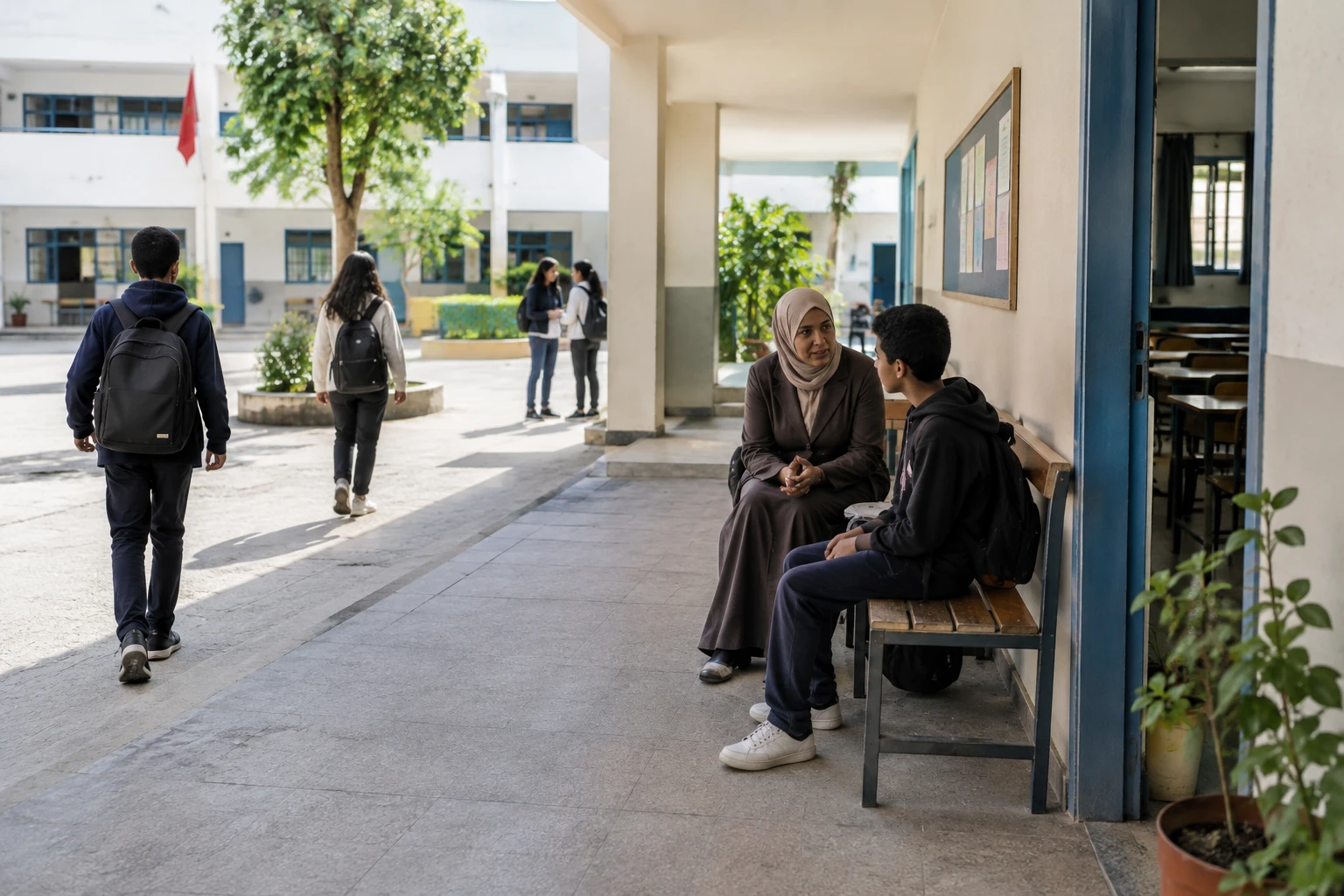
For an adolescent going through a difficult time, talking to a trusted adult can change their relationship with school and with themselves. But in Morocco, listening is no substitute for a psychologist: mental health professionals remain difficult to access in public schools, even as needs are significant.
At school, identifying concerns without diagnosing
At a middle school in Rabat, theatre workshops and a social support scheme help pupils discuss personal or family difficulties. A 14-year-old girl says these activities helped her grow in confidence and express herself more freely. Her account illustrates the value of an initial space to be heard, but cannot on its own measure the scale of need across the country.
Social support staff can identify a worrying situation and refer a pupil. They are not, however, authorised to make a diagnosis. This distinction is essential: school-based support can make it easier to seek help, but it does not replace either a clinical consultation or medical follow-up.
The shortage of permanent psychologists in public schools weakens this chain of support. Pupils in major cities and those in less well-served areas do not have the same referral options. For families with limited means, cost and distance can also delay access to a professional.
Significant figures, but they should be treated with caution
The Moroccan Society of Clinical Psychology has raised the alarm over access to care and called for stronger prevention, early detection and availability of treatments. It cites an estimate of around 6.5 million people affected by mental health disorders, including nearly two million children and young people. According to figures also presented by the Health Ministry when the national plan was launched, 85% of those affected do not receive the care they need. These figures indicate the scale of the challenge, but are not an individual count of patients. Hespress reports estimates cited by professionals, while Médias24 attributes the same orders of magnitude to the ministry.
The government launched the National Mental Health Plan 2030 in Rabat on 3 September 2026. With an announced budget of four billion dirhams, or about €360 million, it aims to strengthen services, prevention and access to care. The ministry plans, among other measures, to integrate psychiatric units into general hospitals and train more professionals. Its national report on Sustainable Development Goal 3 also sets out planned measures for suicide prevention, awareness-raising and school-based support programmes. The Health Ministry’s report details these priorities.
The challenge: turning a plan into accessible services
For professionals, the budget announcement will not be enough. Funding must be converted into recruitment, available appointments and services distributed across the country. The Moroccan Society of Clinical Psychology is also calling for better reimbursement of care and clarification of the regulatory framework for clinical psychology.
The response must bring several sectors together. Health centres and GPs can help identify concerns, provided they have appropriate training and clear referral pathways. At school, social support staff can help young people, but must know where to refer cases that require specialist assessment. In its resources on adolescent mental health, the World Health Organization recommends developing prevention and support in the settings where young people live and learn. The WHO stresses the importance of prevention and support for adolescents.
Implementation will affect families differently. In major cities, private provision can sometimes supplement public services, but access remains dependent on ability to pay. In less well-served areas, a lack of professionals can make referrals theoretical. Young people may also give up on seeking help for fear of being stigmatised or having their difficulties misunderstood.
An issue for Morocco and African co-operation
The 2030 plan gives Morocco a national framework for better co-ordination between health, schools and social services. Its impact will be judged by concrete results: professionals recruited, geographical access to appointments, waiting times and continuity of care. The ministry has also announced a monitoring and evaluation system. Regular publication of comparable data would help establish whether the announced resources are reaching the pupils and families who need them most.
Across Africa, the issue connects with public health and sustainable development commitments advanced by the African Union and the United Nations. But responses must remain rooted in each country’s realities. For Morocco, the next step is domestic: turn the plan into local services, without confusing listening, screening and diagnosis, and without letting cost or place of residence determine access to care.