Algeria
 Egypt
 Libya
 Morocco
 Sudan
 Tunisia
 Benin
 Burkina Faso
 Cabo Verde
 Côte d'Ivoire
 Ghana
 Guinea
 Guinea-Bissau
 Liberia
 Mali
 Mauritania
 Niger
 Nigeria
 Sierra Leone
 The Gambia
 Togo
 Cameroon
 Central African Republic
 Chad
 DR Congo
 Equatorial Guinea
 Gabon
 Republic of the Congo
 São Tomé and Príncipe
 Burundi
 Comoros
 Djibouti
 Eritrea
 Ethiopia
 Kenya
 Madagascar
 Malawi
 Mauritius
 Mozambique
 Rwanda
 Seychelles
 Somalia
 South Sudan
 Tanzania
 Uganda
 Angola
 Botswana
 Eswatini
 Lesotho
 Namibia
 South Africa
 Zambia
 Zimbabwe
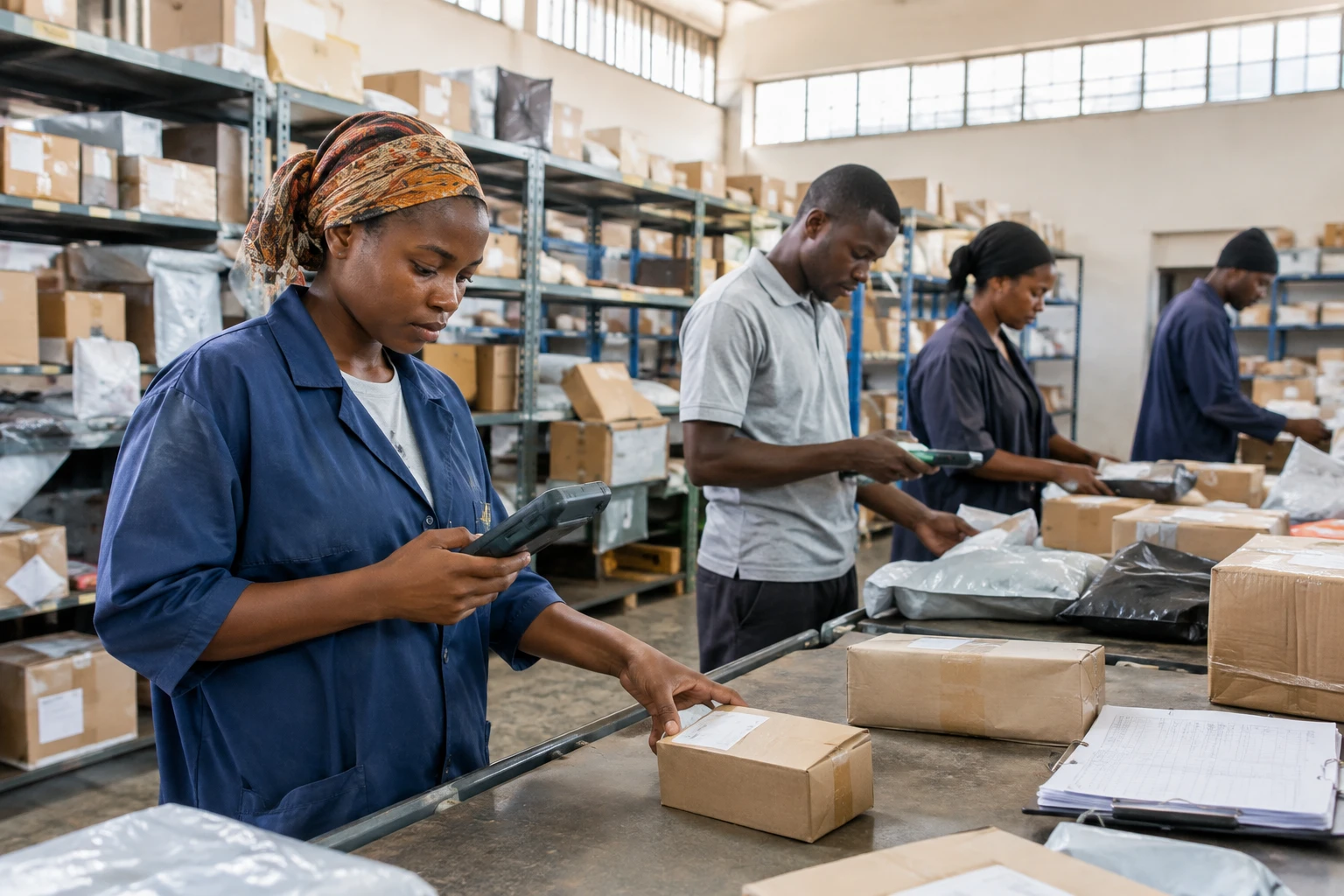
In Dakar, a parcel can pass between online sellers, couriers and small transporters without leaving a trace in the regulator’s records. Yet these services already connect businesses with customers and neighbourhoods with regions. The challenge for the Senegalese state is now to gain a clearer picture of these operators without confusing digital visibility with effective formalisation.
A market already part of everyday economic life
Senegal’s postal sector extends far beyond letters and La Poste counters. It also includes parcel transport, delivery linked to online commerce and services provided by small businesses. Some of this activity takes place outside the regulatory framework. That does not mean it is marginal to economic life: a survey commissioned by the Telecommunications and Postal Regulatory Authority (ARTP) is specifically seeking to measure its scale.
Presented in Dakar on 18 December 2025, a study by consultancy SOTERCO estimates that informal postal operators generate more than CFAF 500 billion in annual turnover, or about 4.7% of gross domestic product, according to the ARTP. Consultant Amadou Diallo cited more than 400,000 operators and just over 500,000 associated jobs. These estimates come from a survey conducted in six regions, representing 66% of Senegal’s population; they therefore describe a limited study, not an exhaustive count of every operator in the country. The Senegalese Press Agency also reported these findings.
The figures highlight both the scale of the activity and the difficulties of integrating it into the formal economy. According to results presented by the ARTP, 85% of those surveyed were unaware of the regulations in force and 63% did not pay taxes. By contrast, 95% said they supported regularisation. These data, collected from survey respondents, are not enough on their own to conclude that all operators would be willing to bear the same costs or complete the same procedures.
Geography also matters. The ARTP says that more than 70% of informal operators are concentrated in Dakar, Thiès and Diourbel. In the survey breakdown reported by the APS, 35% of the units identified were in Dakar. These proportions cover different areas: the first combines three regions, while the second concerns the capital. Both nevertheless shed light on the urban concentration of the activity, without diminishing the role of operators serving other areas.
Digital tools can document activity, but cannot regularise it alone
A digital register could help the regulator identify service providers, the services they offer and the areas they cover. Electronic declarations or shipment tracking could then generate information about the operations actually carried out. For businesses, these tools could also clarify obligations and facilitate dealings with the administration. But an app or database does not, in itself, constitute an operating licence.
This distinction is essential. Senegal’s Law No. 2006-01 of 4 January 2006, establishing the Postal Code, governs postal activities and provides for a licensing regime. Yet the market is evolving with e-commerce, delivery services and business models that can be difficult to classify under rules drawn up 20 years ago. In December 2025, the former director-general of the ARTP, Dahirou Thiam, cited reform of the Code, digitalisation and a “regulatory sandbox” among the avenues for formalisation. The latter refers to a supervised testing framework in which new services can be trialled before any tailored rules are introduced.
For operators, moving into the formal sector involves more than registration: it can bring administrative, tax and compliance obligations. Support and clear information will therefore be crucial, as will ensuring that procedures are proportionate for small businesses. For the regulator, greater visibility can facilitate oversight and planning. For customers, parcel tracking and the ability to identify a service provider can improve traceability, but do not in themselves guarantee service quality or the resolution of disputes.
Regulator renews dialogue with operators
This discussion is continuing through initiatives launched by the ARTP. From 3 to 5 November 2026, its director-general, Cheikh Tidiane Sarr, met LOGIDOO, Flash Car and La Poste. The discussions covered operators’ constraints, digital transformation and the adaptation of regulation. Senegalese Radio Television reported on the visits on 7 November. They signal a renewed dialogue with operators of different kinds, but do not yet amount to an announcement of an adopted reform.
The sector must therefore reconcile several interests: allowing small businesses to operate, enforcing the rules and maintaining clear conditions of competition for La Poste and private operators alike. The survey’s findings do not settle these trade-offs. They do, however, give the ARTP an initial basis for establishing where the activity is taking place and what obstacles operators say they face.
A shared challenge across Africa
Senegal is not alone in facing the growth of postal activities that are difficult to track. At the African Postal Leaders Forum, held in Nairobi on 22 and 23 April 2025, discussions focused on unlicensed operators, compliance with licensing requirements and the difficulties of overseeing cross-border service providers. The Universal Postal Union (UPU), which facilitates co-operation between postal administrations, has also highlighted the complexity of business models in a sector transformed by digital technology.
For West Africa, the issue therefore goes beyond registering businesses in Senegal. Parcels and delivery services can cross borders, while regulations remain largely national. Regional co-ordination and information-sharing will be important to the authorities’ ability to track these flows without shutting new providers out of the market.
The next step will be practical: whether the reform proposals lead to updated rules, accessible procedures and digital tools that are useful to both operators and the regulator. Formalisation will not be measured by the number of entries in a database, but by the ability to bring these activities gradually into a framework that is understood, enforceable and suited to the diversity of the sector.