Algeria
 Egypt
 Libya
 Morocco
 Sudan
 Tunisia
 Benin
 Burkina Faso
 Cabo Verde
 Côte d'Ivoire
 Ghana
 Guinea
 Guinea-Bissau
 Liberia
 Mali
 Mauritania
 Niger
 Nigeria
 Senegal
 Sierra Leone
 The Gambia
 Togo
 Cameroon
 Chad
 DR Congo
 Equatorial Guinea
 Gabon
 Republic of the Congo
 São Tomé and Príncipe
 Burundi
 Comoros
 Djibouti
 Eritrea
 Ethiopia
 Kenya
 Madagascar
 Malawi
 Mauritius
 Mozambique
 Rwanda
 Seychelles
 Somalia
 South Sudan
 Tanzania
 Uganda
 Angola
 Botswana
 Eswatini
 Lesotho
 Namibia
 South Africa
 Zambia
 Zimbabwe
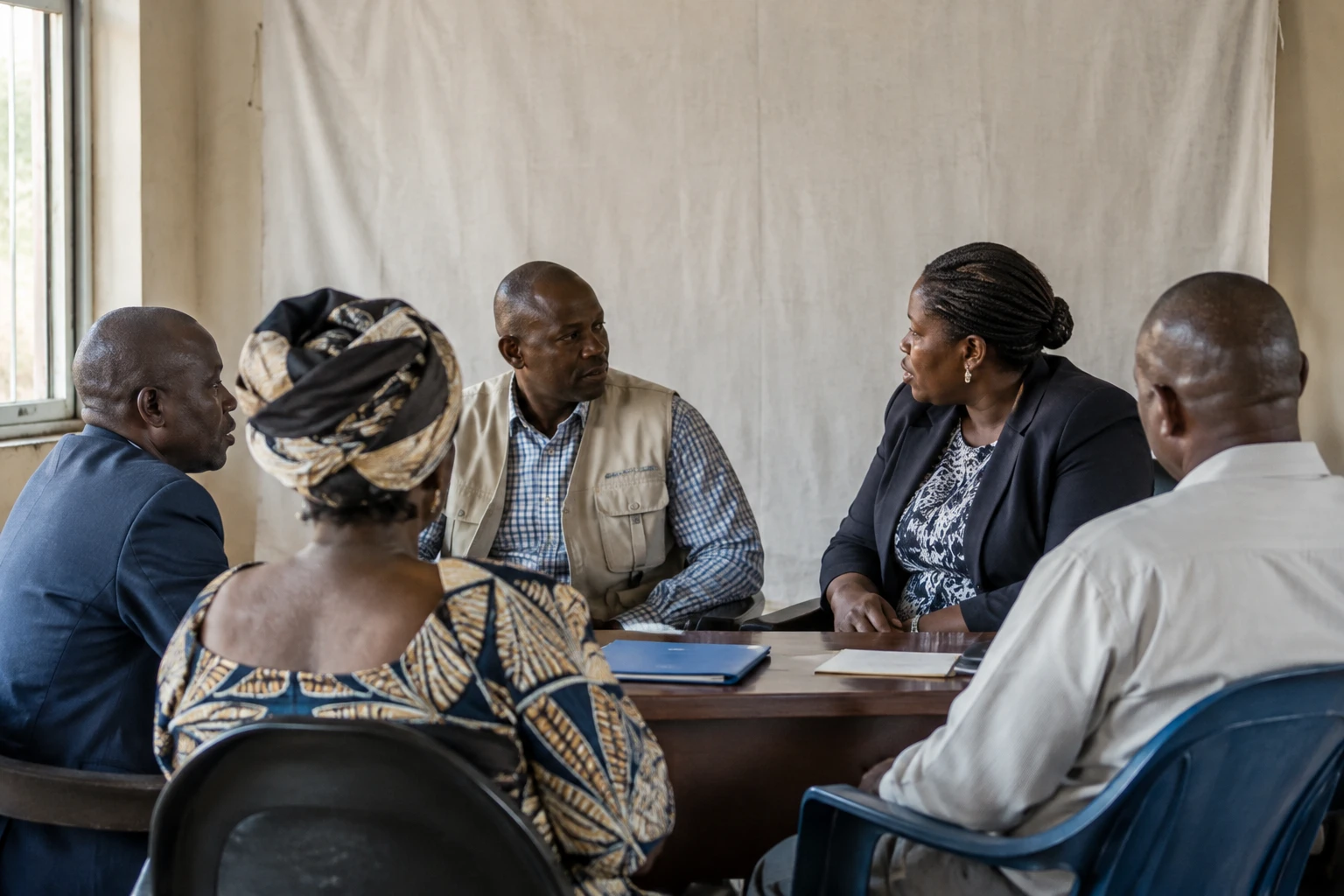
In Birao, welcoming thousands of people fleeing the war in Sudan is changing the balance in a region already poorly served. In Vakaga, the humanitarian emergency is now intertwined with a security question: how can civilians be protected without allowing weapons and armed groups to move back and forth across the border?
A border where crises intersect
Vakaga, a prefecture in the north-east of the Central African Republic (CAR), borders Darfur in Sudan and Chad. Birao, its administrative centre, is far from Bangui and the main administrative centres. Distances, road conditions and weak public services complicate travel, humanitarian aid and control of the territory.
The region also bears the scars of conflicts in the Central African Republic. The Séléka rebellion, which overthrew President François Bozizé in 2013, was formed in particular in the north-east. Armed groups have retained networks there, while porous borders serve as routes for people, goods and sometimes weapons.
The war in Sudan, which began in April 2023 between the army and the Rapid Support Forces (RSF), has added new pressure. Vakaga is hosting people seeking refuge, but it is also close to areas where combatants operate. These two realities must be distinguished: refugees are not combatants, and their presence alone does not prove armed infiltration.
Large arrivals put local capacity under strain
The United Nations High Commissioner for Refugees (UNHCR) said in April 2026 that more than 35,000 Sudanese had found refuge in CAR since the start of the war. About 22,000 were living in Korsi, a reception neighbourhood established in Birao. These figures describe an evolving situation and do not mean that all these people are in Vakaga alone.
The concentration of arrivals around Birao is increasing needs for water, shelter, healthcare and schools. Central African residents share already limited infrastructure with refugees. Pressure is being felt in public services and markets, although the welcome can also support local economic activity. Access to services and land is therefore an issue for families in both communities.
The Central African authorities and humanitarian partners established Korsi away from the border to facilitate registration and assistance. But the distance from villages and the dispersal of some families make monitoring difficult. In a 2026 situation update, UNHCR said that cross-border movements and the activity of armed groups continued to complicate protection in the northern and eastern prefectures.
Am-Dafock, an incident that highlights the risks
On 30 June 2026, an armed attack targeted Am-Dafock, a border town in Vakaga. The United Nations Multidimensional Integrated Stabilization Mission in the Central African Republic (MINUSCA) condemned the attack. Two weeks later, it described a gradual lull since 5 July, while judging the situation fragile and unpredictable.
The death toll cited in some publications has not been uniformly confirmed by the independent sources consulted. A definitive number of victims should therefore not be given without clear attribution. However, the impact on local life is documented: MINUSCA reports that several public buildings, including the sub-prefecture, town hall, gendarmerie and health centre, were destroyed or burned down. The continuity of the administration had to be organised from the mission’s base.
An International Crisis Group investigation, reported as published on 29 October, warns of the possible effects of the war in Sudan on Vakaga: the movement of weapons, looting and recruitment could provide resources to Central African armed groups. This reading is consistent with observations by ACLED, an organisation that tracks political violence, on the intensification of armed movements around the border. It does not, however, make it possible to automatically attribute each attack to a specific group or to establish the role of foreign actors without public evidence.
Security is not just about the border line
For the authorities in Bangui, the challenge is to restore a lasting public presence in an area where military operations are not enough. For residents, security also means being able to travel, access healthcare, resume farming and trade, and regain the services that were destroyed. People displaced by the violence in Am-Dafock also need a safe and voluntary return.
MINUSCA supports civilian protection, the delivery of aid and the continuation of government administration. But the mission does not replace national institutions. In June, local officials, community representatives and MINUSCA had welcomed an improvement in the situation following a local peace agreement. The attack at the end of the month nevertheless shows that these gains remain reversible.
The regional context also matters. CAR belongs to the Economic and Monetary Community of Central Africa (CEMAC), which brings together six countries for economic and monetary cooperation. But the immediate management of displacement and the border also involves Chad, Sudan, humanitarian agencies and the United Nations. The deterioration in relations between Bangui and N’Djamena, reported in the available information, makes bilateral coordination all the more important.
The next test: sustaining the response
Vakaga is not merely a periphery exposed to conflicts in neighbouring countries. It is a place where people live, trade and engage in mining, and where local communities must cope with limited public resources. Reducing the region to a security threat would erase the needs and initiatives of its residents; ignoring armed movements would, conversely, mean underestimating the risks.
In the coming weeks, developments in security in Am-Dafock, the return of displaced residents and the authorities’ ability to restore services will be concrete indicators. Access to aid for refugees and host communities will also need to be monitored. At the African level, this situation is a reminder that a national war can displace its effects beyond borders: the response depends as much on civilian protection and regional cooperation as on security control.
UNHCR documents the scale of arrivals and the organisation of reception in Birao in its update on Sudanese refugees in the Central African Republic. MINUSCA has also reported on the situation in Am-Dafock after the 30 June attack and the damage to local public services.