Algeria
 Egypt
 Libya
 Morocco
 Sudan
 Tunisia
 Benin
 Burkina Faso
 Cabo Verde
 Côte d'Ivoire
 Ghana
 Guinea
 Guinea-Bissau
 Liberia
 Mali
 Mauritania
 Niger
 Nigeria
 Sierra Leone
 The Gambia
 Togo
 Cameroon
 Central African Republic
 Chad
 DR Congo
 Equatorial Guinea
 Gabon
 Republic of the Congo
 São Tomé and Príncipe
 Burundi
 Comoros
 Djibouti
 Eritrea
 Ethiopia
 Kenya
 Madagascar
 Malawi
 Mauritius
 Mozambique
 Rwanda
 Seychelles
 Somalia
 South Sudan
 Tanzania
 Uganda
 Angola
 Botswana
 Eswatini
 Lesotho
 Namibia
 South Africa
 Zambia
 Zimbabwe
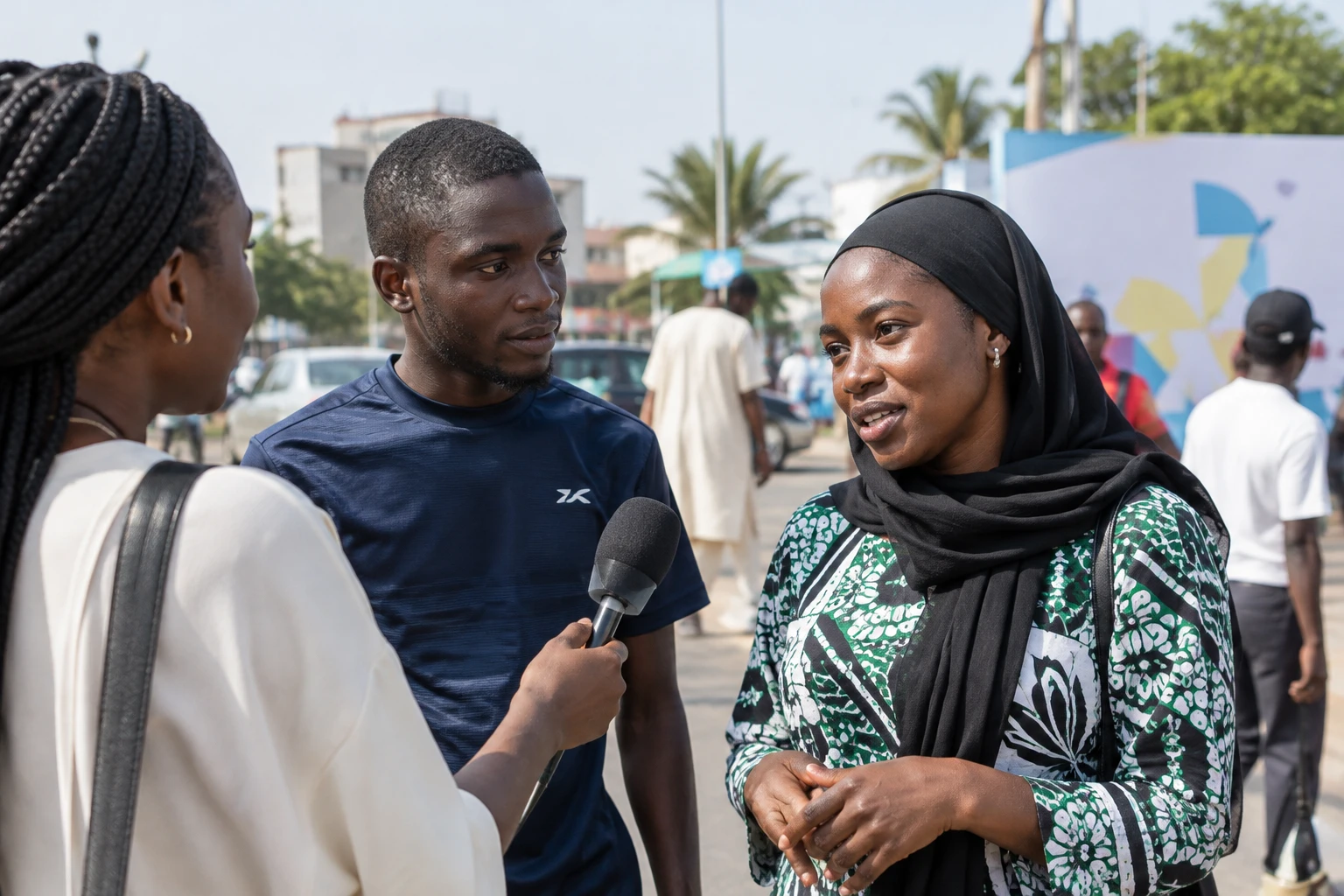
At a youth competition, the public is not there simply to count the points. In Dakar and Diamniadio, Senegalese fans are a visible presence at the 3×3 basketball and futsal events. Their support accompanies the local teams, but also a first: Senegal is hosting the Youth Olympic Games, the first edition of the event to be held in Africa.
Stands close to the action
On Sunday 8 November, 3×3 basketball players contested their quarter-finals at the Tour de l’Œuf complex in Dakar. The women’s futsal teams played their semi-finals at the Dakar Arena in Diamniadio. These events are part of a programme that divides competitions between Dakar, Diamniadio and Saly.
The scenes of support reported in the venues give the Games a tangible face. In a fast-paced discipline such as 3×3, exchanges are short and the public follows the action closely. In futsal, too, play moves on without long pauses. This proximity can make encouragement more immediate, especially when Senegal’s teams take to the court.
It is important, however, to distinguish the atmosphere observed from an attendance figure. The information available here does not establish a number of spectators. We can speak of a present and engaged public without turning that impression into a record turnout or claiming to measure the enthusiasm of the entire country.
Senegal’s teams rise to the occasion
Local interest is also driven by the results. On 8 November, both of Senegal’s 3×3 basketball teams reached the semi-finals. The Lioncelles beat Chile 13–11, then the Lionceaux defeated Mongolia 20–11, reports Radiodiffusion Télévision Sénégalaise. The official schedule confirms that the 3×3 tournament continues until 9 November.
These qualifications give supporters an immediate stake: watching the national teams continue their campaigns in a tournament being held at home. They do not guarantee a medal. They do, however, put Senegal’s young athletes in the final four, in front of a public that can follow their progress without leaving Dakar.
Futsal, meanwhile, is played across several venues. The discipline began on 1 November, and some matches are being held at the Dakar Arena in Diamniadio. Iba Mar Diop Stadium in the capital is also hosting matches. This distribution means organisers and spectators have to contend with distances, schedules and travel between venues.
An event spread across three hubs
The JOJ are being held from 31 October to 13 November 2026. Dakar is hosting the Tour de l’Œuf and Iba Mar Diop Stadium, among other venues. Diamniadio, about 30 kilometres east of the capital, is hosting events at the Dakar Arena, among others. Saly completes the arrangements, about 80 kilometres south of Dakar. The International Olympic Committee lists the venues and the sports being hosted.
This geography gives the Games a reach that extends beyond the stands. Spectators in Dakar do not necessarily experience the event in the same way as those in Diamniadio or Saly. Access to competitions depends on the venue, transport and people’s availability. For those working in the capital or travelling from outlying municipalities, attending an event also requires being able to reach the venue at the right time.
Using several venues makes it possible to draw on different facilities and distribute the competitions. The IOC says the organisers are prioritising existing venues and shared spaces. But this arrangement also puts travel at the centre of the experience: sporting and popular success is played out in the arenas, as well as in the ability to connect the host locations.
Beyond the cheers, a legacy to assess
The programme includes 25 competitive sports and ten engagement sports. 3×3 basketball and futsal sit alongside athletics, beach wrestling, skateboarding and wushu. For the organisers, this diversity is intended to give Olympic sports a place while reflecting the local context. The official JOJ programme also provides for balanced representation of women and men.
The significance of this edition is regional as well as national. Delegations from several continents are taking part in an event held in West Africa. For young Senegalese people, the competitions make sporting pathways close to home visible, while visitors discover the country’s facilities and audiences. These are real exchanges, without needing to see them automatically as proof of a lasting legacy.
That legacy will depend instead on what happens after the ceremonies: the maintenance and regular use of the facilities, access to them for clubs and schools, and continued support for young athletes. The fervour in the stands matters, but it does not answer these questions on its own. The JOJ continue until 13 November; the 3×3 basketball semi-finals and the next futsal fixtures will offer a chance to see how the public supports the teams as the competition progresses.
For Senegal, then, the stakes go beyond the noise in the arenas. The challenge is to bring an international sporting event to life across several cities, while giving young athletes and the public a central role. The cheers heard in Dakar and Diamniadio are a powerful image of this. What follows will also be measured by how the venues are used and what opportunities to take part remain accessible after the Games.