Algeria
 Egypt
 Libya
 Morocco
 Sudan
 Tunisia
 Benin
 Burkina Faso
 Cabo Verde
 Côte d'Ivoire
 Ghana
 Guinea
 Guinea-Bissau
 Liberia
 Mali
 Mauritania
 Niger
 Nigeria
 Senegal
 Sierra Leone
 The Gambia
 Togo
 Cameroon
 Central African Republic
 Chad
 Equatorial Guinea
 Gabon
 Republic of the Congo
 São Tomé and Príncipe
 Burundi
 Comoros
 Djibouti
 Eritrea
 Ethiopia
 Kenya
 Madagascar
 Malawi
 Mauritius
 Mozambique
 Rwanda
 Seychelles
 Somalia
 South Sudan
 Tanzania
 Uganda
 Angola
 Botswana
 Eswatini
 Lesotho
 Namibia
 South Africa
 Zambia
 Zimbabwe
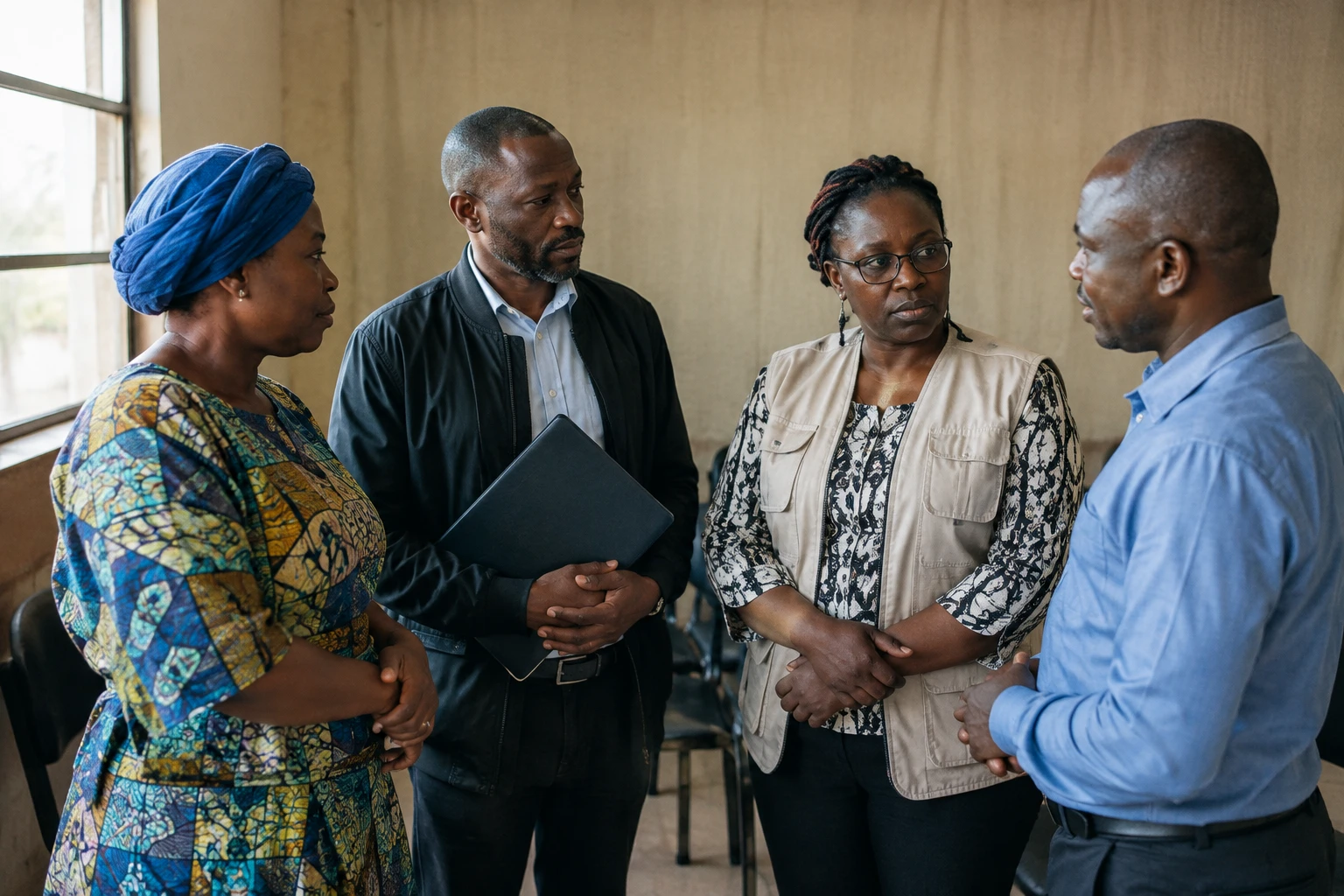
In Cantine-Aloya, violence struck a place where people live as well as a commercial transit point. In this part of North Kivu, the burning of homes and looting of health facilities also threaten access to healthcare and trade on which neighbouring villages depend.
Attack reported on the night of 5–6 November
On the night of Thursday 5 to Friday 6 November 2026, armed men attacked Cantine-Aloya and several nearby localities in Beni territory. Congolese military authorities and local actors have attributed the incursion to the Allied Democratic Forces (ADF), an armed group originating in Uganda, active in eastern Democratic Republic of the Congo and affiliated with the Islamic State group.
The toll remains uncertain. An initial statement from local civil society put the number of dead at at least 24. Other Congolese reports later cited 33 victims, while a figure of more than 40 also circulated. The figures are inconsistent, and no definitive independent toll has been established in the information consulted. The figure of 37 given by the military authorities should therefore remain attributed to them, rather than being presented as confirmed.
Congolese media outlets UNE.CD and CongoActu report different tolls, of at least 24 and 33 dead respectively. The discrepancy highlights the difficulty of quickly verifying casualties in remote localities, where communications and travel have been disrupted.
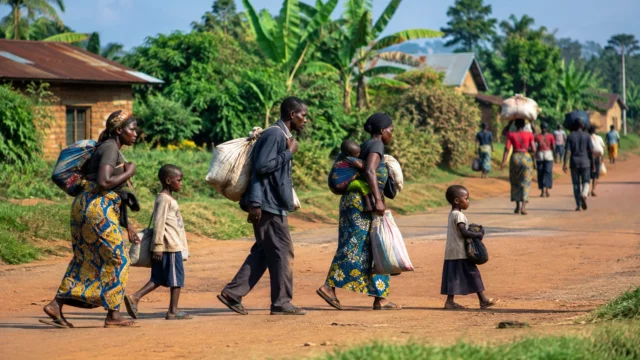
Homes and businesses are reported to have been set alight. Pharmacies and health centres are also said to have been looted. Civil society says residents left their homes to seek refuge in neighbouring localities. At this stage, the available information does not make it possible to establish precisely how many people have been displaced or the extent of the damage.
Pressure extends beyond Beni
Cantine-Aloya is in North Kivu, a province in eastern Congo where armed groups have placed civilians under heavy pressure for years. Beni and Lubero, the two territories affected by incidents reported this week, lie north of Goma and near the Ugandan border. This geography facilitates cross-border movement, but cannot on its own explain the attacks.
On Tuesday 3 November, armed men burst into Maikengu, in Lubero territory. Initial reports described gunfire, clashes and residents fleeing. Local media later reported that homes and motorbikes had been set alight. The human toll of this incident is also disputed: the head of the Bapere sector said no casualties had been recorded, while some local sources cited one death. Radio Moto and RTVH report the incursion and the displacement of residents.
The close timing of the incidents in Maikengu and Cantine-Aloya is not enough to establish a direct operational link. It does, however, show that alerts concern several areas of North Kivu, with immediate effects on movement, commerce and schooling. Local markets are among the most exposed places: their closure or insecurity affects vendors, transporters and households that rely on them for supplies.
Shujaa has not ended the threat
Since 30 November 2021, the Armed Forces of the DRC (FARDC) and the Ugandan army have been conducting Operation Shujaa against the ADF. The operation brings together two neighbouring states and takes place in a region where security co-operation is necessary but politically sensitive. Kinshasa remains responsible for protecting the Congolese population, while the presence of foreign forces also raises questions about co-ordination, oversight and accountability.
Nearly five years after its launch, the persistence of attacks attributed to the ADF is a reminder that a military operation alone does not guarantee lasting security for residents. A report by the United Nations Group of Experts noted that ADF attacks in the DRC had intensified despite the operation, and raised concern about its effects on civilians. This finding does not determine responsibility for each incident, but highlights the gap between the stated objective and the day-to-day protection communities expect.
The group’s strategy, movements and access to affected areas remain difficult to document. It is therefore important to distinguish reported facts — attacks, destruction and displacement — from claims or attributions that require further verification. Local actors, particularly health facilities and civil society organisations, are essential to identifying needs and monitoring the consequences, without taking the place of independent investigations.
What comes next for residents and the region
In the short term, the priorities are to verify the toll, find people reported missing, and restore access to healthcare and markets. Residents of neighbouring localities can be affected even if they were not directly attacked: hosting displaced families puts local resources under strain, while insecurity hampers transport and economic activity.
At the regional level, the crisis has implications for relations between the DRC and Uganda, whose forces are fighting together under Operation Shujaa. It also concerns the African Union, which advocates co-operation between states against armed groups, and the East African Community (EAC), the regional bloc to which both countries belong. But military co-ordination is no substitute for humanitarian access or the transparent establishment of facts.
Further communications from Congolese authorities, health services and local organisations will need to clarify the casualties, damage and displacement. In Cantine-Aloya as in Maikengu, the decisive measure will not simply be the number of announced operations: it will be whether residents can return without fearing another attack and regain access to essential services.