Algeria
 Egypt
 Libya
 Morocco
 Sudan
 Tunisia
 Benin
 Burkina Faso
 Cabo Verde
 Côte d'Ivoire
 Ghana
 Guinea-Bissau
 Liberia
 Mali
 Mauritania
 Niger
 Nigeria
 Senegal
 Sierra Leone
 The Gambia
 Togo
 Cameroon
 Central African Republic
 Chad
 DR Congo
 Equatorial Guinea
 Gabon
 Republic of the Congo
 São Tomé and Príncipe
 Burundi
 Comoros
 Djibouti
 Eritrea
 Ethiopia
 Kenya
 Madagascar
 Malawi
 Mauritius
 Mozambique
 Rwanda
 Seychelles
 Somalia
 South Sudan
 Tanzania
 Uganda
 Angola
 Botswana
 Eswatini
 Lesotho
 Namibia
 South Africa
 Zambia
 Zimbabwe
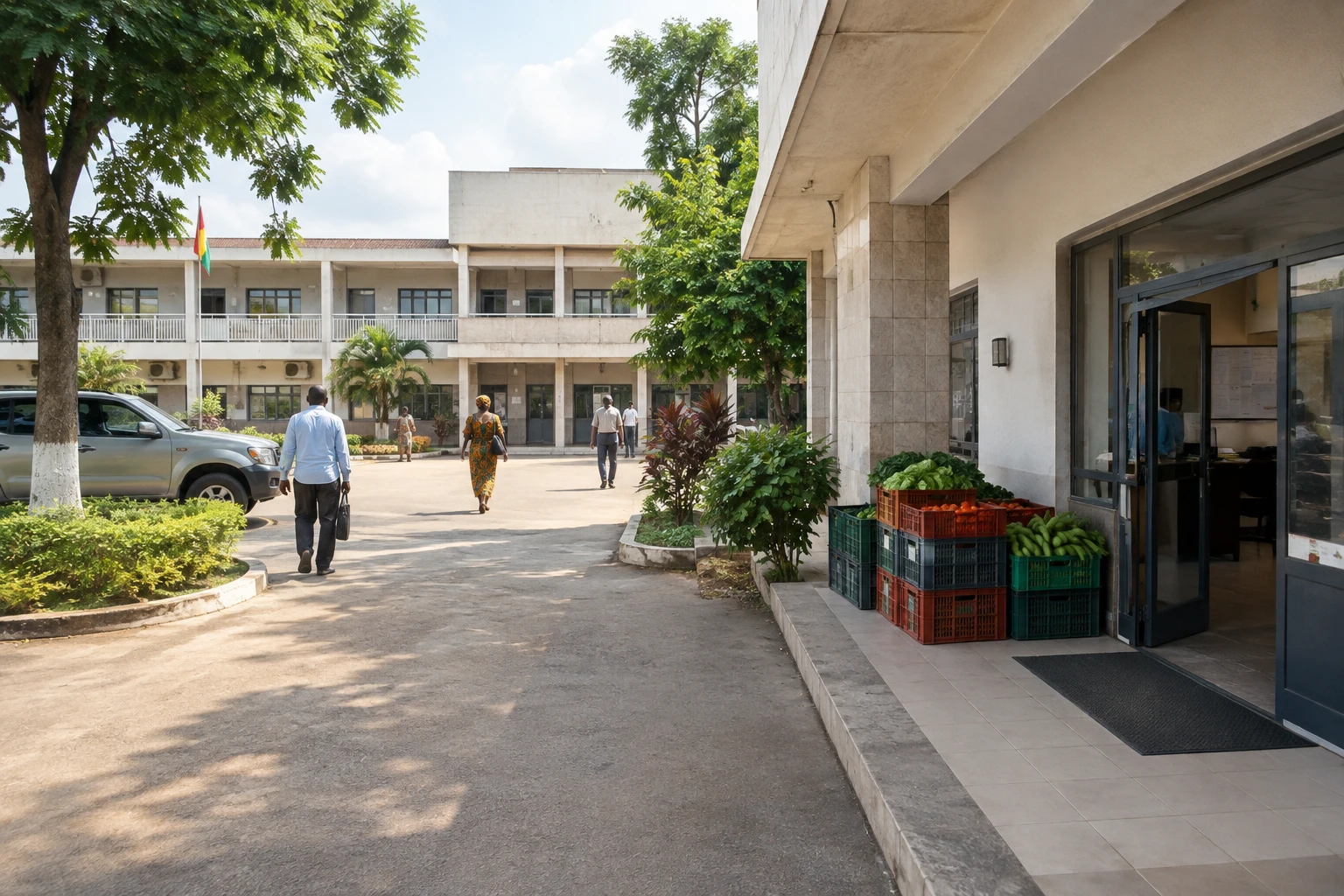
A rural track can matter as much as agricultural financing: without a passable road, a harvest can struggle to reach markets. In Guinea, a new funding package under consideration by the International Fund for Agricultural Development (IFAD) is intended to extend investment in production and rural trade.
Funding still subject to approval
On 4 November 2026 in Conakry, Prime Minister Amadou Oury Bah received an IFAD delegation led by Bernard Hien, regional director for West and Central Africa. Hien presented the results of ongoing operations and discussed a second funding phase estimated at about $70 million.
The funding has not yet been secured. Approval by IFAD’s Executive Board is expected in December 2026, according to the Guinean Prime Minister’s Office. The meeting took place on 4 November, while the official report was published on 5 November. This distinction matters: the funding is under consideration, not already disbursed.
The broad priorities announced are to strengthen production, develop agricultural value chains and diversify the economy. In the information available, the authorities have not yet detailed how the funds will be allocated, which sectors will be targeted or the implementation timetable.
Linking production areas to markets
The results presented by Bernard Hien include 250 kilometres of rural roads and markets built in 15 prefectures. These achievements, reported by the Prime Minister’s Office, are intended to improve access to production areas and the transport of harvests. The figures have not been corroborated by a second independent source in the information reviewed; they should therefore be understood as results reported by the parties to the partnership.
For producers far from urban centres, road conditions can affect transport costs, delays and post-harvest losses. Local markets can also make it easier to sell produce. But infrastructure alone does not guarantee remunerative prices or reliable outlets. Storage, processing, and access to inputs and credit remain crucial.
This issue concerns small farms as much as traders and processors. A passable road helps transport produce, but its benefits depend on the season, its maintenance and producers’ ability to negotiate with buyers. The next phase will therefore need to show how construction work will be linked to agricultural services and marketing channels.
Available land, investment to be delivered
Guinea has 6.2 million hectares of arable land, about a quarter of which is cultivated each year, according to figures cited by the government. Irrigation potential is estimated at 364,000 hectares, with less than 10 per cent developed. These estimates appear in the general policy statement published by the Prime Minister’s Office. They point to scope for development, but do not in themselves show which land can be farmed sustainably, or under what conditions.
Irrigation could reduce dependence on rainfall in some areas, while roads and markets bring harvests closer to buyers. However, such investments need to take land rights, water availability and the effects of climate change into account. Productivity is not measured only by the area cultivated: it also depends on yields, seed quality, technical support and the income farms actually receive.
The government presents agro-industry as a way to reduce food imports and diversify an economy heavily focused on mineral resources. The challenge is to bring food production, local processing and market access together without reserving the benefits for the best-funded operators. Women, young people and small-scale producers will need credit schemes suited to their means and agricultural cycles.
Agricultural credit, another link in the chain
In May 2026, the Ministry of Agriculture announced agreements between the Agricultural Development Fund (FODA), Coris Bank, Crédit Rural de Guinée and several insurers. The initiative aims to facilitate access to credit and better distribute the risks associated with rural investment, according to the Guinean Ministry of Agriculture.
This national scheme and the funding under consideration from IFAD are separate, but address complementary obstacles. Infrastructure can open up market opportunities; loans and insurance can help producers finance seeds, equipment or storage. It remains to be seen whether the proposed terms will be accessible to family farms, which are often more exposed to risks and less able to provide collateral.
An issue that extends beyond Guinea’s borders
Guinea is a member of the Economic Community of West African States (ECOWAS), which co-ordinates regional initiatives on agriculture, trade and food security. The organisation is developing tools to improve data on agricultural production and trade. Better-connected value chains in Guinean markets could therefore matter for trade with neighbouring countries, if regulations, transport and volumes allow.
The reach of the announced funding will now depend on the decision expected in December 2026, followed by the projects selected and their implementation. For people in Guinea’s rural areas, the real test will be less the amount announced than access to maintained roads, workable financing and markets able to buy their produce. At regional level, the challenge is to turn national investment into more reliable supplies and better-organised agricultural trade, without assuming results before they are achieved.