Algeria
 Egypt
 Libya
 Morocco
 Sudan
 Tunisia
 Benin
 Burkina Faso
 Cabo Verde
 Côte d'Ivoire
 Ghana
 Guinea
 Guinea-Bissau
 Liberia
 Mali
 Mauritania
 Niger
 Nigeria
 Senegal
 Sierra Leone
 The Gambia
 Togo
 Cameroon
 Central African Republic
 Chad
 DR Congo
 Equatorial Guinea
 Gabon
 Republic of the Congo
 São Tomé and Príncipe
 Burundi
 Comoros
 Djibouti
 Eritrea
 Ethiopia
 Kenya
 Madagascar
 Malawi
 Mauritius
 Mozambique
 Rwanda
 Seychelles
 Somalia
 South Sudan
 Tanzania
 Angola
 Botswana
 Eswatini
 Lesotho
 Namibia
 South Africa
 Zambia
 Zimbabwe

In Uganda, generating enough electricity does not guarantee that every household can benefit from it. In the coming years, the challenge will be less about adding megawatts than connecting villages, financing connections and making power affordable.
The National Energy Compact launched in Kampala on 22 October 2026 sets an ambitious target: to raise access to electricity to 85% of the population by 2030. It also aims for 50% access to clean cooking solutions. These goals are part of Mission 300, an initiative by the African Development Bank and the World Bank to connect an additional 300 million people in Africa by the end of the decade.
An expanding grid, but persistent disparities
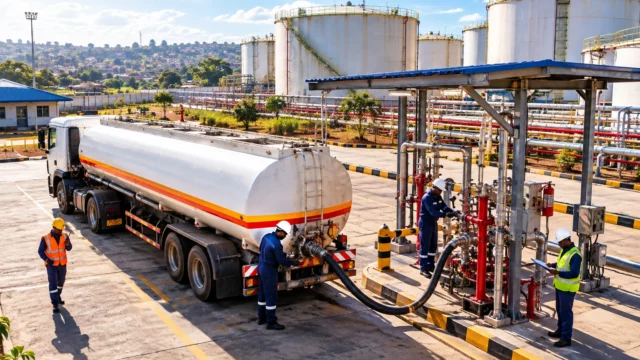
Uganda’s installed capacity reached about 2,098 megawatts at the end of 2025. Renewable energy accounted for 95.2% of this, mainly thanks to hydroelectric dams. The country also has 5,383 kilometres of high-voltage transmission lines. These figures point to a sector that has grown, but they do not, on their own, show who can actually use this energy.
The gaps between urban and rural areas remain significant. The compact puts access at about 80% in urban areas, compared with 43% in rural areas. Connecting a home far from the grid costs more. For households, the connection fee and the cost of electricity can also limit use, even when infrastructure runs nearby.
Distribution is another pressure point. The Electricity Regulatory Authority of Uganda reports distribution losses of 18.1% in 2025, up from 16.7% in 2024. Reducing these losses and strengthening the lines is essential: increased generation is not enough if power is lost before it reaches customers.
Grid expansion must also adapt to differing needs. In urban neighbourhoods and industrial areas, demand may justify upgrades to lines and substations. For remote communities, mini-grids or individual solar installations may be better suited. These decentralised systems generate or distribute electricity close to users, without waiting for the national grid to expand.
The compact relies on several routes to access
The plan provides for densifying the existing grid, deploying 2,712 mini-grids and increasing the number of individual solar systems to six million by 2030. Its stated aim is to provide additional access to more than 13 million people. These solutions are not interchangeable: the grid can support higher-power uses, while individual solar mainly meets basic household needs.
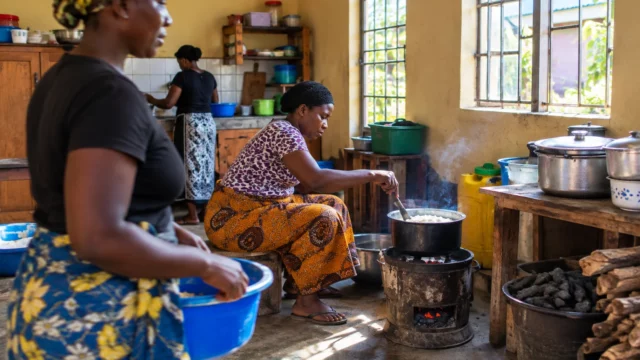
Clean cooking is a distinct but related energy access challenge. The compact aims to achieve 50% coverage of the population by 2030. The term refers to cooking methods that are less polluting than traditional fuels. Equipment and supplies that households can actually adopt and afford will therefore need to be developed, rather than simply announcing a national target.
The roadmap estimates that $17.7bn in investment will be needed. About $9.4bn is expected to come from private capital. This makes project preparation, stable rules and the ability to turn pledges into available financing crucial. The compact also provides for 2,500 megawatts of generation capacity to be operational in 2030, as well as a 5,800-megawatt project pipeline expected to reach financial close before then.
The question of finance and execution
Financial close is the point at which a project has secured the financing and agreements needed to move towards implementation. It does not mean that the power plant or line has already been built. The distinction matters: announced capacity targets will translate into useful supply only if projects pass through the stages of financing, construction and connection.
The compact’s launch brought together the Ugandan government and the African Development Bank, which says a monitoring mechanism is to be established within the Ministry of Energy. An initial six-monthly report is expected in December 2026. This monitoring will make it possible to check whether private financing materialises and connections are progressing in areas that are currently less well served.
For rural families, the outcome will be measured by whether they can light their homes, preserve food or run a small business. For companies, reliable electricity supply affects costs and production. For the state, the challenge is also to reduce grid losses and co-ordinate investment in generation, transmission and distribution.
A test for regional energy integration
Uganda places this strategy within a regional framework: the East African Community (EAC), which brings together several neighbouring countries and promotes economic co-operation. Electricity infrastructure and energy trading can support this integration, but the compact’s priority remains access within the country. Regional progress will not replace local connections or investment in the last mile.
Mission 300’s timetable gives the compact significance beyond Kampala. Other African countries have also set national commitments under the initiative. For Uganda, the first indicator to watch will be the report announced for December 2026, followed by the translation of financial commitments into construction projects and actual connections. The national rate alone will not be enough: progress must also narrow the gap between urban and rural areas.
At the end of 2025, renewables already accounted for 95.2% of the country’s installed electricity capacity, according to the Electricity Regulatory Authority of Uganda. Distribution losses in 2025 stood at 18.1%, according to its data on energy purchases, sales and losses. The terms and targets of the compact were presented by the African Development Bank.