Algeria
 Egypt
 Libya
 Morocco
 Sudan
 Tunisia
 Benin
 Cabo Verde
 Côte d'Ivoire
 Ghana
 Guinea
 Guinea-Bissau
 Liberia
 Mali
 Mauritania
 Niger
 Nigeria
 Senegal
 Sierra Leone
 The Gambia
 Togo
 Cameroon
 Central African Republic
 Chad
 DR Congo
 Equatorial Guinea
 Gabon
 Republic of the Congo
 São Tomé and Príncipe
 Burundi
 Comoros
 Djibouti
 Eritrea
 Ethiopia
 Kenya
 Madagascar
 Malawi
 Mauritius
 Mozambique
 Rwanda
 Seychelles
 Somalia
 South Sudan
 Tanzania
 Uganda
 Angola
 Botswana
 Eswatini
 Lesotho
 Namibia
 South Africa
 Zambia
 Zimbabwe
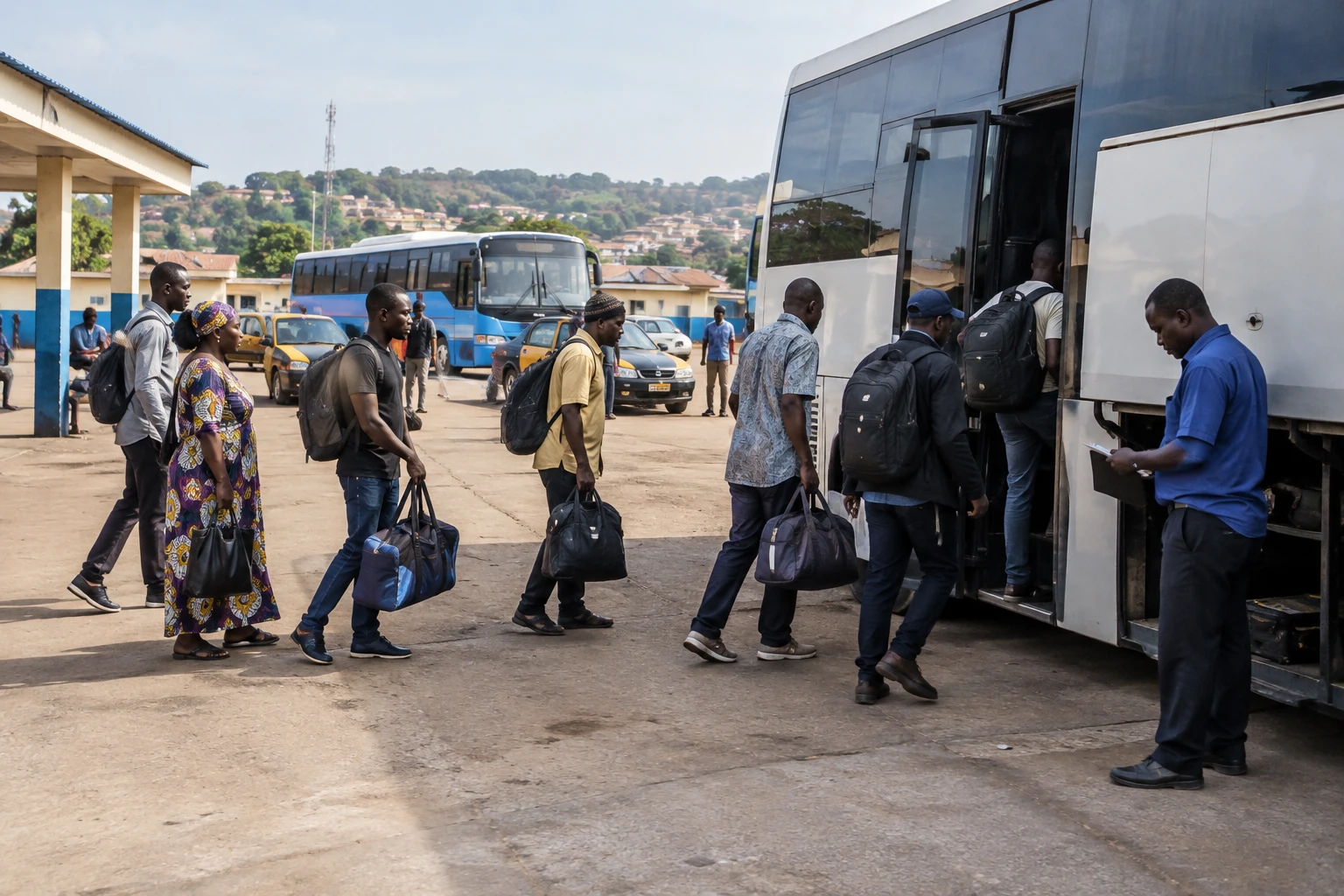
In Siguiri, the halt to artisanal gold mining is measured not only by the sites that close. It also affects family incomes, Guinean communities along the riverbanks and workers from neighbouring countries. Since early November, the disagreement between Conakry and Ouagadougou has concerned both environmental protection and the way Burkinabè miners are leaving the area.
An environmental measure with immediate effects
On 2 November 2026, five Guinean ministries announced a ban on what they described as anarchic gold mining in the administrative region of Siguiri, in north-eastern Guinea, near Mali. The government cites the degradation of soil and farmland, as well as the pollution and silting of waterways, including the Niger, the Djoliba and the Tinkisso. The African Press Agency reported the reasons for the ban and the provisions of the statement.
The decision bans the use of dredgers, mining in the beds and on the banks of waterways, and the use of explosives, mercury and cyanide. Activities are also prohibited in protected areas, classified forests, farmland and pastures. Conakry plans to deploy security forces, carry out road and river checks, and direct gold purchases to licensed trading centres.
The Guinean text does not present the operation as a collective expulsion. However, it provides for security forces to verify the identity and legal status of people present at the sites, and for foreign nationals without legal status to be subject to procedures laid down by law. This distinction matters: it separates the measure officially announced from the consequences experienced by the workers affected.
Many gold miners, including Burkinabè nationals, travelled to Mali after the operations. Burkina Faso says it is organising their return and, through its security minister, Mahamadou Sana, denounces what it calls an expulsion and « cruel, inhuman and degrading » treatment. These allegations are those of the Burkinabè authorities. The exact number of people concerned and the circumstances of each departure have not been independently established in the available information.
The transit through Bamako has given the situation a regional dimension. The Burkinabè authorities have announced a delegation to Mali and the organisation of repatriation. Guinean and Burkinabè media report the same broad sequence of events, while details of the conditions of departure and assistance remain to be clarified. It is therefore important to distinguish confirmed facts — the ban, the departures and the announced return arrangements — from opposing assessments of how the operations were conducted.
In Siguiri, gold sustains livelihoods as it transforms the land
Siguiri is a major centre for gold mining in Guinea. The activity involves more than miners: it supports businesses, transport operators and services around the sites. A study by the International Organization for Migration published in 2020 had already described significant migration to the region’s mines, as well as risks linked to toxic substances, working conditions and the lack of protection for some migrant workers.
The decision may therefore have different effects on different residents. For communities near waterways and farmland, curbing destructive practices may address tangible concerns. For gold miners, small traders and households dependent on the activity, a rapid closure means lost income and uncertainty about what comes next. Local voices quoted by Guinéenews support the principle of better regulation, but also express reservations about the method and the element of surprise.
This tension cannot be resolved by a ban alone. Its implementation will depend on inspections, transparent procedures and the availability of economic alternatives. It also raises a question of governance: how can water and land be protected without placing most of the cost on the least protected workers, whether Guinean or foreign? The authorities have yet to set out an economic support scheme for people whose incomes depended on the sites.
A bilateral issue that crosses borders
For Conakry, the challenge is to enforce mining regulations and limit environmental damage in a border region. For Ouagadougou, it is to assist its nationals and challenge the conditions of their departure. Mali, now a transit country, must in turn manage the arrival of people on the move and facilitate the passage of the announced convoys.
The diplomatic trajectories of the three countries give this episode particular significance. Guinea, Mali and Burkina Faso are governed by transitional authorities following military takeovers. ECOWAS, the West African regional integration organisation, has been a central forum for political discussions about these transitions. But this specific dispute is playing out first and foremost among national administrations, border communities and mobile workers: it should not be reduced to a confrontation between regional blocs.
What happens next will depend on how the convoys are organised, what guarantees are given to those concerned and how the rules are actually enforced in Siguiri. It will also be important to see whether Conakry clarifies the procedures applicable to foreign nationals and whether the Burkinabè authorities publish a verifiable account of the returns. In the longer term, the challenge is to reconcile the protection of water resources, the regulation of gold mining and livelihoods in a mining economy that crosses borders.