Algeria
 Egypt
 Libya
 Morocco
 Sudan
 Tunisia
 Benin
 Burkina Faso
 Cabo Verde
 Côte d'Ivoire
 Ghana
 Guinea
 Guinea-Bissau
 Liberia
 Mali
 Mauritania
 Niger
 Nigeria
 Sierra Leone
 The Gambia
 Togo
 Cameroon
 Central African Republic
 Chad
 DR Congo
 Equatorial Guinea
 Gabon
 Republic of the Congo
 São Tomé and Príncipe
 Burundi
 Comoros
 Djibouti
 Eritrea
 Ethiopia
 Kenya
 Madagascar
 Malawi
 Mauritius
 Mozambique
 Rwanda
 Seychelles
 Somalia
 South Sudan
 Tanzania
 Uganda
 Angola
 Botswana
 Eswatini
 Lesotho
 Namibia
 South Africa
 Zambia
 Zimbabwe
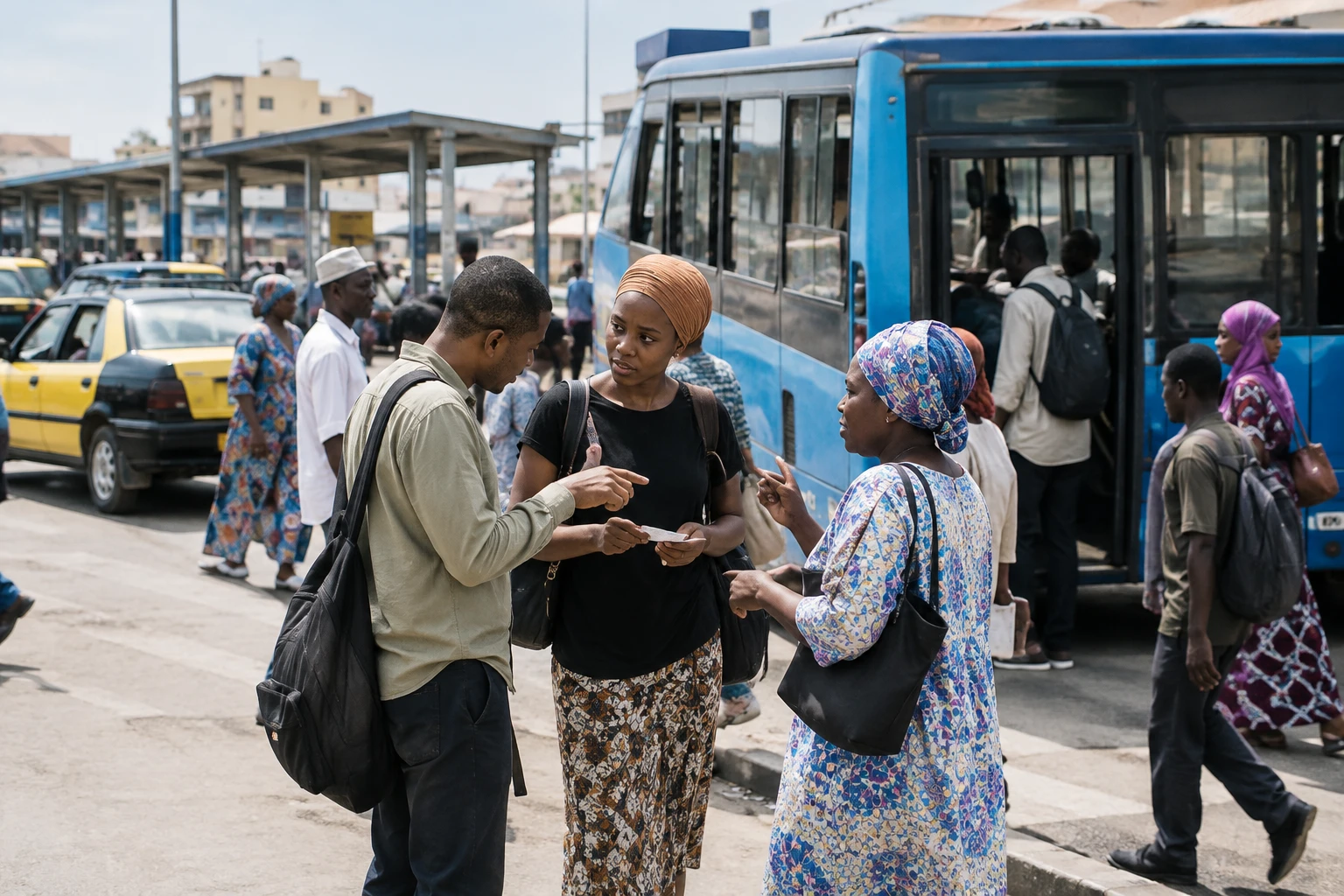
Welcoming another person means more than opening a door to them. It also means recognising their language, history and place in the world. For Souleymane Bachir Diagne, a Senegalese philosopher, hospitality thus becomes a way of thinking about our shared humanity without demanding that differences disappear.
This reflection takes on particular resonance in Senegal, where teranga — often translated as “hospitality” — is part of the collective vocabulary. But a celebrated value cannot, on its own, resolve tensions around identity, migration or inequality. Instead, it poses a practical question: how can welcome become a reciprocal relationship, in everyday life as well as in institutions?
An idea rooted in Senegal, open to the world
Born in Saint-Louis, Souleymane Bachir Diagne taught at Cheikh Anta Diop University in Dakar, then at Columbia University in New York, where he joined the university in 2008. He retired from university teaching in 2025, while continuing his work. His career therefore connects African and international intellectual spaces, without reducing his thought to a simple passage between two continents.
In Dakar in April 2026, he argued for universal museums established in several regions of the world. In his view, concentrating places that celebrate cultures and knowledge in Europe contradicts the very ambition of universalism. This position echoes his thinking on hospitality: a shared humanity cannot be built if some speak for everyone while others are confined to the role of witnesses.
The regional context also matters. Senegal belongs to the Economic Community of West African States (ECOWAS), which organises co-operation between West African countries. Mobility, cultural exchange and debates about belonging extend beyond national borders. In this space, thinking about welcome also means questioning relations between citizens, foreigners and institutions.
From translation to hospitality
In an interview published in February 2026 by the Senegalese daily Le Soleil, the philosopher presents translation as an ethical act. It is not simply a matter of transferring words from one language to another. To translate, he explains, is to welcome a thought from elsewhere and accept that one’s own language does not exhaust meaning.
This idea illuminates his new essay, L’Hospitalité. Affirmer l’humanité, published by Autrement in October 2026. The book brings into dialogue myths, Eastern, Senegalese and British tales, and philosophers such as Kant, Derrida and Senghor. The publisher describes it as a reflection on openness to others, encounter and reciprocity. This description is borne out by bibliographic entries and the book’s presentation, published when it appeared.
The argument is not about idealising welcome or denying disagreements. Rather, it calls for two demands to be held together: affirming one’s own identity and recognising the equal dignity of others. From this perspective, universalism would not be a rule dictated from a single centre. It is built from multiple languages, traditions and experiences.
Teranga, between value and practice
In Senegal, teranga gives this reflection a familiar resonance. The term is often associated with welcome and sharing. Yet the philosopher does not reduce hospitality to a national quality or a brand image. A cultural value does not automatically guarantee that everyone receives the same welcome in public services, workplaces or decision-making forums.
Everyday life in Senegal therefore reminds us that hospitality is more than a symbol. It is also measured by how a person is listened to, the opportunities available to them and the place given to their voice. This reading avoids confusing a tradition of generosity with an absence of tensions. It also makes it possible to see Senegalese people as actors who debate and reshape their own points of reference.
The philosopher has already emphasised Africa’s presence in global intellectual debates. The point is not merely for African scholars to be invited to foreign universities. Questions, languages and concepts from the continent must also help define the terms of debate. Hospitality then works in both directions: welcoming others, while also making room for one’s own thought.
A debate that crosses borders
The question raised by the essay extends beyond Senegal. West African societies share human movements and diverse heritages, but each country has its own institutions and debates. ECOWAS provides a framework for regional dialogue; it does not, however, make national experiences identical. Diagne’s thinking invites us to seek a common language without erasing these differences.
Across the continent, the subject connects with discussions about the place of African knowledge, languages of instruction and the representation of cultures in institutions. The question of universal museums, which the philosopher championed in Dakar in April 2026, offers a concrete example: who preserves, interprets and displays works? Who has the power to tell their story? These choices also determine which experiences are recognised as belonging to shared history.
It remains to be seen how this thinking travels beyond books and conferences: through universities, cultural policies and regional exchanges. Hospitality, as Diagne describes it, does not promise the disappearance of conflict. It offers a way to confront it without stripping anyone of their dignity: listening, translating and building a shared space in which no one claims to embody humanity alone.