Algeria
 Egypt
 Libya
 Morocco
 Sudan
 Tunisia
 Benin
 Burkina Faso
 Cabo Verde
 Côte d'Ivoire
 Ghana
 Guinea
 Guinea-Bissau
 Liberia
 Mali
 Mauritania
 Niger
 Nigeria
 Sierra Leone
 The Gambia
 Togo
 Cameroon
 Central African Republic
 Chad
 DR Congo
 Equatorial Guinea
 Gabon
 Republic of the Congo
 São Tomé and Príncipe
 Burundi
 Comoros
 Djibouti
 Eritrea
 Ethiopia
 Kenya
 Madagascar
 Malawi
 Mauritius
 Mozambique
 Rwanda
 Seychelles
 Somalia
 South Sudan
 Tanzania
 Uganda
 Angola
 Botswana
 Eswatini
 Lesotho
 Namibia
 South Africa
 Zambia
 Zimbabwe
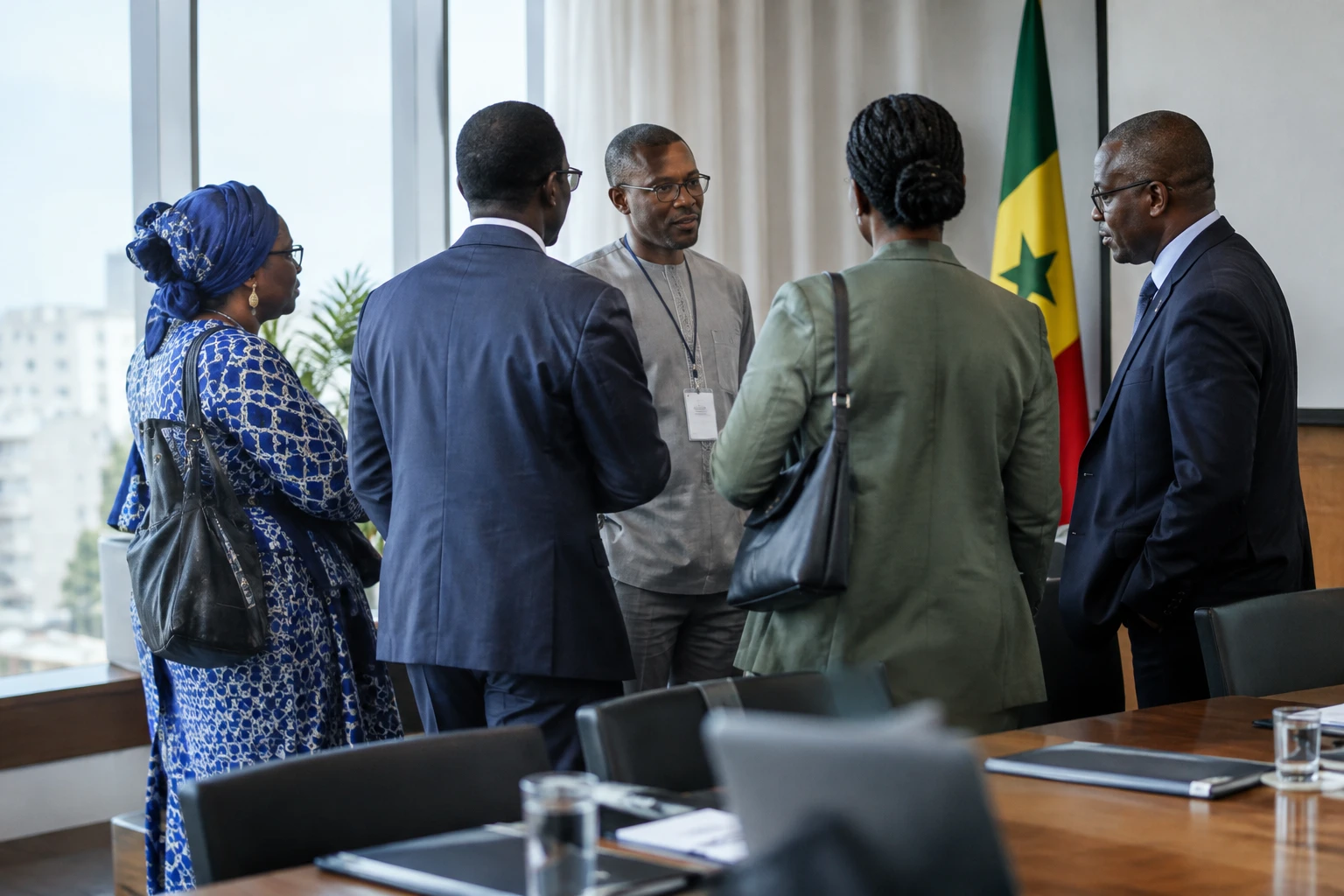
Cutting emissions while protecting crops, coastal cities and access to water: in Senegal, climate action affects both the economy and everyday life. The government estimates that $24.9bn in investment will be needed to implement its third Nationally Determined Contribution, or NDC 3.0, by 2035.
Targets dependent on funding
Presented at a political validation meeting in Dakar on 2 November 2026, NDC 3.0 sets out two levels of ambition. With what it considers sufficient international support, Senegal is aiming to reduce its greenhouse gas emissions by 31.6% by 2030 and 48.5% by 2035. Without that support, the planned cuts would fall to 13.3% in 2030 and 19.4% in 2035, said Aliou Gori Diouf, the Minister for the Environment and Ecological Transition, according to the Senegalese Press Agency.
The difference between these scenarios is central. It shows that the announced targets do not rest solely on national decisions: the highest ambition depends on funding and co-operation that have yet to be secured. Of the estimated total, $16.9bn is expected to come from the state’s financial partners. The remaining $8bn is expected from other sources, including private investors and trust funds.
Political validation is a preliminary step, not the end of the process. According to the minister, the document must still be approved in its final form before being formally submitted to the secretariat of the United Nations Framework Convention on Climate Change. The announced commitments should therefore be seen as a framework to be put into practice, rather than a list of projects that have already been funded.
Energy, transport and adaptation to risks
The programme covers several sectors. It provides for the development of renewable energy, mangrove restoration and reforestation. Assisted natural regeneration — which encourages the return of existing vegetation — and farming practices, including rice cultivation, are also among the proposed measures. The government also intends to reduce emissions from the cement industry and improve waste management.
In transport, the Bus Rapid Transit (BRT) and the Regional Express Train (TER) are cited as infrastructure contributing to less-polluting travel. Their climate impact will nevertheless depend on how much they are used, how well they are integrated with other modes of transport and how travel patterns evolve in the Dakar metropolitan area. The NDC thus links visible investment in cities with broader changes in production and services.
The other strand focuses on adaptation: water management, flood prevention and protection of coastal areas. It directly concerns farmers and herders exposed to changing rainfall, as well as residents of urban areas facing floods and communities whose livelihoods depend on the coast. Health is also listed among the sectors affected. This two-pronged approach — reducing emissions and limiting climate damage — is part of the commitments set out by the ministry.
The challenge is therefore not simply to raise a total sum. Investment will need to reach areas and activities with different needs. Protecting the coastline, for example, involves different constraints from ensuring access to water in agricultural areas or decarbonising a cement plant. How projects are distributed, and local authorities’ ability to implement them, will matter as much as funding announcements.
JETP, one part of the funding package
Senegal also intends to draw on the Just Energy Transition Partnership (JETP), a co-operation mechanism launched in 2023 with a group of international partners. The minister puts the investment envisaged under the mechanism at $2.75bn. When it was announced, the partnership aimed in particular to accelerate renewable energy and raise its share to 40% of installed electricity capacity by 2030. The European Investment Bank says the initial commitment envisaged mobilising €2bn in new financing over three to five years.
This amount should not be confused with the total funds already disbursed or spent. Mobilisation announcements can cover loans, grants, guarantees or technical assistance, and their conversion into projects depends on how well those projects are prepared and on their terms. A World Bank report on climate and development in Senegal describes the JETP as a potential contribution to the energy transition and highlights the role concessional finance can play in attracting private capital.
Mobilising private capital can expand the resources available, but it also raises the question of how risks are shared. Profitable projects, such as some energy infrastructure, may attract investors more easily than prevention or ecosystem restoration measures whose benefits are spread more widely. Public funding and climate funds will therefore also need to support needs that do not generate direct commercial revenue.
A Senegalese challenge in an exposed region
The plan is part of a regional context in which West African states face climate challenges that cross borders: shared water resources, pressure on agricultural systems and growing energy needs. Senegal operates within ECOWAS, the Economic Community of West African States, but its NDC remains a national commitment. Its implementation will need to link Dakar’s policies with conditions in the regions and with regional co-operation.
For Senegalese people, results will be measured less by the amount announced than by concrete changes: more reliable access to electricity, lower-emission transport, protection from floods, and secure water supplies and rural livelihoods. The next step will be final approval of NDC 3.0, followed by turning its targets into funded projects that are monitored and distributed across sectors and regions.