Algeria
 Egypt
 Morocco
 Sudan
 Tunisia
 Benin
 Burkina Faso
 Cabo Verde
 Côte d'Ivoire
 Ghana
 Guinea
 Guinea-Bissau
 Liberia
 Mali
 Mauritania
 Niger
 Nigeria
 Senegal
 Sierra Leone
 The Gambia
 Togo
 Cameroon
 Central African Republic
 Chad
 DR Congo
 Equatorial Guinea
 Gabon
 Republic of the Congo
 São Tomé and Príncipe
 Burundi
 Comoros
 Djibouti
 Eritrea
 Ethiopia
 Kenya
 Madagascar
 Malawi
 Mauritius
 Mozambique
 Rwanda
 Seychelles
 Somalia
 South Sudan
 Tanzania
 Uganda
 Angola
 Botswana
 Eswatini
 Lesotho
 Namibia
 South Africa
 Zambia
 Zimbabwe
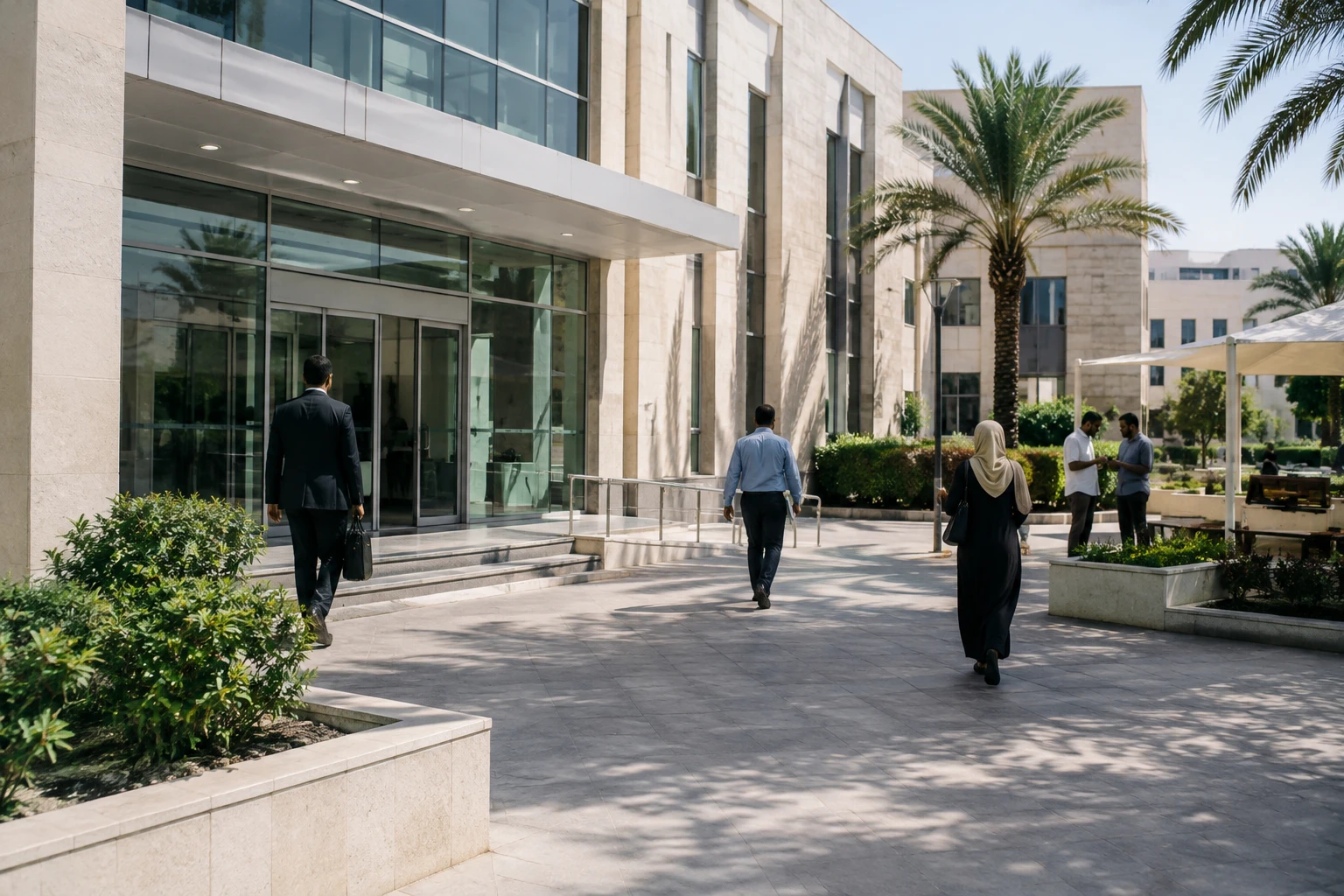
In Libya, a change at the helm of the Central Bank is not a simple personnel change. It touches the heart of the country’s political balance: the institution manages oil revenues, foreign currency reserves and government payments. Fauzi Abokhzam’s swearing-in therefore comes in a country where financial unity is as contested as political authority.
Appointment approved in Sebha, oath taken in Benghazi
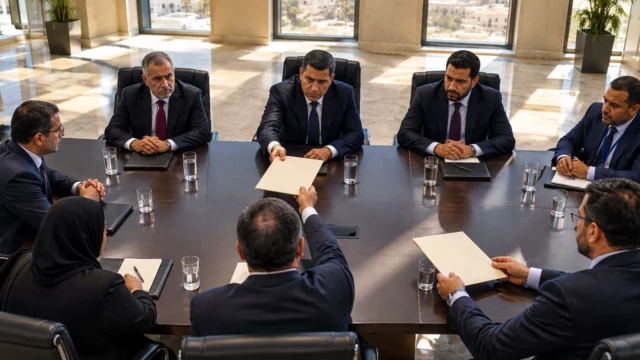
On Wednesday 4 November 2026, Fauzi Abokhzam was sworn in before the Speaker of the House of Representatives, Al-Salehin Abdelnabi, at Parliament’s headquarters in Benghazi. The ceremony formalised his appointment after MPs voted two days earlier in Sebha, in the south of the country.
According to the Libyan news agency LANA and Libyan outlet Al-Wasat, 78 of the 90 MPs present approved his appointment and accepted the resignation of his predecessor, Naji Issa. The House of Representatives had initially accepted the resignation provisionally on 22 October. Abokhzam then took up the post on an interim basis. The Central Bank’s board confirmed his assumption of office on that date. LANA’s report on the parliamentary vote, Al-Wasat’s account of the swearing-in and the Central Bank’s statement agree on the main steps.
The sequence of decisions — interim appointment, formal vote and oath — distinguishes his assumption of office from parliamentary confirmation. It is not, however, enough on its own to establish a broader political consensus on the bank’s governance. Issa’s resignation, according to Al-Wasat’s report, was accepted by Parliament on 2 November. The handover thus closes a tense institutional episode without resolving the divisions surrounding national institutions.
A bank at the centre of resource-sharing
Since the fall of Muammar Gaddafi in 2011, Libya has remained divided between rival authorities. The government based in Tripoli exercises power in the west, while institutions based in the east, including the House of Representatives, rely on forces linked to Field Marshal Khalifa Haftar. Lines of authority and alliances have shifted over the years; portraying the country as two perfectly homogeneous blocs would obscure this complexity.
The Central Bank is a major point of contention because oil exports provide most public revenue. The institution is involved in managing foreign currency, payments and the financing of government spending. Its governor is therefore at the intersection of decisions affecting public authorities, businesses and households, particularly when tensions disrupt access to foreign currency or the payment of public expenditure.
A 2024 report by the United Nations Panel of Experts had already documented the difficulties of reunifying the Central Bank: integrating payment systems, reconciling balance sheets, harmonising accounts and controlling expenditure. It also noted that a dispute over the institution’s leadership had then halted technical progress towards reunification. This precedent sheds light on the current challenges, but does not prove that the same tensions will recur. The UN report on governance and financial reunification challenges describes these obstacles.
Continuity of services is the first practical test
For Libyans, the significance of this appointment will be measured less by ceremonies than by the day-to-day operation of banking services. A recognised and operational leadership can facilitate payments between the different regions. Conversely, prolonged challenges to its authority or competing budgetary decisions could increase uncertainty for banks, importing businesses and employees who depend on public payments.
The effects are not the same for everyone. Public authorities and players in the oil sector are closely monitoring the flow of revenue and investment spending. Businesses, particularly those importing goods, depend on access to foreign currency and predictable payments. For households, the issues are more immediate: the availability of cash, salaries and prices of imported goods. These consequences will depend on economic decisions and how they are implemented; they do not automatically follow from a change of governor alone.
Following Abokhzam’s assumption of office, the Central Bank’s board announced the reconstitution of the monetary policy committee and the creation of committees responsible for governance, risk and appointments. These measures concern internal organisation and oversight. Their impact will depend on how they are implemented, the regularity of the bank’s work and cooperation between its different components. The board’s official statement details these internal changes.
A regional signal to watch
The transition is also of interest to Libya’s partners in North Africa and continental institutions. Budgetary or financial disruption in a major hydrocarbon producer can affect trade, investment and regional mobility. The African Union and regional diplomatic mechanisms are therefore monitoring developments in Libya’s institutions, although the practical impact of this change will depend first and foremost on the balance of power at home.
The next decisive step will be to see whether Abokhzam’s authority is accepted beyond the House of Representatives’ vote and whether the bank can continue operating without interruption. The board confirmed that he took office on 22 October, while the 4 November swearing-in completed the parliamentary formalities. It remains to be seen whether this transition will help consolidate common financial management or usher in a new phase of contest over control of revenue and spending.