Algeria
 Libya
 Morocco
 Sudan
 Tunisia
 Benin
 Burkina Faso
 Cabo Verde
 Côte d'Ivoire
 Ghana
 Guinea
 Guinea-Bissau
 Liberia
 Mali
 Mauritania
 Niger
 Nigeria
 Senegal
 Sierra Leone
 The Gambia
 Togo
 Cameroon
 Central African Republic
 Chad
 DR Congo
 Equatorial Guinea
 Gabon
 Republic of the Congo
 São Tomé and Príncipe
 Burundi
 Comoros
 Djibouti
 Eritrea
 Ethiopia
 Kenya
 Madagascar
 Malawi
 Mauritius
 Mozambique
 Rwanda
 Seychelles
 Somalia
 South Sudan
 Tanzania
 Uganda
 Angola
 Botswana
 Eswatini
 Lesotho
 Namibia
 South Africa
 Zambia
 Zimbabwe
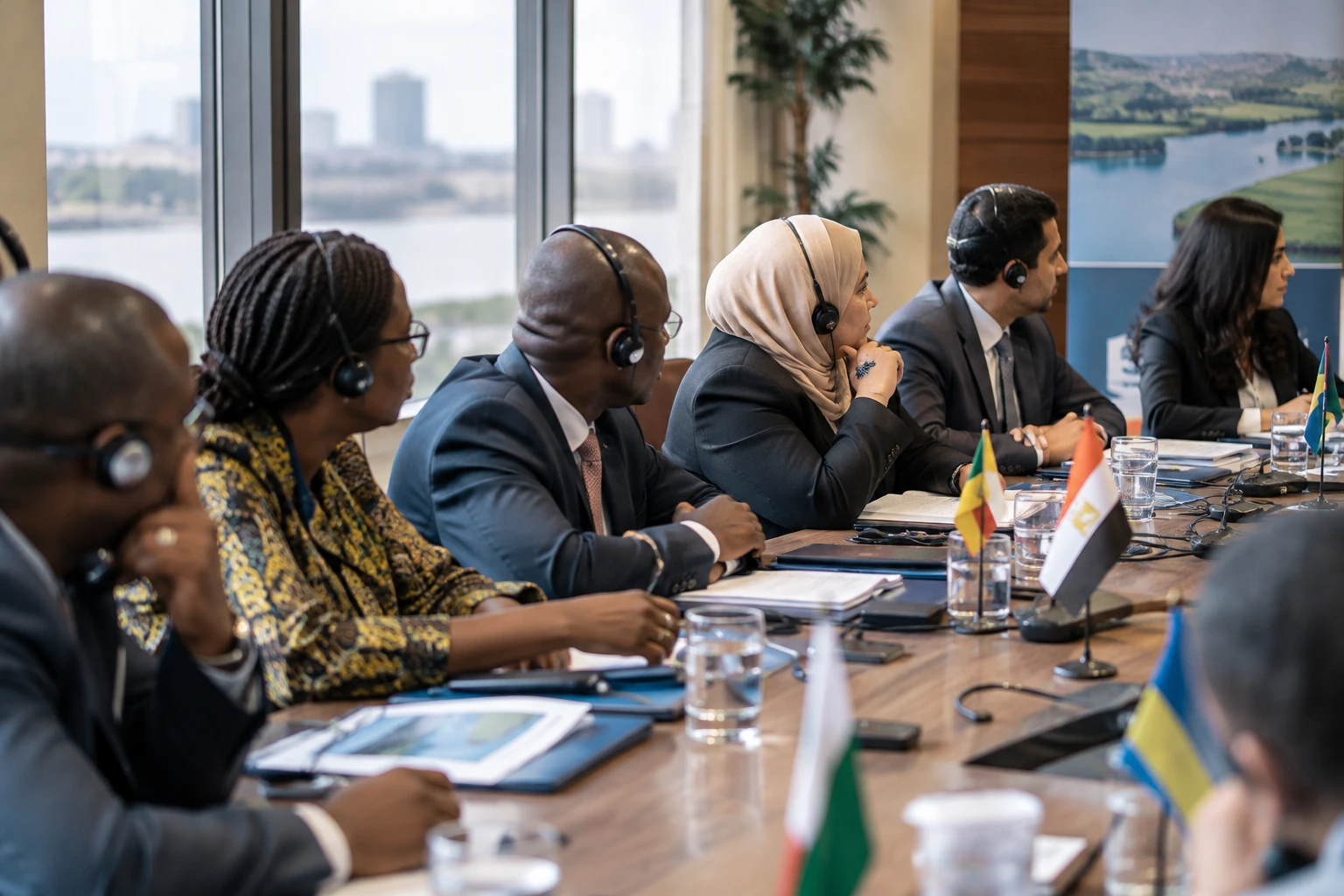
In the Nile Valley, distributing water more effectively among fields is no longer merely a technical choice. For Egyptian farming families, it directly affects harvests, incomes and their ability to cope with hotter seasons.
On 2 November 2026, the Egyptian government and the International Fund for Agricultural Development (IFAD) signed two agreements to support this adaptation. The announced funding totals $65.32 million. The main project targets rural farms; the second is intended to strengthen agricultural skills and the sharing of expertise.
Targeted investment in the Nile Valley
The CROWN project — “Climate-resilient On-farm Water Management in the Nile Valley” — receives $64.85 million in IFAD funding. It plans to modernise irrigation and drainage, promote climate-adapted farming practices, and facilitate access to markets and finance. Its stated aim is to improve productivity while using water more efficiently.
The main phase is expected to cover 30,000 feddans, or about 12,600 hectares, in the governorates of Beni Suef and Minya. IFAD estimates that 90,000 rural households could benefit. These figures are programme targets, not results already achieved. IFAD’s announcement on the agreements and the CROWN project gives details of the areas and beneficiaries targeted.
The second agreement concerns PEARL, which has a $470,000 grant. It is intended to support training, digital tools and the exchange of agricultural expertise with countries in Africa and the Middle East. About 2,000 direct beneficiaries are expected. The two allocations, $64.85 million and $470,000, correspond to the published total of $65.32 million.
Pressure felt on farms
Egypt relies heavily on the Nile for its freshwater. The Minister of Water Resources and Irrigation, Hany Sweilam, put annual availability at about 500 cubic metres per person in statements reported in 2026. The figure varies according to the indicators and dates used: in October, the ministry cited about 472 cubic metres of renewable resources per person. These official estimates place the country below the absolute water scarcity threshold of 500 cubic metres. The Egyptian State Information Service and Ahram Online reported the minister’s statements on different dates.
This dependence makes water management particularly important for agriculture, which has to contend with the needs of cities, economic activities and households. Irrigation and drainage systems can affect losses, the reliability of supply and growing conditions. But the results will also depend on equipment maintenance, its cost, and farmers’ ability to access the promised training and services.
The benefits will not necessarily be the same for everyone. Farms with more resources may be better placed to adopt new technologies or access finance. The programme says it will give particular attention to women and young people, including through access to skills and job opportunities. Their actual participation will therefore need to be monitored, beyond the stated targets.
Nile Basin cooperation in the background
These projects are part of an Egyptian strategy that combines improved irrigation, wastewater reuse and desalination. These solutions can supplement supplies, but they do not replace the role of the Nile. Managing this resource also extends beyond national borders: ten countries along the river cooperate through the Nile Basin Initiative, an intergovernmental framework dedicated to shared resources and regional cooperation.
This cooperation is taking place amid persistent disagreements over the sharing and management of the river. Investments in Egyptian fields do not resolve these disputes. They can, however, improve the efficiency of water use locally, while discussions between states remain necessary to address basin-wide issues. The Nile Basin Initiative outlines its framework for cooperation among riparian states.
The PEARL project gives this partnership a continental dimension: Egypt also wants to share skills and solutions with other countries. The reach of this ambition will depend on the quality of the training and how well it is adapted to local realities, since farming and water conditions differ from one area to another.
The next step will be practical: checking that work gets under way, that the targeted households can access equipment and training, and then assessing the effects on water management and incomes. For farmers in Beni Suef and Minya, these results on the ground — more than the announced funding — will show whether the agreements durably strengthen the resilience of farms.