Algeria
 Egypt
 Libya
 Morocco
 Sudan
 Tunisia
 Benin
 Burkina Faso
 Cabo Verde
 Côte d'Ivoire
 Ghana
 Guinea
 Guinea-Bissau
 Liberia
 Mali
 Mauritania
 Niger
 Nigeria
 Sierra Leone
 The Gambia
 Togo
 Cameroon
 Central African Republic
 Chad
 DR Congo
 Equatorial Guinea
 Gabon
 Republic of the Congo
 São Tomé and Príncipe
 Burundi
 Comoros
 Djibouti
 Eritrea
 Ethiopia
 Kenya
 Madagascar
 Malawi
 Mauritius
 Mozambique
 Rwanda
 Seychelles
 Somalia
 South Sudan
 Tanzania
 Uganda
 Angola
 Botswana
 Eswatini
 Lesotho
 Namibia
 South Africa
 Zambia
 Zimbabwe
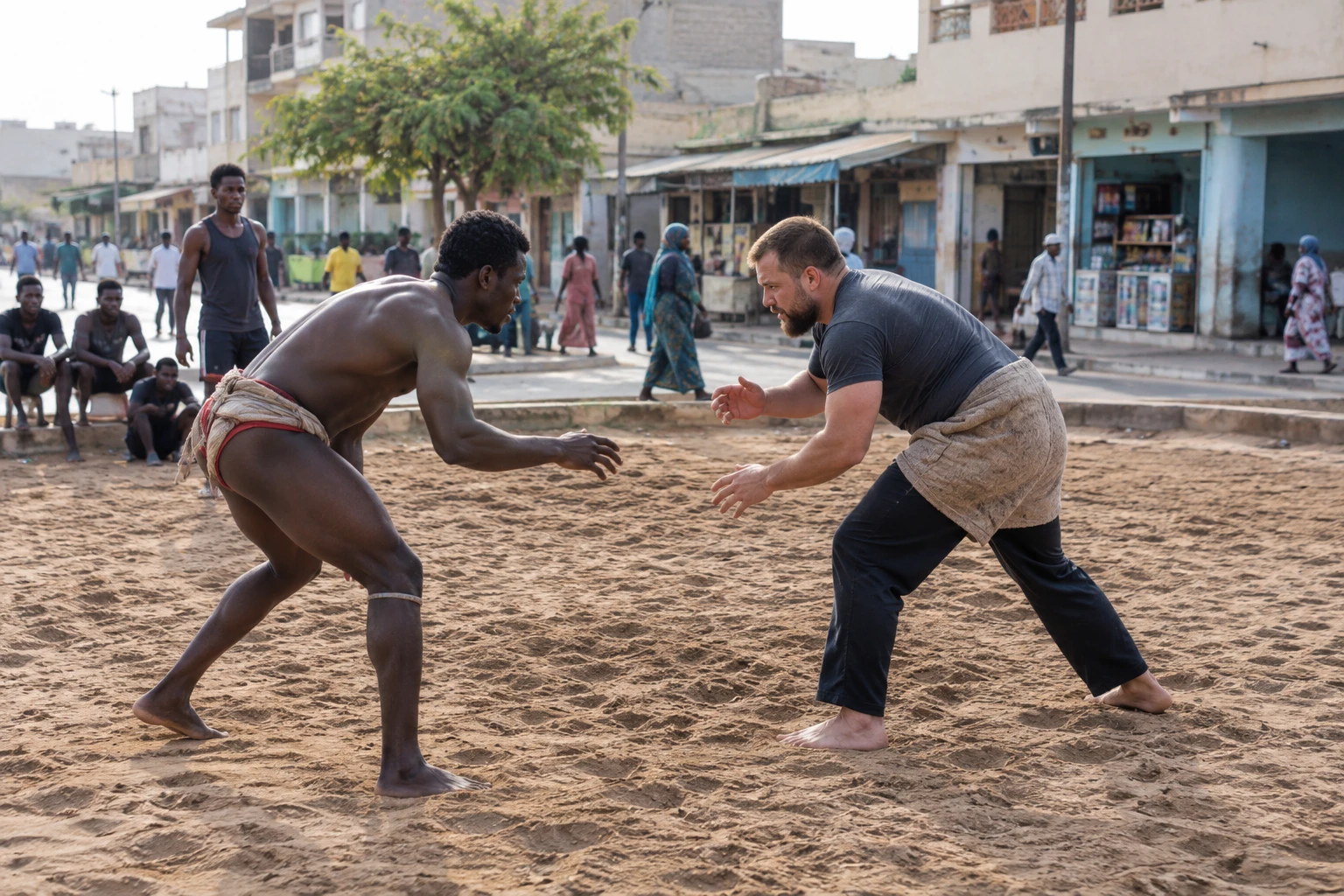
In Parcelles Assainies, a bout can also become a lesson in reciprocity. On Sunday 1 November 2026, Senegalese and Swiss wrestlers exchanged disciplines and outfits in Dakar, as Senegal hosts the first Youth Olympic Games to be held in Africa.
Two traditions, one arena
The meeting took place on the sidelines of the Youth Olympic Games, which opened on Saturday 31 October. Three wrestlers from each country took part in the cultural exchange, according to accounts published after the event. It was not intended as an official competition: each wrestler was able to try the other’s style and discover its moves, rules and codes.
The Swiss first exchanged their usual clothes for the attire worn in laamb, the Wolof name for Senegalese wrestling. Then the roles were reversed. The Senegalese wrestlers put on the traditional thick shorts worn in Schwingen, Swiss wrestling. Bouts, dances and moments of sharing accompanied the meeting. A TV5MONDE report places the event in Parcelles Assainies and says the municipality’s mayor, Aboubacar Djamil Sané, saw it as a sign of the vitality of relations between the two countries.
The differences are immediately apparent in the clothing. Schwingen is practised in trousers covered by thick canvas shorts. Laamb is generally contested bare-chested, with a loincloth. The rules and moves are not interchangeable; the meeting’s value lies precisely in discovering them, rather than comparing the merits of the two disciplines.
Swiss wrestler Matthieu Burger said their shared passion made it possible for athletes from, in his words, “the other side of the world” to meet. On the Senegalese side, Moussa Dioum 2 welcomed the opportunity to provide greater support for young wrestlers and mentioned future exchanges in Switzerland. He also reported a Senegalese victory in the laamb bouts, followed by a Swiss rematch victory during the Schwingen introduction. These results come from the participants’ accounts, not an official record.
The Youth Olympic Games beyond the competition venues
This meeting is part of a major event. The Dakar 2026 Youth Olympic Games run from 31 October to 13 November. About 2,700 young athletes are expected in the capital, Diamniadio and Saly, for the first Olympic sporting event to be held on the African continent. The International Olympic Committee’s official press kit sets out the Games’ schedule and venues.
The wrestlers’ meeting is not an Olympic event. Rather, it illustrates a less visible aspect of major sporting gatherings: informal exchanges between disciplines, communities and countries. For Senegal, the host country, the question is also one of local benefits. Events concentrated at the Games’ venues do not automatically benefit neighbourhood associations and young people. Initiatives organised in municipalities can broaden participation, provided they are backed by resources and concrete follow-up.
Senegalese wrestling holds a distinctive place in the country’s sporting life. Laamb combines combat, physical preparation and cultural codes. It attracts a large audience and sustains an ecosystem ranging from wrestling stables to promoters, as well as the media and professions connected with bouts. But the visibility of champions does not guarantee every young participant sustained guidance, training or career prospects.
This is why Moussa Dioum 2’s call for greater support for young people deserves attention. A one-off meeting can establish contacts and encourage people to continue training. It cannot, however, replace training structures, funding or long-term sporting support. The idea of invitations to Switzerland, mentioned by the wrestler, remains a possibility rather than a confirmed programme.
Regional and continental significance
In Dakar, the significance of the Youth Olympic Games extends beyond Senegal: hosting the first Olympic event in Africa puts the country at the centre of international sporting attention. The issue is not only image. It is also about the ability to engage local organisations, welcome visitors and leave behind facilities or skills that can be used after the closing ceremony. The effects may differ among groups: delegations and partners benefit directly from the visibility, while neighbourhood clubs need support to access new opportunities.
Sporting co-operation between Senegal and Switzerland adds another dimension to this story. Exchanges between federations, associations and participants can spread training methods and build bridges. To ensure they do not remain symbolic, it will be necessary to clarify who organises them, which young people will have access and how continuity will be ensured. At this stage, accounts of the meeting document a cultural initiative, not an institutional agreement between the two countries.
At continental level, the Youth Olympic Games give Senegal and its African partners an opportunity to showcase the diversity of sporting practices and the capacity for local organisation. The official programme includes beach wrestling, but this does not make traditional laamb an Olympic sport. The IOC confirmed that the Games opened on 31 October and will continue until 13 November. Their legacy will also be measured by the connections built outside the stadiums: how long they last will depend on the collaborations actually established after the event.