Algeria
 Egypt
 Libya
 Morocco
 Sudan
 Tunisia
 Benin
 Burkina Faso
 Cabo Verde
 Côte d'Ivoire
 Ghana
 Guinea-Bissau
 Liberia
 Mali
 Mauritania
 Niger
 Nigeria
 Senegal
 Sierra Leone
 The Gambia
 Togo
 Cameroon
 Central African Republic
 Chad
 DR Congo
 Equatorial Guinea
 Gabon
 Republic of the Congo
 São Tomé and Príncipe
 Burundi
 Comoros
 Djibouti
 Eritrea
 Ethiopia
 Kenya
 Madagascar
 Malawi
 Mauritius
 Mozambique
 Rwanda
 Seychelles
 Somalia
 South Sudan
 Tanzania
 Uganda
 Angola
 Botswana
 Eswatini
 Lesotho
 Namibia
 South Africa
 Zambia
 Zimbabwe
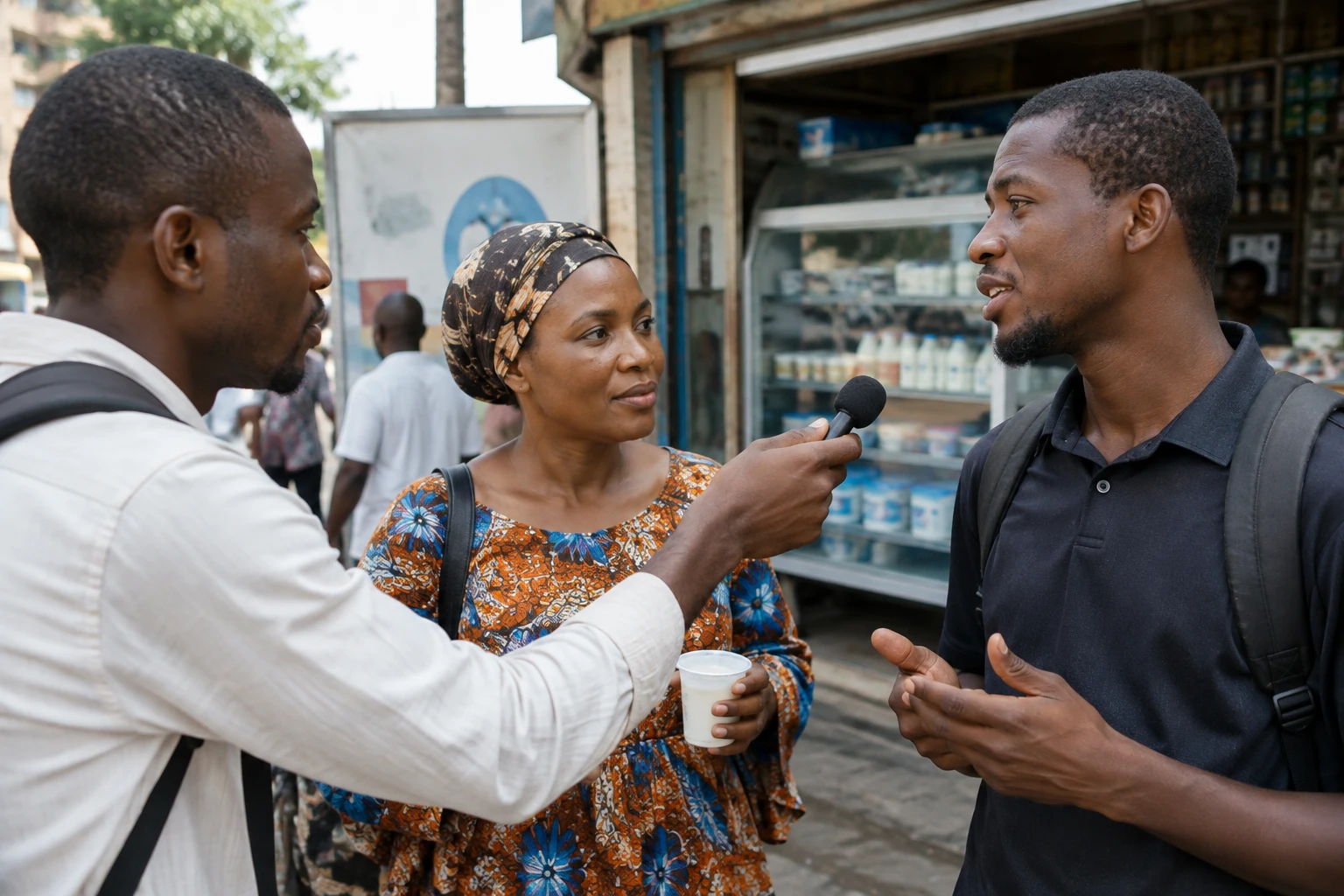
In Coyah, near Conakry, a Guinean company wants to produce more yoghurt. But increasing factory output alone will not be enough to reduce dependence on imports: it will also need to secure milk supplies, control costs and make products affordable for households.
A bigger factory, a market to consolidate
The Société guinéenne de produits alimentaires (SOGUIPAL) plans to increase the capacity of its yoghurt unit from 9 to 15 tonnes a day. The announced increase of about 67% is to be supported by a new industrial production line in Coyah, on the outskirts of the capital.
To finance the expansion, Proparco, a subsidiary of the French Development Agency specialising in private-sector financing, announced a €5 million loan on 28 October 2026. It is part of an investment programme worth €7.2 million. This is intended to cover the factory expansion and part of the working capital, meaning the expenditure needed to keep the business running day to day.
The financing also provides for support on quality, hygiene, safety and the environment. These requirements matter as production increases: they determine product consistency and consumer confidence. The loan amount and capacity targets are set out by Proparco and cited in a publication by the Embassy of Guinea in Senegal.
The central question: who will supply the milk?
Higher processing capacity does not guarantee that the raw material will come from Guinea. For now, the industrial project concerns yoghurt production; organising local sourcing remains a challenge. At the presentation of the financing, France’s ambassador to Guinea, Luc Briard, raised the possibility of connecting SOGUIPAL with fresh-milk producers in Forécariah. This is a prospect, not yet a confirmed supply contract.
This link in the chain is crucial. It requires collecting the milk, keeping it in good conditions and transporting it regularly to the factory. Prices and volumes must also be agreed in a way that enables livestock farmers to earn a living from their production while ensuring the industrial company has raw materials available. Without such arrangements, a new production line could increase demand for imported milk rather than create a sustainable market for Guinean producers.
The issue extends beyond livestock farmers. Urban households, particularly in Conakry, could benefit from a more regular supply if increased production translates into products that are available and affordable. In rural areas, the benefits will depend more on collection capacity, access to equipment and reliable outlets. Small shops, meanwhile, will need a dependable distribution network and products that can withstand transport and storage.
Imports, but figures should be read with caution
The Guinean market is part of a regional context in which imported dairy products play a major role. An estimate attributed to FAO data puts average annual dairy imports at about 9,373 tonnes between 2020 and 2024, with an average bill of $20.66 million. These figures combine several categories, including milk, butter and yoghurt: they therefore do not measure demand for yoghurt alone, nor the share SOGUIPAL might replace.
They nevertheless indicate the economic stakes: local production can keep some added value in the country and reduce exposure to external supplies. This does not mean that all imports can or should disappear. Competitiveness will depend in particular on the cost of inputs, energy, packaging and transport, as well as consumers’ purchasing power.
Linking processing and livestock farming
Guinea is also working to strengthen its livestock sector. In February 2026, the authorities announced a partnership with Brazil’s Rio Verde Group, which plans to introduce more than 2,000 cattle of selected breeds at the livestock support and demonstration centre in Boké. The programme includes artificial insemination, embryo transfer and training. The announcement was reported by Guinée360 and also appears in communications from the Guinean Ministry of Livestock.
This programme and SOGUIPAL’s investment concern different links in the same chain: genetics and animal production on one side, processing and marketing on the other. How they will fit together remains to be seen. The cattle announced for Boké will not automatically supply milk to the factory in Coyah; distances, schedules, milk yields and collection systems will all need to be taken into account.
A test for West African agribusiness
For Guinea, the challenge is to turn industrial financing into measurable local economic links: jobs, purchases from livestock farmers, consistent quality and affordable prices. The announced capacity increase is a production target, not proof that these results have already been achieved. The next concrete steps will be installing the production line, bringing it into operation and confirming supply channels.
Across West Africa, the case illustrates a shared challenge: developing food processing without neglecting primary production or distribution networks. The aim is not simply to replace an imported product with a local one, but to build a value chain connecting farms, collection, factories and markets. For SOGUIPAL, success will depend as much on how that chain is organised as on the additional tonnes produced each day.