
 Algeria
 Egypt
 Libya
 Sudan
 Tunisia
 Benin
 Burkina Faso
 Cabo Verde
 Côte d'Ivoire
 Ghana
 Guinea
 Guinea-Bissau
 Liberia
 Mali
 Mauritania
 Niger
 Nigeria
 Senegal
 Sierra Leone
 The Gambia
 Togo
 Cameroon
 Central African Republic
 Chad
 DR Congo
 Equatorial Guinea
 Gabon
 Republic of the Congo
 São Tomé and Príncipe
 Burundi
 Comoros
 Djibouti
 Eritrea
 Ethiopia
 Kenya
 Madagascar
 Malawi
 Mauritius
 Mozambique
 Rwanda
 Seychelles
 Somalia
 South Sudan
 Tanzania
 Uganda
 Angola
 Botswana
 Eswatini
 Lesotho
 Namibia
 South Africa
 Zambia
 Zimbabwe
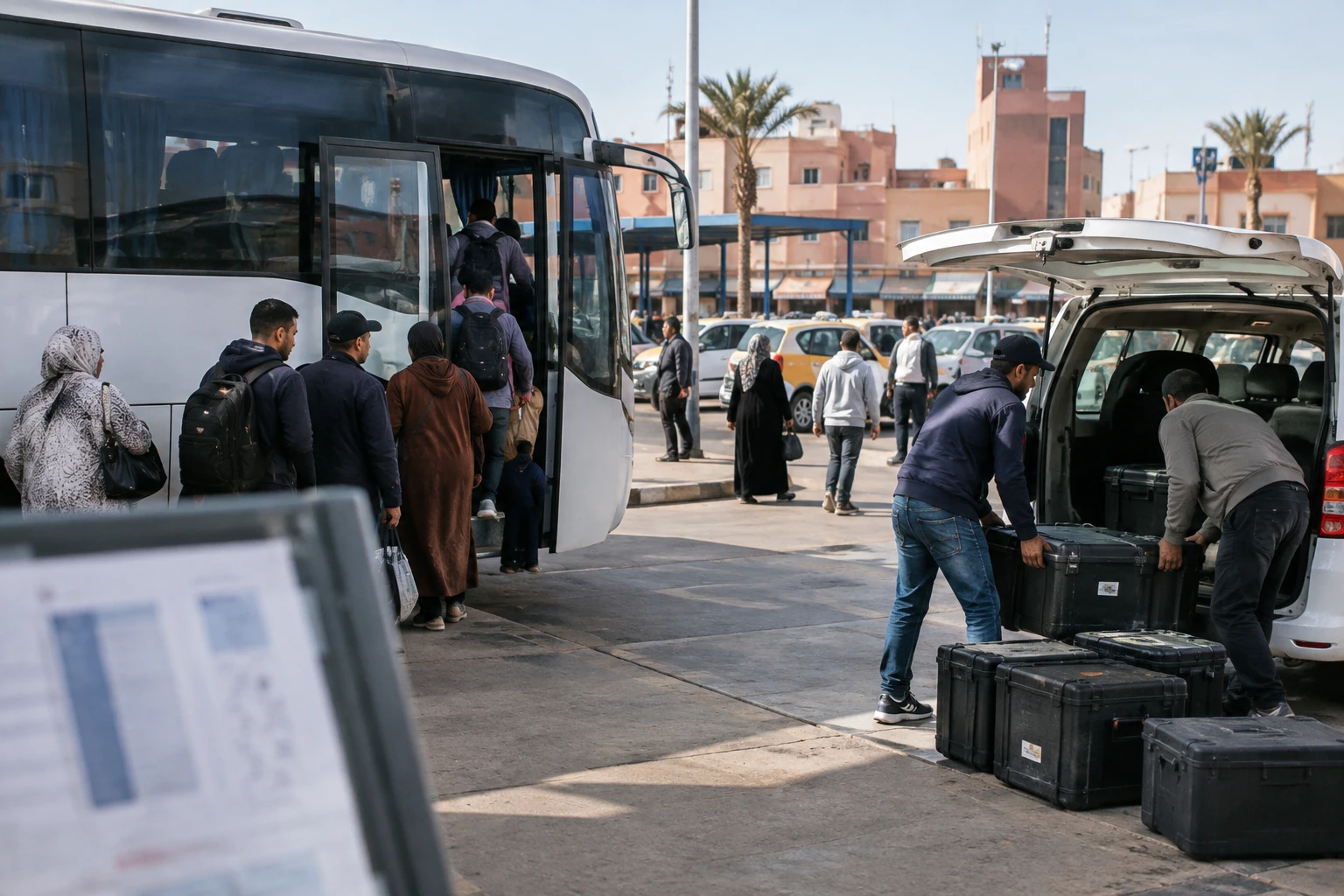
In Western Sahara, the end of MINURSO’s mandate leaves an immediate question: who will now observe the ceasefire and report incidents on the ground? For Morocco, the outcome marks political progress. For Sahrawis who support independence, it does not settle the dispute over the territory’s future.
Mandate expires as two drafts are rejected
The Security Council adopted neither of the two draft resolutions it considered on Friday, 30 October 2026. The US text received 11 votes, but was blocked by Russia’s veto; China, Pakistan and Somalia abstained. A Russian counter-proposal to extend the mission by a year then received three votes in favour, one against — from the United States — and 11 abstentions. It therefore failed to reach the required threshold.
The mandate of the United Nations Mission for the Referendum in Western Sahara, established in 1991, expired on 31 October. On 1 November, the UN announced the start of its liquidation: a reduced team is to oversee the return of equipment loaned by contributing countries and the handling of UN property. The mission is thus entering a withdrawal phase, with no new Council mandate governing what happens next. The UN Secretary-General’s statement on the end of MINURSO nevertheless says the organisation remains ready to support a political settlement.
The US draft proposed extending the mission until 31 October 2027, renaming it and removing the reference to a referendum. It placed Morocco’s autonomy plan at the centre of negotiations. Moscow denounced the approach as unilateral and defended an extension of the mandate without changes. Washington, in turn, voted against the Russian text, which failed for lack of sufficient support. The Security Council meeting record confirms the votes and the mission’s role.
Contested territory, fragile regional balance
Western Sahara, a former Spanish colony, remains on the UN list of Non-Self-Governing Territories. Morocco controls most of the territory and, since 2007, has advocated autonomy under its sovereignty. The Polisario Front calls for independence and the self-determination of the Sahrawi people; Algeria supports the movement. The referendum envisaged under the 1991 ceasefire has never taken place, partly because no agreement has been reached on who would be eligible to vote. Resolution 2797 of 2025 extended the mandate until 31 October 2026 and took Morocco’s plan as the basis for discussions, without ruling out the principle of self-determination.
The decision in New York comes amid a regional rivalry that extends beyond the UN dossier. Morocco and Algeria severed diplomatic relations in 2021. Their divergent positions on Western Sahara also weigh on relations in the Maghreb and the region’s ability to revive cooperation. The Arab Maghreb Union, a regional organisation that includes the two countries, does not currently provide an active mediation framework comparable to the UN process.
Reactions highlight the differing interpretations of the vote. Morocco’s Royal Cabinet presented the failure to renew the mandate as a step towards closing the dossier at the UN. Secretary-General António Guterres, for his part, reiterated that the end of the mandate does not remove the Sahrawi people’s right to self-determination. The Polisario Front criticised a US text which, according to its representative, would have compromised that right. These are the positions of the parties concerned; they do not settle the territory’s status. The African Press Agency, APA, reported Rabat’s reaction, while Algerian agency APS relayed the UN’s reiteration of the right to self-determination.
What the withdrawal changes on the ground
MINURSO’s remit went beyond the prospect of a referendum: its observers also monitored the ceasefire and facilitated exchanges between the parties. Its removal from the operational landscape therefore reduces an independent channel of verification. This does not automatically mean a return to fighting, but it makes monitoring incidents and attributing responsibility more difficult. The UN Secretary-General has expressed concern about the risk of escalation and called on all parties to exercise restraint.
The effects will not be the same for everyone. Moroccan authorities see the outcome of the vote as an opportunity to consolidate their diplomatic approach and autonomy plan. For the territory’s inhabitants, as well as Sahrawi refugees living notably in the Tindouf camps, the practical question remains how they will be represented and what their political future will be. The mission’s military and civilian personnel, meanwhile, are entering a phase of departure and logistical transfer; this operation does not resolve the fundamental disagreements.
What comes next depends on dialogue, not the vote alone
The liquidation of MINURSO amounts neither to international recognition of sovereignty nor to a decision on self-determination. Rather, it marks a break in the monitoring arrangement established in 1991. Morocco, from Rabat, says the political process as conducted at the UN is suspended; the United Nations says it remains available to support dialogue through the Secretary-General’s Personal Envoy, Staffan de Mistura.
At the African level, the issue is also whether multilateral mechanisms can maintain impartial monitoring when the permanent members of the Security Council are opposed. The next steps to watch are the actual withdrawal of teams, any mediation initiatives and the possibility of a new Council agreement. In the meantime, no new mandate replaces the one that has expired, and Western Sahara’s status remains contested.



