
 Algeria
 Egypt
 Libya
 Morocco
 Sudan
 Tunisia
 Benin
 Cabo Verde
 Côte d'Ivoire
 Ghana
 Guinea
 Guinea-Bissau
 Liberia
 Mali
 Mauritania
 Niger
 Nigeria
 Senegal
 Sierra Leone
 The Gambia
 Togo
 Cameroon
 Central African Republic
 Chad
 DR Congo
 Equatorial Guinea
 Gabon
 Republic of the Congo
 São Tomé and Príncipe
 Burundi
 Comoros
 Djibouti
 Eritrea
 Ethiopia
 Kenya
 Madagascar
 Malawi
 Mauritius
 Mozambique
 Rwanda
 Seychelles
 Somalia
 South Sudan
 Tanzania
 Uganda
 Angola
 Botswana
 Eswatini
 Lesotho
 Namibia
 South Africa
 Zambia
 Zimbabwe
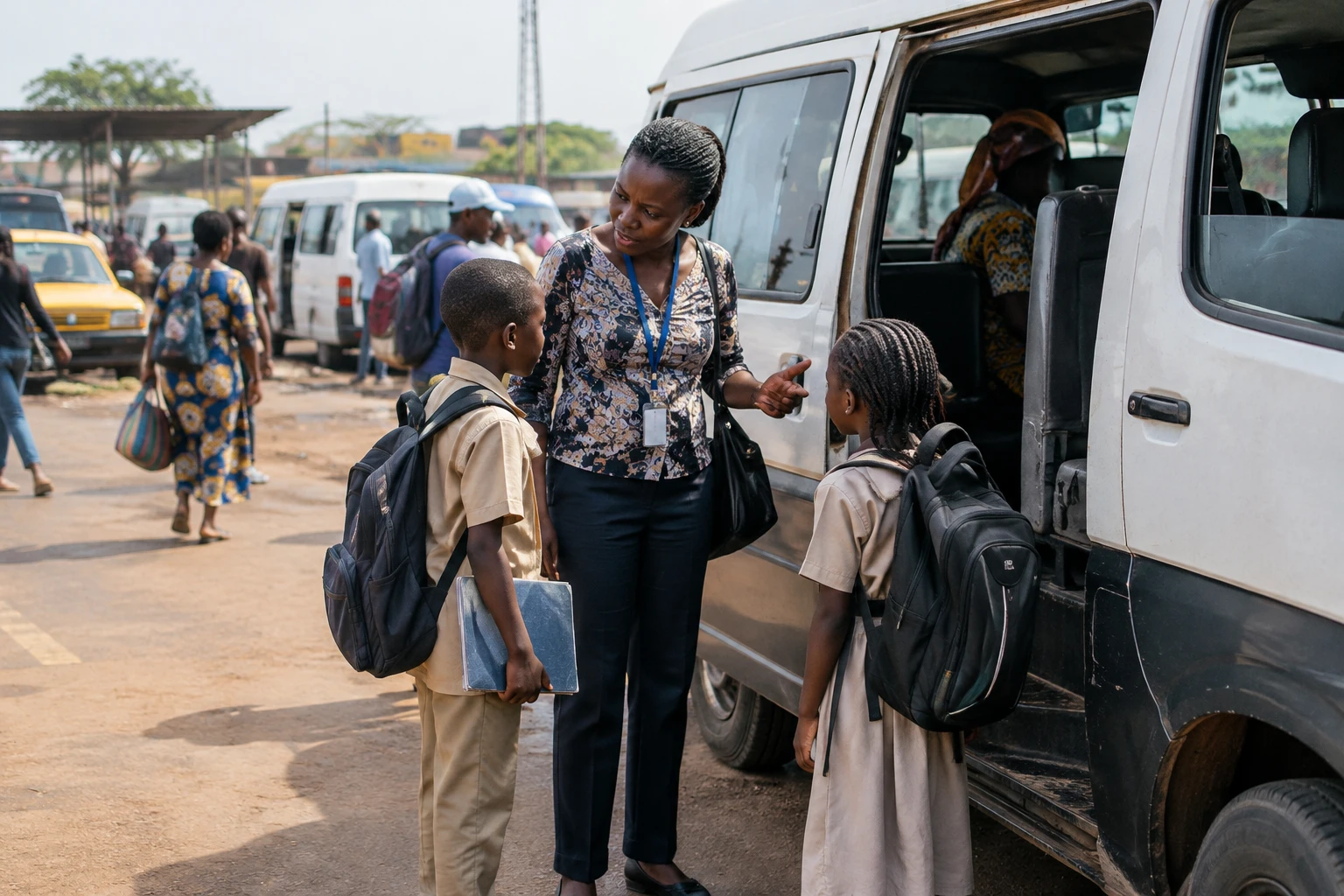
For a child starting school in Burkina Faso, the language used in class can make the difference between recognising words and understanding what they tell us. The bilingual education reform aims to start from this reality while preparing pupils to continue their schooling in French.
A reform built on long-standing experience
Bilingual education is not new in Burkina Faso. Experimental schools opened as early as 1994. Since then, several models have combined national languages and French, with results and resources varying from one school to another. In February 2024, the ministry adopted a harmonised framework to organise this approach in primary schools.
The principle is gradual: pupils begin learning in a national language chosen according to the local context, while French is introduced and then takes on a greater role. In the model set out in Burkinabè education documents, the first year has a strong emphasis on a national language; by the fifth year, French becomes the main language. The aim is not to set the two languages against each other, but to build skills in both.
This approach also addresses a practical question. Mooré, Dioula, Fulfulde, Gulmancema, Lyèlé, Dagara, Bissa and Nouni are among the languages used in bilingual education. The choice depends on the area and the resources available. It does not necessarily mean that every pupil will study in their family language: the guidance reported for the programme favours the majority language of the area.
Burkina Faso’s legal framework recognises French and national languages as languages of instruction. The reform is therefore part of an evolution in the national school system, not the sudden creation of an education system without French. The ministry presents the approach as a way to bring learning closer to pupils’ everyday lives and to give greater value to the country’s languages.
Training teachers and providing resources
Implementation requires much more than changing the language used in the classroom. Teachers must be proficient in the language of instruction, know how to explain school subjects in that language and have suitable textbooks. Short or late training can hardly replace this preparation, especially when postings place teachers in regions where they do not speak the local language.
Some teachers have voiced concerns about their ability to teach in a language they barely understand. In Fada N’Gourma, for example, a teacher posted to the region said she was not proficient in Gulmancema. This difficulty highlights a national challenge: matching postings and locally spoken languages with staff members’ skills.
Parents also need clear information. Some are concerned that they were not given enough notice of the change and are considering reinforcing their children’s French at home. Yet families do not all have the same amount of time, level of French or resources. If schools do not provide the necessary materials, reliance on family support could widen gaps between pupils.
The available results call for the reform to be monitored, rather than its success being taken for granted. A publication by the International Organisation of La Francophonie’s Institute for Education and Training compares the pass rates in the primary school leaving certificate in bilingual schools with national results from 2020 to 2024. For 2024, it reports a rate of 79.03% in the bilingual schools studied, compared with 82.16% nationally. These figures are not enough to establish a causal link: the schools and the conditions for comparison may differ.
Nationwide rollout announced, capacity still to be tested
Figures published since the pilot phase show that the rollout is taking place in stages. In 2025, the Prime Minister’s Office reported that around 750 classes were piloting instruction in national languages from the first year of primary school. In October 2026, the Burkina Information Agency reported a target of 8,743 schools for the 2026–2027 school year, up from 955 during the 2025–2026 pilot phase. The programme is to use 13 national languages, with French as a second language.
These announcements give a sense of the ambition, but also of the logistical challenge. The same AIB dispatch points to needs in training, textbooks and educational supervision. It will be necessary to see whether schools actually receive the promised teachers and materials, particularly outside major centres. Conditions differ between Ouagadougou, regional cities and remote rural areas.
The political and administrative timetable also matters. The military authorities have launched several education reforms, presented as an effort to root schooling more firmly in Burkinabè realities. But the success of bilingual education will depend less on slogans than on practical decisions: teacher preparation, the production of resources in the selected languages, continuity of lessons and dialogue with families.
A debate that extends beyond Burkina Faso
Burkina Faso is not alone in seeking a greater place for African languages in schools. In Senegal, national languages are also being gradually incorporated into primary education. These efforts address a challenge shared by several countries: enabling children to learn in a language they understand while maintaining access to a language of national or international communication.
The regional context has, however, changed. Since 29 January 2025, Burkina Faso, Mali and Niger have no longer been members of ECOWAS, the West African regional integration organisation. This change does not directly affect school curricula, but it makes the exchange of expertise between countries, researchers and African educational institutions all the more important.
The next step will be to check how the announced 2026–2027 rollout is translated into classroom practice. The number of schools taking part will matter, as will teachers’ command of the languages, the availability of textbooks and pupils’ progress in French as well as in their language of learning. Only under these conditions can bilingual education become a lasting capacity of the school system, rather than a reform implemented unevenly.
For further information, see the Burkinabè framework for the nationwide rollout of bilingual education, the comparative data on school results, and the Burkina Information Agency’s update on rollout targets for 2026–2027.



