Algeria
 Egypt
 Libya
 Morocco
 Sudan
 Tunisia
 Benin
 Burkina Faso
 Cabo Verde
 Côte d'Ivoire
 Ghana
 Guinea
 Guinea-Bissau
 Liberia
 Mali
 Mauritania
 Niger
 Nigeria
 Sierra Leone
 The Gambia
 Togo
 Cameroon
 Central African Republic
 Chad
 DR Congo
 Equatorial Guinea
 Gabon
 Republic of the Congo
 São Tomé and Príncipe
 Burundi
 Comoros
 Djibouti
 Eritrea
 Ethiopia
 Kenya
 Madagascar
 Malawi
 Mauritius
 Mozambique
 Rwanda
 Seychelles
 Somalia
 South Sudan
 Tanzania
 Uganda
 Angola
 Botswana
 Eswatini
 Lesotho
 Namibia
 South Africa
 Zambia
 Zimbabwe
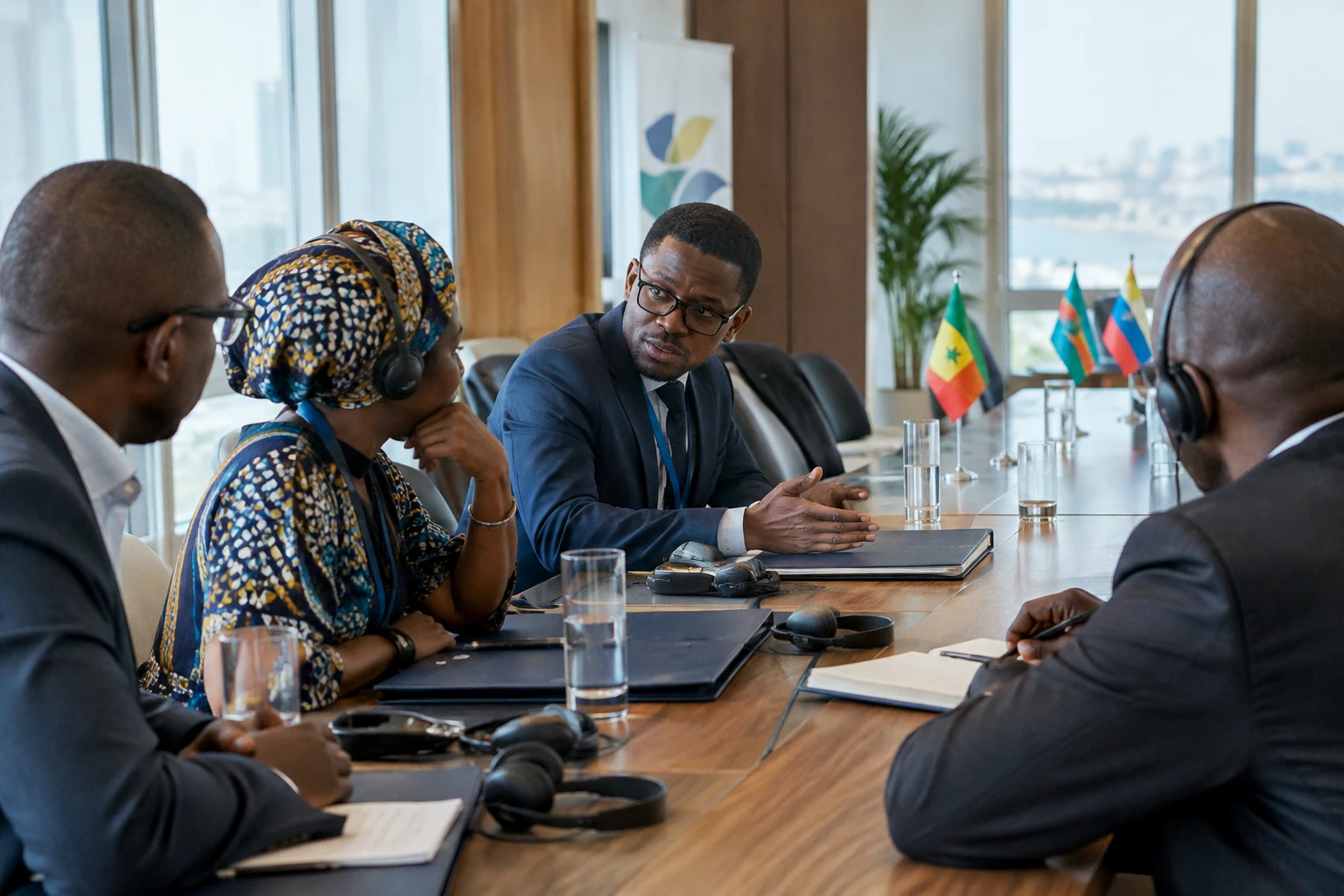
Paying a public bill by phone or receiving assistance without travelling: these steps sum up some of the promises of digital public services. They also raise a practical question for Senegalese people: who will be able to access these services, at what cost and with what safeguards?
This is the context for a two-year memorandum of understanding between Senegal’s Ministry of Telecommunications and Digital Technology and Visa. The announced partnership plans to explore payment services between citizens and the administration, as well as cybersecurity and financial innovation. It does not, in itself, prove that new services have already been rolled out.
A deal put to the test of everyday use
The planned work will focus in particular on two types of payment flows. “Person-to-government” (P2G) payments could, for example, allow certain public fees to be paid digitally. “Government-to-person” (G2P) payments concern the transfer of assistance or other public payments to their beneficiaries.
The agreement also provides for the sharing of expertise in cybersecurity, financial innovation and regulatory matters. According to the information released about the deal, the aim is to identify possible projects with the Senegalese authorities. No rollout timetable, budget or pilot service has been specified in the available information.
Minister Samba Diouf describes the partnership as a way to advance the “New Deal Technologique”, the national digital transformation programme. Aminata Kane, Visa’s head for West and Central Africa, highlights access to digital services and the development of the payments ecosystem. These statements describe the signatories’ objectives; they are not an independent assessment of future results.
For Senegal, the challenge is to turn co-operation between a ministry and an international company into measurable benefits. An online process can reduce travel and simplify some formalities. But it must also work for people who use basic phones, have an unreliable internet connection or still prefer cash.
A transformation already involving several players
The partnership enters a financial landscape that extends beyond banks and international card networks. In Senegal, mobile money wallets, telecoms operators, banks, microfinance institutions and local companies are already involved in digital payments. The question is therefore also how these solutions will coexist and interoperate.
At regional level, Senegal belongs to the West African Economic and Monetary Union (WAEMU), which brings together eight countries that share, among other things, a currency and a central bank, the BCEAO. This matters: the rules governing payment services and electronic money are set within a regional framework. A project designed in Senegal must therefore be compatible with these rules and with shared infrastructure.
In its 2024 financial inclusion dashboard for WAEMU, the BCEAO notes the expansion of financial services across the Union. These indicators provide regional context, but do not, on their own, show whether every Senegalese household can easily access a digital service or afford it.
Statistics published by the National Agency for Statistics and Demography (ANSD) also highlight the growing importance of digital payments and financial services in Senegal’s economy. They show that this trend rests on a range of players, including licensed electronic money issuers. The partnership with Visa is therefore being added to an existing ecosystem; it is not replacing it.
What citizens need to benefit
For users, the value will depend first on simplicity and price. A digital public payment is genuinely accessible only if fees are clear, transactions go through and there is a solution when something goes wrong or a dispute arises. People who live far from bank branches could save time, provided they are not excluded by the cost of a phone, internet access or transactions.
Administrations, for their part, will need to adapt their procedures and secure data. A digital public transfer requires verification mechanisms, protection against fraud and a means of redress if a payment is not received. The cybersecurity mentioned in the agreement is therefore an operational issue, not merely a technical component.
The division of responsibilities also warrants scrutiny. The agreement brings together a public authority and a global private payments company. The information released does not specify how projects will be selected, what data might be shared or how solutions could be opened up to competition. These details will be important in assessing transparency and safeguarding the state’s ability to make its own digital policy choices.
Reaching beyond Dakar
The issue affects Senegalese people in the capital as well as in the regions, but the constraints are not the same. In Dakar, the proximity of services and the quality of internet connections may make some uses easier. In areas with poorer coverage, or in informal activities that rely heavily on cash, digital services will need to complement existing channels rather than suddenly make them unusable.
Across WAEMU, payments between administrations and citizens can help make public services more accessible, provided they comply with shared rules and take account of solutions already in use. For the African Union, the challenge is broader: to turn digitalisation into effective access without widening gaps between regions, incomes and levels of digital literacy.
The next step will therefore matter less as a signature than as implementation: the projects selected, the timetable, costs for users, security safeguards and published results. Until these details are specified, the agreement provides a framework for co-operation, but its practical effects for Senegal’s population remain to be established.