Algeria
 Egypt
 Libya
 Morocco
 Sudan
 Tunisia
 Benin
 Burkina Faso
 Cabo Verde
 Côte d'Ivoire
 Ghana
 Guinea-Bissau
 Liberia
 Mali
 Mauritania
 Niger
 Nigeria
 Senegal
 Sierra Leone
 The Gambia
 Togo
 Cameroon
 Central African Republic
 Chad
 DR Congo
 Equatorial Guinea
 Gabon
 Republic of the Congo
 São Tomé and Príncipe
 Burundi
 Comoros
 Djibouti
 Eritrea
 Ethiopia
 Kenya
 Madagascar
 Malawi
 Mauritius
 Mozambique
 Rwanda
 Seychelles
 Somalia
 South Sudan
 Tanzania
 Uganda
 Angola
 Botswana
 Eswatini
 Lesotho
 Namibia
 South Africa
 Zambia
 Zimbabwe
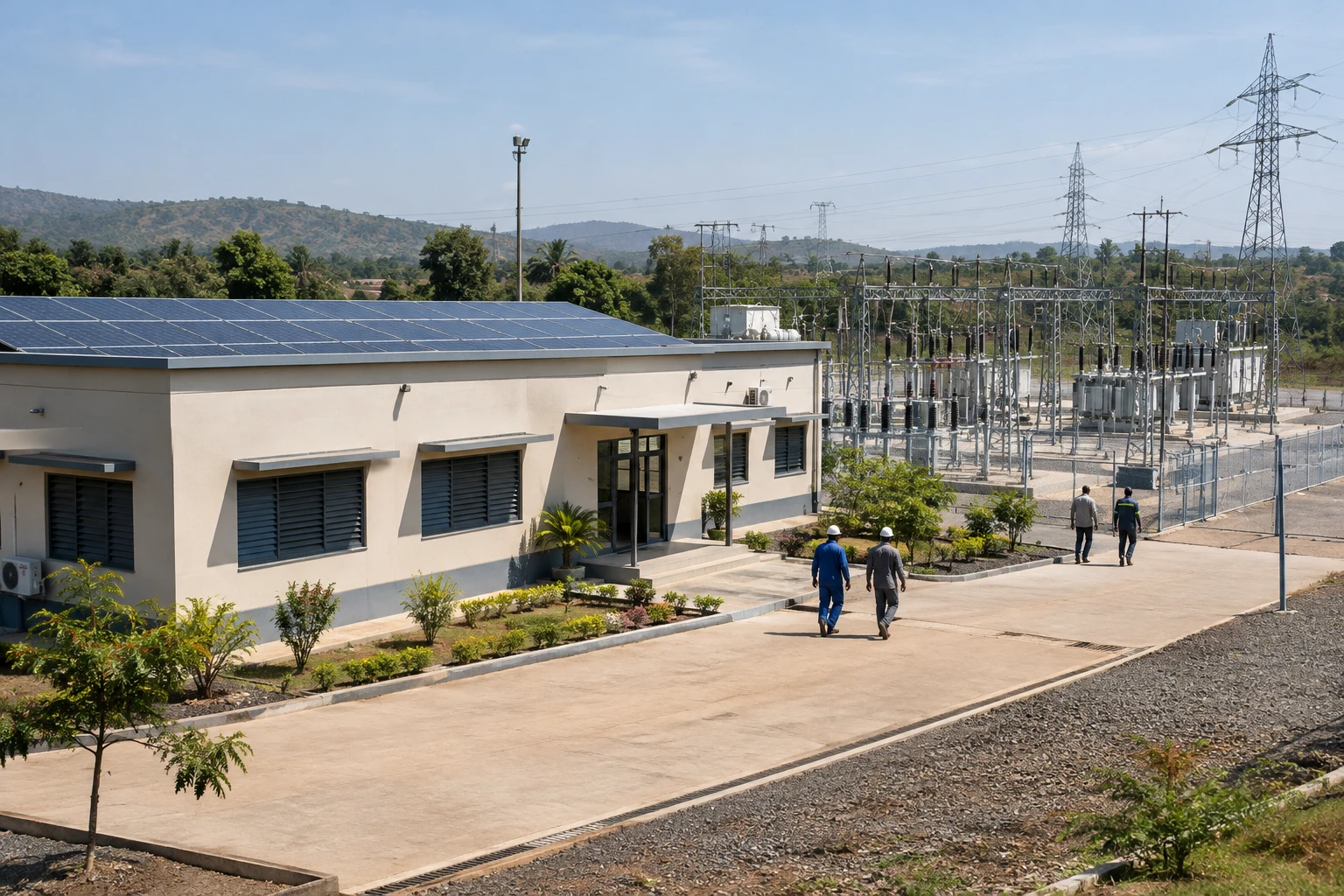
At Khoumagueli, solar power is intended to complement hydroelectricity rather than replace it. For Guinea, the stakes are clear: generate more electricity during sunny hours, preserve water at the nearby dam and make the grid less dependent on rainfall variations. But the project, announced several years ago, has yet to be built.
A long-running project relaunched with a new partner
AXIAN Energy has joined the development of the Khoumagueli solar power plant, near Linsan, in Kindia prefecture. The group is replacing Solvéo Énergies as partner to InfraCo, the development arm of the Private Infrastructure Development Group (PIDG). Benjamin Memmi, chief executive of AXIAN Energy, said the aim was to start work in 2027. This is a stated ambition, not a guaranteed commissioning date.
The capacity cited for the project varies according to the source. AXIAN’s announcement refers to 50 MW, while Guinean concession and power-purchase documents cover a 40 MW plant. InfraCo also describes Khoumagueli as a 40 MW project. This difference needs to be clarified as studies and contractual documents progress; the two figures do not necessarily refer to the same measure of capacity.
The project has already passed through several stages. A 25-year power-purchase agreement with Électricité de Guinée (EDG), the state-owned utility, was announced in 2021. In May 2025, the National Transitional Council authorised ratification of the concession agreement and the power-purchase agreement. The texts were promulgated in July. These legal advances provide a framework for the project, but do not mean construction has begun.
Solar by day, dam water by night
Khoumagueli is to be connected to the national grid and operate alongside the 75 MW Garafiri hydroelectric dam. During the day, the solar plant would feed electricity into the grid. Garafiri could then retain more water in its reservoir and run its turbines when the sun is no longer generating power, particularly at night.
This combination could help cushion periods of low rainfall, which restrict hydroelectric output. However, it will not, by itself, resolve supply difficulties. Transmission and distribution equipment will also have to deliver the power to users, and generation will need to be available when demand requires it.
The social impact will therefore depend on how this power is integrated into the grid and sold to EDG. Households and small businesses in Conakry and secondary cities need a more reliable supply. In rural areas, where access to electricity remains a separate challenge, a plant connected to the national grid does not automatically guarantee local service. The Guinean Agency for Rural Electrification says access to electricity in rural areas remains limited and that its work is part of a long-term electrification plan.
Financing, grid connection and expected benefits
The change of partner comes as AXIAN Energy expands its renewable energy business in West Africa. The company and InfraCo have also developed solar projects in the region, including NEA Kolda in Senegal. Their experience could help structure the financing and construction of Khoumagueli. It does not, however, mean that work in Guinea will necessarily begin as planned.
The next steps to watch are confirmation of the selected capacity, completion of the transfer between partners, mobilisation of financing and preparations for construction. Grid connection and operating arrangements will matter as much as building the panels. Available announcements do not yet specify the project’s total cost, expected jobs or commissioning date.
For the Guinean state, the long-term sales contract provides a framework for purchasing the electricity. For EDG, it creates a new source of generation to integrate and manage. For the population, the benefits will depend on grid reliability and the terms of supply. Electricity generation does not automatically mean lower bills or an end to power cuts.
A Guinean infrastructure project in a regional grid
Khoumagueli is also part of a broader West African ambition: connecting national grids and facilitating electricity trading. The West African Power Pool (WAPP), a specialised institution of ECOWAS, co-ordinates this regional integration. InfraCo believes existing transmission lines could encourage trade with neighbouring countries, but this will depend on transmission capacity, trading rules and the actual availability of electricity.
The project thus illustrates a wider challenge for Guinea: turning its solar and hydropower resources into a reliable electricity supply, without confusing announced capacity with service actually delivered. If work begins in 2027, as AXIAN Energy hopes, attention will then turn to meeting the timetable, final capacity and commissioning. Khoumagueli’s contribution will be measured by these results and their effect on Guinea’s grid.