Algeria
 Egypt
 Libya
 Morocco
 Sudan
 Tunisia
 Benin
 Burkina Faso
 Cabo Verde
 Côte d'Ivoire
 Ghana
 Guinea
 Guinea-Bissau
 Liberia
 Mali
 Mauritania
 Niger
 Nigeria
 Senegal
 Sierra Leone
 The Gambia
 Togo
 Cameroon
 Central African Republic
 Chad
 Equatorial Guinea
 Gabon
 Republic of the Congo
 São Tomé and Príncipe
 Burundi
 Comoros
 Djibouti
 Eritrea
 Ethiopia
 Kenya
 Madagascar
 Malawi
 Mauritius
 Mozambique
 Rwanda
 Seychelles
 Somalia
 South Sudan
 Tanzania
 Uganda
 Angola
 Botswana
 Eswatini
 Lesotho
 Namibia
 South Africa
 Zambia
 Zimbabwe
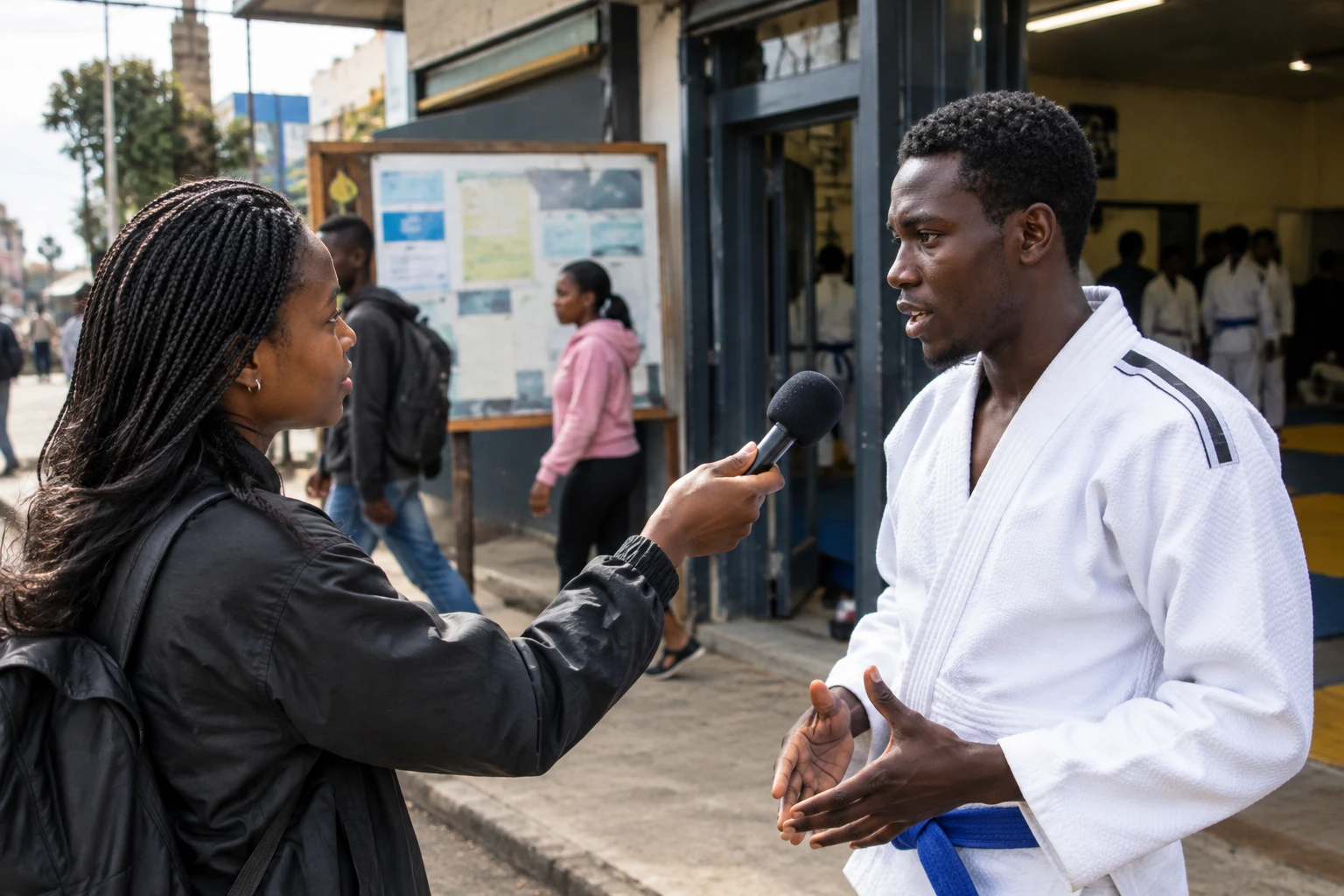
In Nairobi, judo began in a family setting: Arno Yafunga Botay watched his father train before asking him to teach him the holds. At 15, the young Congolese is preparing to take on another role: as a judoka on the Refugee Olympic Team at the Dakar Youth Olympic Games.
From DR Congo to Nairobi, a journey shaped by judo
Arno was six when his family fled the Democratic Republic of the Congo. His father, Arnold, says he was threatened. He recounts that an attack on their home killed one of his children, who was seven months old. These details are based on the family’s testimony and have not been independently corroborated.
The family first lived in Kakuma camp in north-western Kenya, then settled in Nairobi. At seven, Arno began learning judo rules and techniques from his father. Since 2020, he has trained at a dojo in the Kenyan capital.
Arno’s selection in the under-55kg category is part of a team of six young refugee athletes. The International Olympic Committee (IOC) confirms that the delegation will compete in three sports: athletics, judo and taekwondo. It was assembled with the support of the Olympic committees of Kenya and Uganda.
Arno says he was surprised by his selection. He described tears of joy and the particular weight of representing his community. “A refugee is a human being like anyone else,” he says in his testimony.
A landmark event on the continent
The Dakar Games will take place from 31 October to 13 November 2026. Senegal will thus host the first Olympic event held on African soil. Dakar, Diamniadio and Saly are set to host the competitions and activities linked to the Games.
Dakar 2026 will also mark a first for the Youth Olympic Games: a Refugee Olympic Team will take part. The IOC describes the participation as a continuation of the team created for the Rio Games in 2016. In Paris in 2024, boxer Cindy Ngamba, born in Cameroon, won bronze, the team’s first-ever medal.
The significance of this first goes beyond symbolism. The presence of refugee athletes in a competition held in Africa makes visible journeys often told only through displacement and hardship. It also confronts sports institutions with a practical question: how can these young people be enabled to train and progress beyond a major event?
The obstacles do not end with selection
Arno speaks of material difficulties: buying a judogi, travelling to local competitions and covering school-related expenses. He says his family has limited means and that documents are needed to live in Kenya. These remarks describe their particular situation and do not establish that they are representative of all refugee families in the country.
The United Nations High Commissioner for Refugees says refugee children can access education in Kenya. For families living in urban areas, attending public primary and secondary day schools is free, but additional fees and contributions may be requested. The right of access therefore does not eliminate all the costs weighing on a household.
In this context, sports support can open a path, but it cannot replace accessible documentation, continuity in education or regular means to train. The IOC has announced a community programme and an athlete support pathway to assist the delegation. It remains to be seen whether these schemes can deliver lasting benefits in clubs and host communities.
At the Nairobi dojo, Arno’s father continues to train him. His brother Christian, who is 17 according to the family’s account, sometimes acts as his sparring partner. The club owner believes the selection has prompted greater interest in judo among parents. It is a local, still modest, but tangible effect: individual success can draw new young people to a discipline that also teaches self-control and respect.
After Dakar, continuity will be the challenge
Arno has said he wants to visit judokas in Kakuma and pass on what he has learnt. He hopes to win a gold medal, but that remains his ambition: no result can be presumed before the events. His plans already highlight another challenge: sharing experience between urban clubs and young athletes in the camps.
For the DRC, his journey is a reminder of the ties linking displaced populations with neighbouring societies, in this case Kenya, without erasing his Congolese identity. For Senegal, hosting the Games takes the continent into a new chapter of Olympic history. And for African and international sports bodies, the test will not be limited to the ceremony: it will also concern access to sport, training and support after November 2026.
Arno cannot, by himself, represent all refugees. But his journey gives a face to a new team and poses a specific question: what will remain of this visibility once the tatami mats have been put away?