Algeria
 Egypt
 Libya
 Morocco
 Sudan
 Tunisia
 Benin
 Burkina Faso
 Cabo Verde
 Côte d'Ivoire
 Ghana
 Guinea
 Guinea-Bissau
 Liberia
 Mali
 Mauritania
 Niger
 Nigeria
 Sierra Leone
 The Gambia
 Togo
 Cameroon
 Central African Republic
 Chad
 DR Congo
 Equatorial Guinea
 Gabon
 Republic of the Congo
 São Tomé and Príncipe
 Burundi
 Comoros
 Djibouti
 Eritrea
 Ethiopia
 Kenya
 Madagascar
 Malawi
 Mauritius
 Mozambique
 Rwanda
 Seychelles
 Somalia
 South Sudan
 Tanzania
 Uganda
 Angola
 Botswana
 Eswatini
 Lesotho
 Namibia
 South Africa
 Zambia
 Zimbabwe
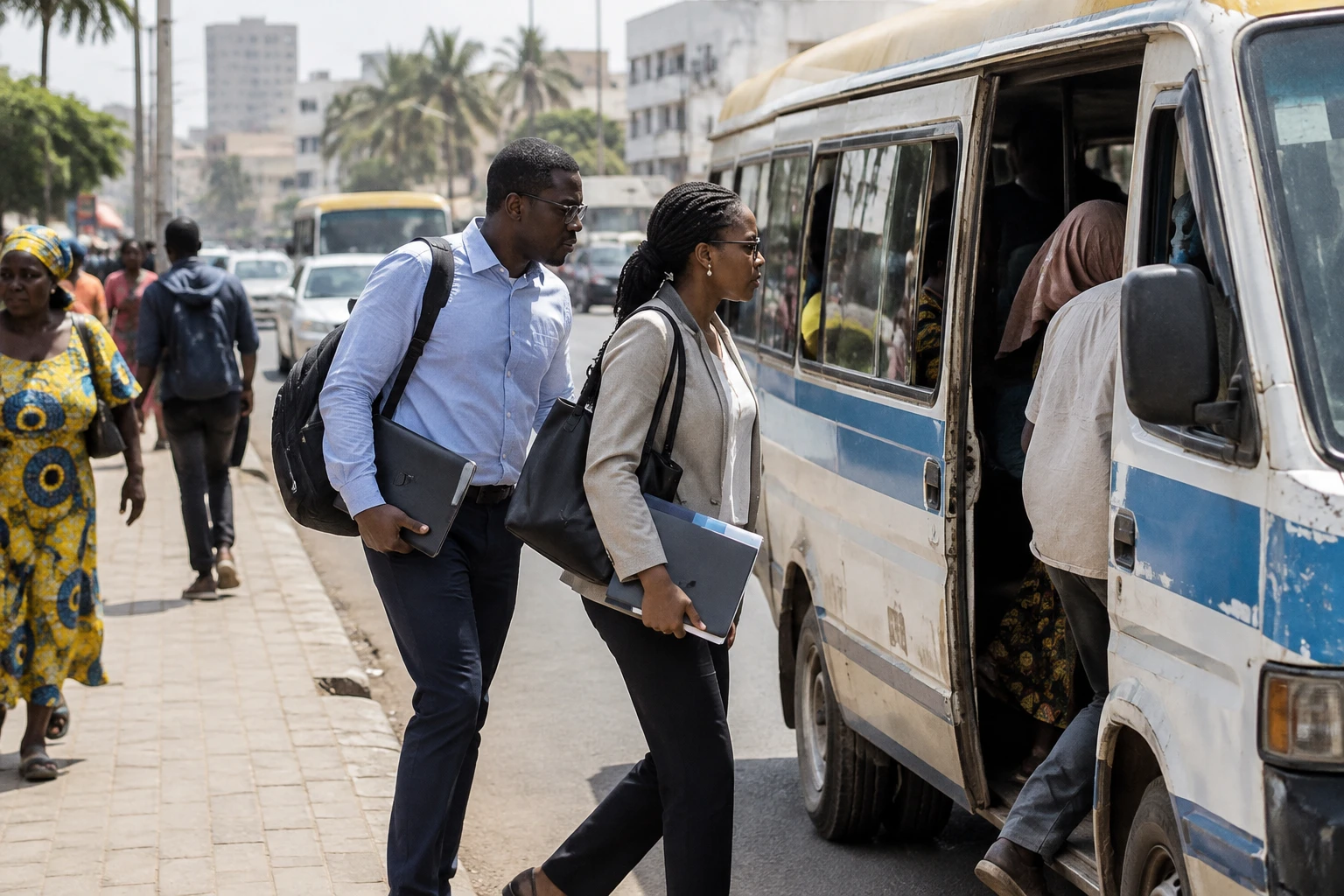
Distributing tablets or opening classrooms is not enough to improve schools. It is also necessary to know whether the equipment is being used, where needs remain most pressing and what progress pupils are making. This is the purpose of the management dialogue renewed in Senegal between the central administration and teams in the field.
Linking decisions to the realities of schools
Senegal’s education system is managed at several levels. In Dakar, the ministry sets national policy. In the regions and departments, academy inspectorates (IA) and education and training inspectorates (IEF) monitor its implementation in schools.
This division of responsibilities makes the flow of information crucial. Data gathered locally must reach central services, then inform decisions and resource allocation. ECOWAS, the organisation bringing together West African countries, provides Senegal’s regional framework, but the day-to-day management of schools is primarily the responsibility of national institutions.
Monitoring is not just a matter of spreadsheets. It can determine whether a school receives suitable equipment, whether teachers are supported and whether learning difficulties are identified in time. Circumstances also vary between areas: the needs of a Dakar secondary school are not necessarily the same as those of a school far from major centres.
Management dialogue gets under way again
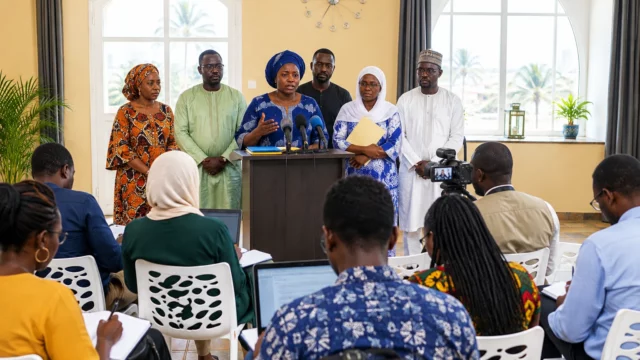
Education Minister Moustapha Mamba Guirassy chaired the opening on Monday 26 October 2026 of a three-day workshop devoted to management dialogue in lower and general upper secondary education. The meeting brings together the Directorate of General Lower and Upper Secondary Education, the IA and the IEF. A Senegalese media outlet also reported the opening of the proceedings on the same date.
Discussions focus on coordination between central and devolved services, the use of school data and the monitoring of results. Pedagogical support and science and technology teaching are also on the agenda, alongside the transformation of science and technology blocks.
The initiative has been revived after several years of interruption, according to information provided about the workshop. It aims to restore a framework in which services can compare their findings and monitor decisions. The real test will be less the meeting itself than the regularity of exchanges and the translation of recommendations into concrete changes in schools.
Equipment delivered, use still to be verified
Senegal has invested in digital technology for schools. In April 2025, ceremonies in Ziguinchor and Kédougou accompanied the handover of 1,488 tablets, as well as computers and other equipment, with support from the Japan International Cooperation Agency. The ministry says the equipment is intended, in particular, to facilitate the collection of school statistics and the management of schools.
The EDUSAT and PLANETE platforms are intended to contribute to this work. The first is used to collect statistical data, while the second is dedicated to school management and monitoring pupils and teachers. An announcement that equipment has been provided does not, on its own, establish whether the devices are available, maintained and used regularly.
In October 2025, an interministerial council had also called for 5,000 laptops to be handed to S1 and S3 pupils, with their use to be supervised. It called for the completion of a national fund for the construction, equipment and maintenance of schools. Management dialogue can therefore help verify how these commitments are being delivered and where obstacles remain.
Spending funds does not measure learning
The Court of Audit examined the ministry’s programmes for 2019 and 2020. Its audit highlights shortcomings in the performance framework and the quality of annual reports. It notes, in particular, that efficiency indicators were inadequate and that the data needed for monitoring were not always available.
A high budget execution rate indicates that funds have been spent. It does not prove that equipment has improved teaching or that pupils have learnt more. Establishing this link requires data tracked over time, relevant indicators and regular reporting from schools.
A diagnostic study by UNESCO’s International Institute for Educational Planning on Senegal also points to weaknesses in management and monitoring practices. It highlights, in particular, difficulties relating to reports from inspectorates. Dialogue between the administration and those in the field therefore addresses a documented governance problem, but its resumption does not yet guarantee that the problem will be resolved.
Rising indicators, incomplete educational journeys
In the 2023-2024 school year, the gross enrolment ratio reached 46.9% at lower secondary level and 29.8% at general upper secondary level. Completion rates stood at 35.3% at lower secondary and 23.9% at upper secondary, according to data cited in documents available on the education system.
These figures describe access to and completion of education cycles. They do not directly measure learning outcomes, nor do they explain why some pupils discontinue their education. Interpreting them therefore requires other information: teacher attendance, learning conditions, pupils’ results and disparities between areas.
The monitoring expected from management dialogue concerns different groups of stakeholders. For officials, the aim is to allocate resources more effectively and evaluate programmes. For education teams, the challenge is to have appropriate support and resources. For families and pupils, the effects will need to be reflected in the continuity of teaching and the opportunity to complete each cycle.
Implementation will be the next step
Across West Africa, countries face comparable management challenges: adapting resources to large and diverse school populations while having sufficiently reliable data to assess progress. The Senegalese case shows that investment in equipment and administrative monitoring must go hand in hand.
What happens next will depend on how often the ministry, inspectorates and schools exchange information, as well as on the publication of clear and complete indicators. In particular, it will be necessary to establish whether digital tools genuinely support data collection and whether findings from the field influence budgetary and pedagogical decisions. Only then can dialogue move beyond the workshop.