Algeria
 Libya
 Morocco
 Sudan
 Tunisia
 Benin
 Burkina Faso
 Cabo Verde
 Côte d'Ivoire
 Ghana
 Guinea
 Guinea-Bissau
 Liberia
 Mali
 Mauritania
 Niger
 Nigeria
 Senegal
 Sierra Leone
 The Gambia
 Togo
 Cameroon
 Central African Republic
 Chad
 DR Congo
 Equatorial Guinea
 Gabon
 Republic of the Congo
 São Tomé and Príncipe
 Burundi
 Comoros
 Djibouti
 Eritrea
 Ethiopia
 Kenya
 Madagascar
 Malawi
 Mauritius
 Mozambique
 Rwanda
 Seychelles
 Somalia
 South Sudan
 Tanzania
 Uganda
 Angola
 Botswana
 Eswatini
 Lesotho
 Namibia
 South Africa
 Zambia
 Zimbabwe
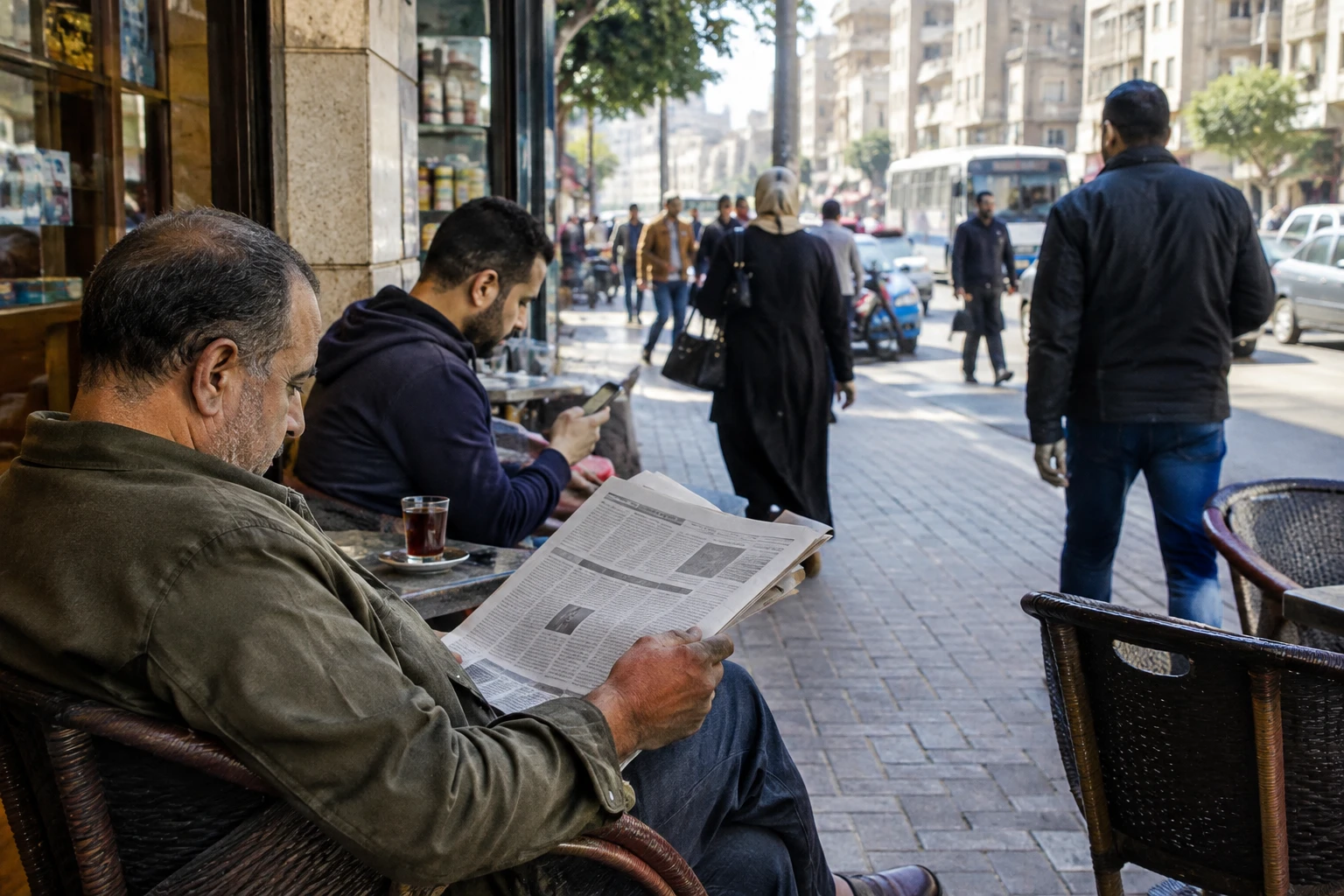
A fine of three million Egyptian pounds was enough to secure Lina Attalah’s release from detention. But for the newsroom she leads, the New Cairo court’s decision goes further: it also orders the closure of Mada Masr, one of the independent media outlets still operating in Egypt. The payment secured the journalist’s release, not an end to the legal battle.
A licensing case with wider consequences
The ruling was handed down on Tuesday, 27 October 2026, after a single hearing. The court found Lina Attalah guilty of running a website without a licence and imposed a fine of three million Egyptian pounds, or about €48,000. It also ordered the site’s closure. These details were reported by Mada Masr and corroborated by the independent Egyptian outlet Al Manassa, as well as by Human Rights Watch.
Security agents took the journalist out of the courtroom, according to Mada Masr. Her lawyer, Hassan al-Azhari, said she had been released that evening after the fine was paid. The newsroom said Lina Attalah had remained in detention for several hours. The closure order raises a separate question: how will it be enforced, given that the site has already been inaccessible in Egypt since 2017, according to the Associated Press?
During the release formalities, the defence also discovered a conviction in absentia handed down in 2024. It provides for a one-year prison sentence for publishing “false information” and running a website without a licence. The lawyer said he would appeal, with a hearing scheduled for 11 November 2026. That date relates to this separate case; it does not, by itself, suspend the effects of the 27 October ruling.
Regulatory framework at the heart of the dispute
The case officially concerns authorisation to operate a news website. Mada Masr says it has applied for a licence several times since 2018. The outlet says Egypt’s media regulator did not respond to some applications and that the prosecutor’s office notified it of the rejection of another. Its most recent application, filed in 2023 according to the Associated Press, had not received a response at the time of its report.
This administrative dispute is unfolding in an environment where rules governing online publishing have direct consequences for newsroom operations. An investigation by Al Manassa and reporting by the Associated Press confirm that the case against Lina Attalah is part of a series of proceedings targeting the outlet and its journalists. Mada Masr describes it as the sixth case in six years. The law and its procedures must be considered in context, without conflating an allegation brought by the authorities with wrongdoing established beyond the ruling handed down.
The case also follows the arrest in late September of the six members of Matsadaash, an Egyptian fact-checking platform. The journalists face charges including the alleged dissemination of false information and alleged links to the Muslim Brotherhood, an organisation banned in Egypt. Those targeted contest the accusations. The Committee to Protect Journalists has also reported the team’s detention and Lina Attalah’s referral to court. The two cases are not legally identical, but their proximity is fuelling concerns about the space available to independent journalism.
A newsroom under pressure, readers affected
The closure order does not concern only a media executive. It may also limit readers’ access to investigations and analysis produced from within Egypt, as well as the newsroom’s journalists’ ability to work. In the capital, Cairo, judicial and administrative decisions have repercussions for newsrooms and advertisers. Outside major centres, access to information published online also depends on blocks and available technical resources. The ruling alone, however, does not make it possible to measure the scale of these effects.
Press freedom advocates have denounced the sanction as disproportionate. Human Rights Watch has called for the charges to be dropped; the Committee to Protect Journalists has described the case as pressure on independent media. These organisations are taking a position in support of press freedom: their responses are assessments, distinct from the reported judicial facts. According to figures from the Egyptian Initiative for Personal Rights cited by Africanews, 26 journalists were detained in Egypt because of their work. That figure is attributed to the organisation and has not been confirmed here by an independent public tally.
The Egyptian government has not, in the material reviewed, publicly detailed the grounds for the ruling beyond the offence of operating without a licence. To understand what happens next, it will therefore be necessary to follow the appeals, the 11 November deadline in the 2024 case and the practical enforcement of the closure order. It also remains to be seen whether Mada Masr will be able to challenge separately the measures targeting its operations.
A regional issue, without institutional equivalence
Egypt belongs to the African Union and the Arab League. It is also a member of the Arab Maghreb Union, a regional organisation in North Africa, although this body does not have the economic and political integration of blocs such as ECOWAS or SADC. The case is therefore situated in a North African space where legal frameworks, regulatory practices and the leeway granted to media vary from country to country. It does not sum up the situation across the region or the continent.
For the African Union, the case is a reminder of the difficulty of reconciling national media laws with continental commitments to freedom of expression. Its immediate impact, however, will be felt first in Egypt: through the legal appeals, Mada Masr’s ability to continue operating and the safety of journalists covering public affairs. Lina Attalah’s release after payment brings a detention lasting several hours to an end; it resolves neither the earlier conviction nor the future of her outlet.