Algeria
 Egypt
 Libya
 Morocco
 Sudan
 Benin
 Burkina Faso
 Cabo Verde
 Côte d'Ivoire
 Ghana
 Guinea
 Guinea-Bissau
 Liberia
 Mali
 Mauritania
 Niger
 Nigeria
 Senegal
 Sierra Leone
 The Gambia
 Togo
 Cameroon
 Central African Republic
 Chad
 DR Congo
 Equatorial Guinea
 Gabon
 Republic of the Congo
 São Tomé and Príncipe
 Burundi
 Comoros
 Djibouti
 Eritrea
 Ethiopia
 Kenya
 Madagascar
 Malawi
 Mauritius
 Mozambique
 Rwanda
 Seychelles
 Somalia
 South Sudan
 Tanzania
 Uganda
 Angola
 Botswana
 Eswatini
 Lesotho
 Namibia
 South Africa
 Zambia
 Zimbabwe
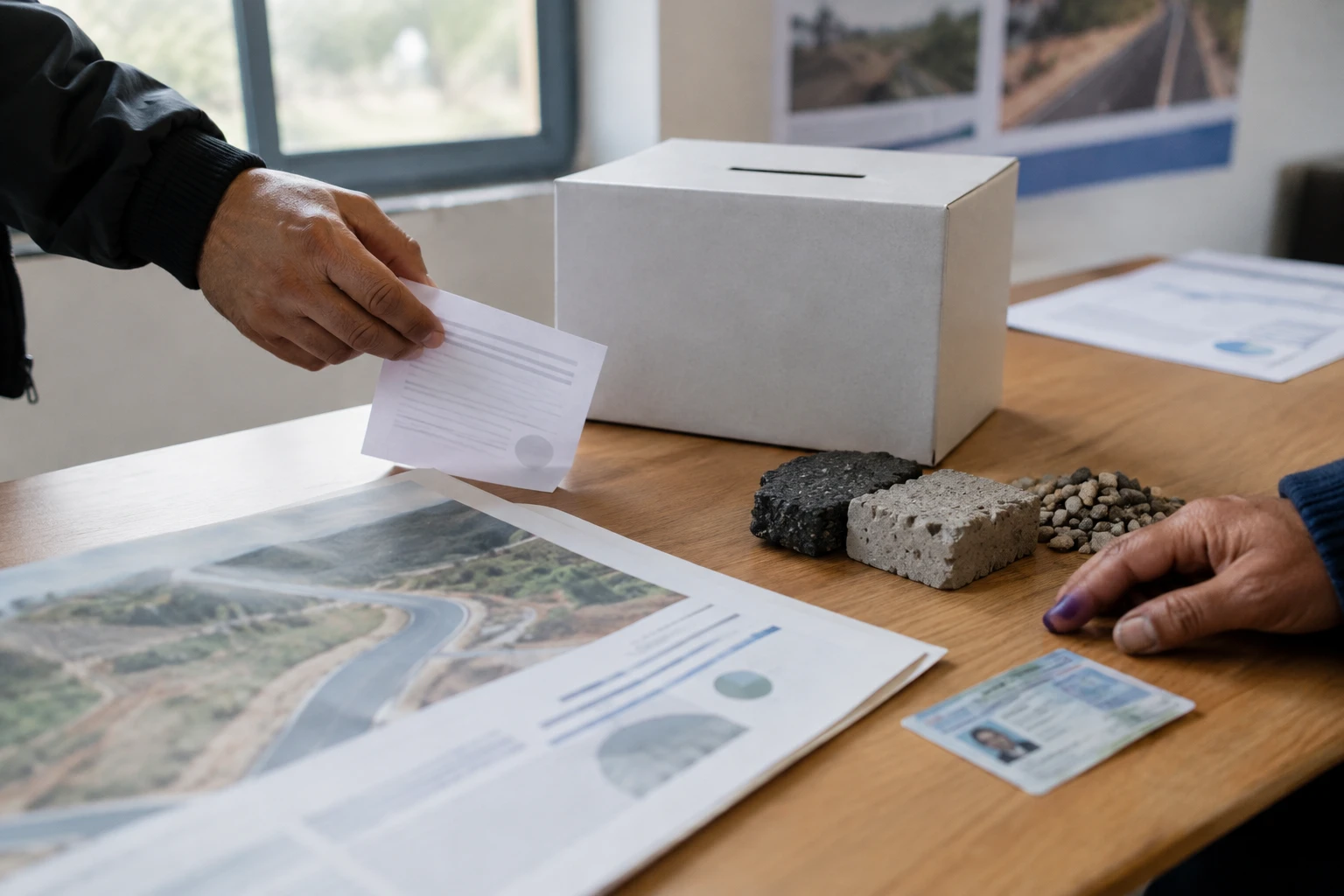
In north-western Tunisia, the distance between a farm and a market is measured in more than kilometres. Road conditions can also affect journey times, transport costs and access to services. Two new financing agreements are intended to address some of these needs, but their impact will depend on the completion of the works and maintenance of the network.
Works linking the north-west and rural roads
On Tuesday 27 October 2026, in Tunis, the Tunisian government and the Arab Fund for Economic and Social Development (AFESD) signed two financing agreements. Their announced total is about 432 million Tunisian dinars, or nearly $144 million according to reported estimates.
The first agreement provides 288 million dinars for the first phase of the link between Boussalem and Fernana, in Jendouba governorate, in the country’s north-west. Information published after the signing describes the project as a motorway. It is part of a route expected to bring the region closer to the Algerian border.
The second financing agreement, worth 144 million dinars, covers 67 rural roads across 21 governorates. Their combined length is given as about 253 kilometres. This is not 67 kilometres in total, but 67 routes whose works would together cover 253 kilometres.
Public radio station RTCI and Tunisian media outlet La Presse reported the main figures and the nature of the two projects. Details about the 67 roads and 21 governorates also appeared in reports published after the signing. The authorities present the works as a way to improve travel in rural areas and support farming.
An issue of balance within Tunisia
The Boussalem-Fernana project concerns an inland region far from the main coastal centres. Better connections can facilitate the transport of people and goods. For producers, a usable road can remove some obstacles between farming areas, services and markets. These benefits, however, remain prospective: they are not guaranteed by the signing of a loan alone.
Rural roads operate on a different scale. Their distribution across 21 governorates is intended to serve several areas, beyond the north-west alone. Better-maintained secondary roads can improve access to villages and farms, particularly where major routes do not adequately serve production areas. Their practical impact will depend on the sections selected, the quality of the works and their monitoring.
The issue of regional disparities is longstanding. In its 2020 evaluation of the road modernisation project, the African Development Bank noted that governorates in the West, Centre-West and North-West had less economic infrastructure than coastal regions. The programme supported at the time by the Bank provided for the rehabilitation of 719 kilometres of roads, mainly in these inland regions.
This finding helps explain the significance of the new agreements, without conflating the projects or their financing. It also shows that improving access is not simply a matter of building major routes. Local roads and their maintenance matter to residents, farmers and small businesses that use them every day.
A Maghreb corridor, but initially local effects
The Boussalem-Fernana link is also presented as part of the trans-Maghreb motorway route, a regional project intended to connect the road networks of several North African countries. The Arab Maghreb Union (AMU), a regional organisation bringing together Tunisia, Algeria, Morocco, Libya and Mauritania, provides the institutional framework associated with this integration ambition.
In theory, better road continuity can facilitate trade between Tunisia and Algeria and strengthen regional connections. But a motorway alone cannot create a functioning trade corridor: neighbouring sections, border procedures and co-ordination between countries also matter. The progress announced in Tunisia therefore says nothing about the timetable or completion of the entire route.
In the short term, the benefits will be felt mainly in the areas served. Rural road users can hope for more reliable journeys, while producers could benefit from better transport conditions. Conversely, the works may cause temporary disruption. Good local communication and attention to the needs of residents will be important during construction.
Financing does not replace maintenance
The agreements are a financial step, not proof that the infrastructure has already been built. To assess their impact, it will be necessary to track tendering, the implementation timetable, final costs and maintenance arrangements. A new or rehabilitated road quickly loses its usefulness if drainage, road surfaces and structures are not maintained.
AFESD financing adds to road programmes already under way with other partners. The African Development Bank, in particular, has described operations targeting roads in inland governorates and links between regions. This continuity underlines a fundamental challenge: connecting less well-served areas without concentrating investment solely on major routes or established economic centres.
For Tunisia, the next measure of progress will therefore not be only the amount committed. It will be necessary to see whether the works are completed, whether the selected roads meet local needs and whether travel costs actually fall. At Maghreb level, the link towards the Algerian border will realise its full potential only if it connects with neighbouring countries’ networks. Until then, its impact will be measured first by everyday access to markets, services and production areas.