Algeria
 Egypt
 Libya
 Morocco
 Sudan
 Tunisia
 Benin
 Burkina Faso
 Cabo Verde
 Côte d'Ivoire
 Ghana
 Guinea
 Guinea-Bissau
 Liberia
 Mali
 Mauritania
 Niger
 Nigeria
 Senegal
 Sierra Leone
 The Gambia
 Togo
 Cameroon
 Central African Republic
 Chad
 DR Congo
 Equatorial Guinea
 Gabon
 Republic of the Congo
 São Tomé and Príncipe
 Burundi
 Comoros
 Djibouti
 Eritrea
 Ethiopia
 Kenya
 Madagascar
 Malawi
 Mauritius
 Mozambique
 Rwanda
 Seychelles
 Somalia
 South Sudan
 Tanzania
 Uganda
 Botswana
 Eswatini
 Lesotho
 Namibia
 South Africa
 Zambia
 Zimbabwe
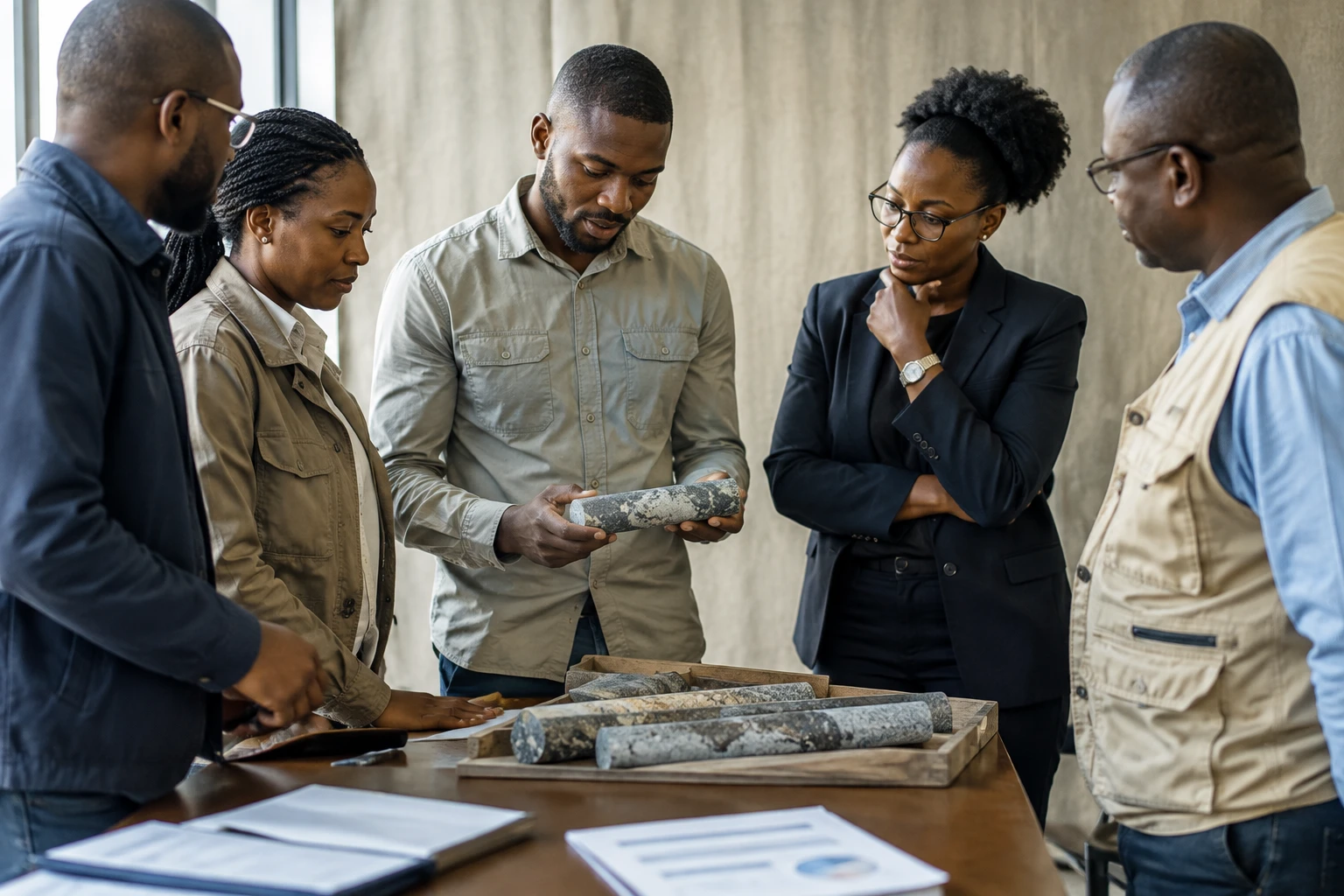
For Angola, the challenge of rare earths is not simply finding deposits. It is turning geological indications into financed mines, and then into activities that also benefit the local economy. Longonjo’s postponement to 2028 makes this distinction very tangible.
A flagship project, but an industry still to be built
Longonjo, in Huambo province, remains the most advanced project. Its operator, Pensana, announced on 26 October 2026 that it was aiming to begin operations in early 2028, followed by full production at the end of that year. The group attributes this timetable to the search for additional financing. It says it is seeking between $75m and $90m for its Angolan subsidiary, Ozango Minerais.
The delay is a reminder that an announced resource is not yet production. Work must be financed, facilities built, ore processing mastered and markets secured. For Longonjo, Pensana has referred to discussions with Japanese and US buyers, but commercial talks alone do not amount to finalised sales contracts.
The issue extends beyond Angola. Rare earths comprise elements used, among other things, in certain permanent magnets, electric motors and electronic equipment. The challenge involves extraction, but also separation and refining — industrial stages that determine access to marketable products. According to the US Geological Survey, China accounted for about 70 per cent of global rare-earth mine production in 2024. This concentration is driving diversification strategies in several countries.
Huambo, an exploration ground beyond Longonjo
New exploration work is broadening Angola’s prospects. At Bailundo, in Huambo province, Connected Minerals announced on 27 October that it had acquired exploration archives containing data from ten historical drill holes, totalling 3,414 metres. The company cited a historical intersection of 227.3 metres at 2 per cent rare-earth oxides.
This is not a discovery resulting from new drilling. The results come from earlier work and must be verified and placed within a more complete geological interpretation. Connected Minerals plans, among other things, to re-examine core and samples that had not been analysed. The company is also studying processes that could enable the metals to be recovered. In other words, the figures point to targets for investigation, not an exploitable reserve or guaranteed future production.
At Coola, Tyranna Resources announced in October that historical soil samples had returned results of up to 13.18 per cent total rare-earth oxides. At Sulima West, spot samples from old trenches reached 10.56 per cent, according to the company. These local grades do not necessarily describe an entire deposit. They will need to be confirmed by further analysis and drilling. Tyranna says it is targeting drilling in 2027 and is seeking to acquire up to 70 per cent of the project, subject to the terms of its agreement.
The announcements are therefore promising, but they come mainly from companies that own or are seeking to develop the projects. Caution requires distinguishing between historical data, spot samples, mineral resources assessed under recognised standards and economically recoverable reserves. These stages are not interchangeable.
From mining strategy to local benefits
Diversification forms part of Luanda’s strategy to broaden an economy in which oil and diamonds play a major role. Angola’s 2023-2027 mining sector development plan encourages exploration and provides for the development of resources that remain largely untapped. The government has cited rare earths among the minerals that could strengthen the sector.
For communities around Huambo, the impact of a mining project will depend on very practical decisions: jobs accessible to local residents, procurement from Angolan companies, water and soil management, infrastructure and local taxation. Investment announcements do not yet show what benefits will actually be generated, or how they will be distributed among local areas, the state and operators.
The industrial question is just as important. If ore is mined in Angola but processed elsewhere, some of the added value and expertise will remain outside the country. Conversely, developing processing capacity requires investment, energy, infrastructure and specialised skills. The choices made today will therefore determine whether Angola mainly exports a raw material or takes part in more stages of the value chain.
Regional scope, milestones to watch
As a member of the SADC, the Southern African Development Community, Angola can frame its ambitions within a regional discussion about mining value chains. SADC identifies mineral processing as a route to industrialisation. This does not guarantee that a shared industry will emerge, but it raises a strategic question: what equipment, expertise and markets could be shared across the region?
For now, the next milestones are national and specific to each project. Longonjo must secure its financing and meet its revised timetable. At Bailundo, the archives will need to be verified and the samples still available analysed. At Coola and Sulima West, fieldwork will have to establish the extent of the indications and their potential. These steps, rather than the grades announced alone, will show whether Angola can become a reliable supplier.
The country is attracting growing investor interest and has several projects at the exploration stage. But access to international markets will also depend on Luanda’s ability to negotiate partnerships that serve its development priorities. In a sector where major buyers are seeking to diversify their supplies, Angola’s room for manoeuvre will depend as much on contracts and local processing as on geology.