Algeria
 Egypt
 Libya
 Morocco
 Sudan
 Tunisia
 Benin
 Burkina Faso
 Cabo Verde
 Côte d'Ivoire
 Ghana
 Guinea
 Guinea-Bissau
 Liberia
 Mali
 Mauritania
 Niger
 Nigeria
 Senegal
 Sierra Leone
 The Gambia
 Togo
 Central African Republic
 Chad
 DR Congo
 Equatorial Guinea
 Gabon
 Republic of the Congo
 São Tomé and Príncipe
 Burundi
 Comoros
 Djibouti
 Eritrea
 Ethiopia
 Kenya
 Madagascar
 Malawi
 Mauritius
 Mozambique
 Rwanda
 Seychelles
 Somalia
 South Sudan
 Tanzania
 Uganda
 Angola
 Botswana
 Eswatini
 Lesotho
 Namibia
 South Africa
 Zambia
 Zimbabwe
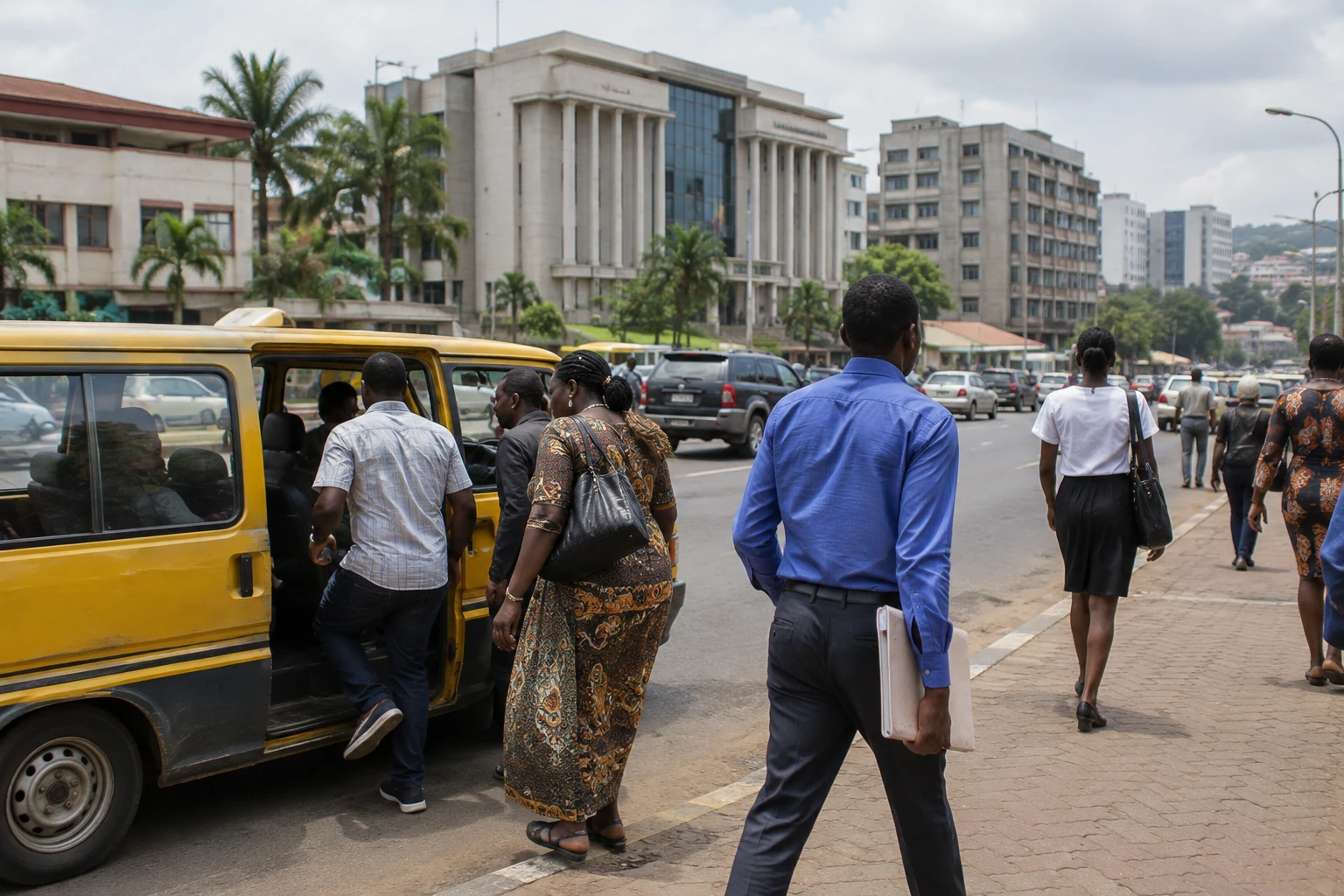
In a case in which several people are on trial and responsibility remains to be established, the credibility of the initial investigations is now at the heart of proceedings. At Yaoundé military court, testimony from a former member of the investigation commission raises a decisive question: do the evidence gathered at the outset of the case make it possible to distinguish facts from assumptions?
A trial followed beyond the capital
Martinez Zogo, a presenter at private radio station Amplitude FM, was abducted in Yaoundé on 17 January 2023. His body was found five days later on the outskirts of the capital. The case quickly went beyond a crime targeting a journalist: the investigation involved members of the intelligence services and well-known figures, while the circumstances and presumed responsibilities remain disputed.
The case is being heard by Yaoundé military court. In March 2024, Cameroon’s Ministry of Justice said that several suspects had been charged and remanded in custody as part of the judicial investigation. These charges do not amount to convictions: the court must still examine the evidence and hear the parties. The report by Cameroon’s Ministry of Justice thus places the case within proceedings that are still under way.
The trial also touches on a key issue for public life in Cameroon: the ability of institutions to establish the facts when a case implicates powerful actors. For the victim’s relatives, lawyers and citizens following the hearings, the transparency of the investigation matters as much as its judicial outcome.
An investigator challenges the commission’s work
On Monday 26 October, the court began hearing Lieutenant-Colonel Parfait Armand Ayissi Nanga, a former member of the joint investigation commission. The hearing continued on Tuesday 27 October. Cameroon’s state-run daily Cameroon Tribune describes him as the 36th prosecution witness. His testimony should be understood as evidence given before the court, not as a judicial finding.
Ayissi Nanga called the initial investigation a “charade”. He says his disagreements with the methods used led to persecution which, he claims, is continuing. He accused Colonel Jean-Pierre Otoulou, who led the preliminary investigation, and Lieutenant-Colonel Dieudonné Bialo of naming killers and those who commissioned the crime without sufficient evidence. These accusations remain to be tested in an adversarial process.
The officer also challenges the handling of some material investigations. According to reports of the hearings, he argued that important evidence had allegedly been concealed or destroyed and that some people had been excluded from the investigation. He put forward another account of the victim’s movements: a group separate from the commando had brought Martinez Zogo back to Yaoundé before leaving his body where it was found. The fact that this version was presented in court does not in itself establish it.
Ayissi Nanga also named Martin Savom as the man who allegedly killed the journalist. Savom’s defence rejects the accusation. His lawyer, Clément Ananga, argued that no evidence presented at the hearing gave a concrete account of how his client had killed the victim. This challenge underscores a central principle of criminal proceedings: an accusation, even one made by a witness, must be tested against the evidence and the defence’s arguments.
The parties’ accounts remain to be weighed
The officer’s statements also prompted reactions from other lawyers. Charles Tchoungang, counsel for Jean-Pierre Amougou Belinga, said the investigation had been diverted and that evidence, including a telephone and the crime scene, had allegedly been compromised. These are claims made by a defence lawyer, not facts established by the court at this stage.
By contrast, representatives of the civil parties described some of the leads put forward as conjectural and challenged their strength. The disagreement is therefore as much about the reliability of the initial procedure as it is about the identity of those responsible: how were the scenes documented, what traces were examined, and how do the testimonies align with the physical evidence? The answers must come from the proceedings and the court’s reasoned decisions.
This caution is all the more important because concerns about unanswered questions in the case existed before these hearings. In January 2024, Reporters Without Borders flagged unresolved questions about the circumstances of the death and the conduct of the investigation. Its investigation into the unanswered questions in the case offers an outside perspective, distinct from the conclusions the courts must reach.
The next hearings will be decisive
For Cameroonians, the stakes go beyond the people facing charges. How the court assesses the testimony and evidence will weigh on public trust in the justice system, as well as on the protection of journalists and witnesses. The proceedings may also shed light on relations between investigators, intelligence services and public officials, without prejudging individual guilt.
At regional level, the case is being watched in a region where Cameroon is a member of the Economic and Monetary Community of Central Africa (CEMAC), which brings together six states. CEMAC is not involved in this trial. But the handling of a case linked to press freedom and institutional accountability feeds into broader discussions about the rule of law in Central Africa. CEMAC’s official overview recalls the regional framework to which Cameroon belongs.
The immediate next step is for the testimony to continue and for the other parties to examine it. It remains to be seen whether the allegations of irregularities are supported by verifiable evidence, and how the theories about Martin Savom’s role will be tested against the evidence. Until then, none of the accounts put forward in court should be confused with the verdict.