
 Algeria
 Egypt
 Libya
 Morocco
 Sudan
 Tunisia
 Benin
 Burkina Faso
 Cabo Verde
 Côte d'Ivoire
 Ghana
 Guinea
 Guinea-Bissau
 Liberia
 Mali
 Mauritania
 Niger
 Nigeria
 Senegal
 Sierra Leone
 The Gambia
 Togo
 Cameroon
 Central African Republic
 Chad
 Equatorial Guinea
 Gabon
 Republic of the Congo
 São Tomé and Príncipe
 Burundi
 Comoros
 Djibouti
 Eritrea
 Ethiopia
 Kenya
 Madagascar
 Malawi
 Mauritius
 Mozambique
 Rwanda
 Seychelles
 Somalia
 South Sudan
 Tanzania
 Uganda
 Angola
 Botswana
 Eswatini
 Lesotho
 Namibia
 South Africa
 Zambia
 Zimbabwe
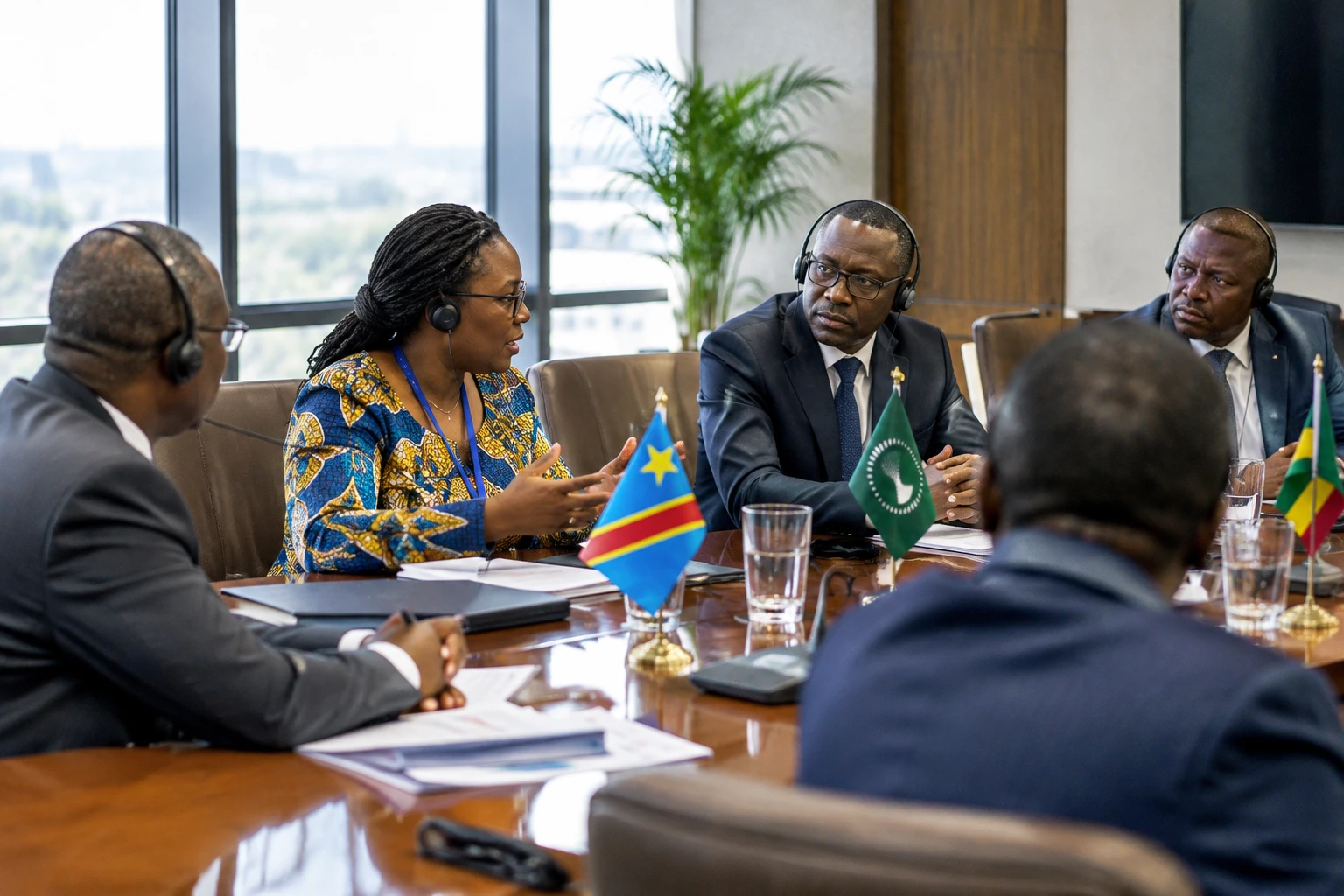
In the Democratic Republic of the Congo, national dialogue faces two difficult questions: who should take part, and which rules cannot be negotiated? In Rome, five opposition figures sought to establish common ground, rejecting both an extension of power outside the constitutional framework and the seizure of power by force.
Building dialogue before setting a date
The Article 64 Coalition (C64) brings together Martin Fayulu, Moïse Katumbi, Jean-Marc Kabund, Delly Sesanga and Augustin Matata Ponyo. At the end of their meeting in Rome, held from 25 to 27 October 2026, the five leaders said they wanted to meet President Félix Tshisekedi and his predecessor Joseph Kabila separately. They wish to discuss the conditions for an inclusive national dialogue. No timetable was announced, and the coalition did not say whether the two men had agreed to the meetings. Actualite.cd also reported this proposal.
The initiative comes as the Congolese presidency is already consulting religious figures on a proposed dialogue. The National Episcopal Conference of the Congo (CENCO), which represents the Catholic Church, and the Church of Christ in Congo (ECC), the main Protestant organisation, have been involved in preparatory discussions. The C64 nevertheless insists that participants must also agree on the purpose, composition, facilitation and follow-up of the conclusions. In other words, the debate is as much about the rules of the meeting as it is about the issues to be discussed.
The same demand directed at the government and armed groups
The Rome declaration condemns both what the coalition calls a “constitutional coup” and the use of weapons to seize power. It does not name Joseph Kabila in this passage. This wording allows the C64 to set out a general rule without presenting its initiative as support for either the government or armed actors opposed to Kinshasa. Enquete.cd also notes that the former president is not named in the condemnation.
The coalition also rejects any constitutional change, any third presidential term and any postponement of the elections scheduled for 2028. In particular, it opposes the bill on the conditions for holding a referendum, adopted after a fresh deliberation by the National Assembly on 23 October. In its view, a parliamentary majority cannot set aside the limits of Article 220 of the Constitution, which protect, among other things, the number and length of presidential terms.
The dispute is political, but also institutional: a referendum does not, by itself, settle whether a reform can affect protected provisions. The Constitution published by the Independent National Electoral Commission is the reference text cited in this debate. The C64 argues that it must be applied, whether or not leaders approve of it. President Tshisekedi, for his part, has expressed disagreement with the current Constitution, while telling his majority that the dialogue was not intended to keep him in power, according to information shared at the 24 October meeting.
Peace processes that should complement one another
The political crisis is unfolding as the east of the country remains affected by armed conflict and diplomatic initiatives on several fronts. The C64 is calling for the African-led facilitation involving Angola and Togo to be resumed, in coordination with mediation by CENCO and the ECC. It also wants the national dialogue to be linked to the Doha talks between Kinshasa and the AFC/M23, as well as the commitments made in Washington between the DRC and Rwanda.
On Doha, the coalition is demanding verifiable results on the ceasefire, the protection of civilians and humanitarian access. It proposes including in the dialogue the governance issues addressed in the process protocols. It also calls for the implementation of United Nations Security Council Resolution 2773, particularly on the withdrawal of foreign troops from Congolese territory. These are the coalition’s demands: their announcement does not mean that their implementation is assured.
The regional dimension is decisive. The DRC is a member of the Southern African Development Community (SADC), whose states have called for diplomatic initiatives and dialogue to be prioritised in response to the crisis in the east. The SADC reaffirmed this approach in its summit communiqué. For people in affected areas, the practical measures will be security, freedom of movement and access to aid. In Kinshasa, the credibility of the electoral timetable and the opposition’s freedom to operate will weigh more heavily in the institutional debate.
Guarantees and a timetable will be the test
Finally, the C64 is calling for an end to arrests it considers arbitrary and to intimidation, for exiles to return, and for trials it regards as politically motivated to be halted. It is specifically demanding the release of Prince Epenge, Marley Vuvu and the videographer Stephane Shiso. These demands are attributed to the coalition and do not, in themselves, constitute independent verification of the cases concerned.
The significance of the Rome declaration will therefore depend on what happens next: will the proposed leaders agree to meet the C64? Will the parties reach agreement on facilitation and guarantees of participation? And will the diplomatic commitments have accessible verification mechanisms? Without answers to these questions, the call for inclusivity will remain a political position. With a shared timetable and agreed rules, it could become a step towards a national discussion in a country where electoral deadlines, security in the east and regional balances are closely linked.



