Algeria
 Egypt
 Libya
 Morocco
 Tunisia
 Benin
 Burkina Faso
 Cabo Verde
 Côte d'Ivoire
 Ghana
 Guinea
 Guinea-Bissau
 Liberia
 Mali
 Mauritania
 Niger
 Nigeria
 Senegal
 Sierra Leone
 The Gambia
 Togo
 Cameroon
 Central African Republic
 Chad
 DR Congo
 Equatorial Guinea
 Gabon
 Republic of the Congo
 São Tomé and Príncipe
 Burundi
 Comoros
 Djibouti
 Eritrea
 Ethiopia
 Kenya
 Madagascar
 Malawi
 Mauritius
 Mozambique
 Rwanda
 Seychelles
 Somalia
 South Sudan
 Tanzania
 Uganda
 Angola
 Botswana
 Eswatini
 Lesotho
 Namibia
 South Africa
 Zambia
 Zimbabwe
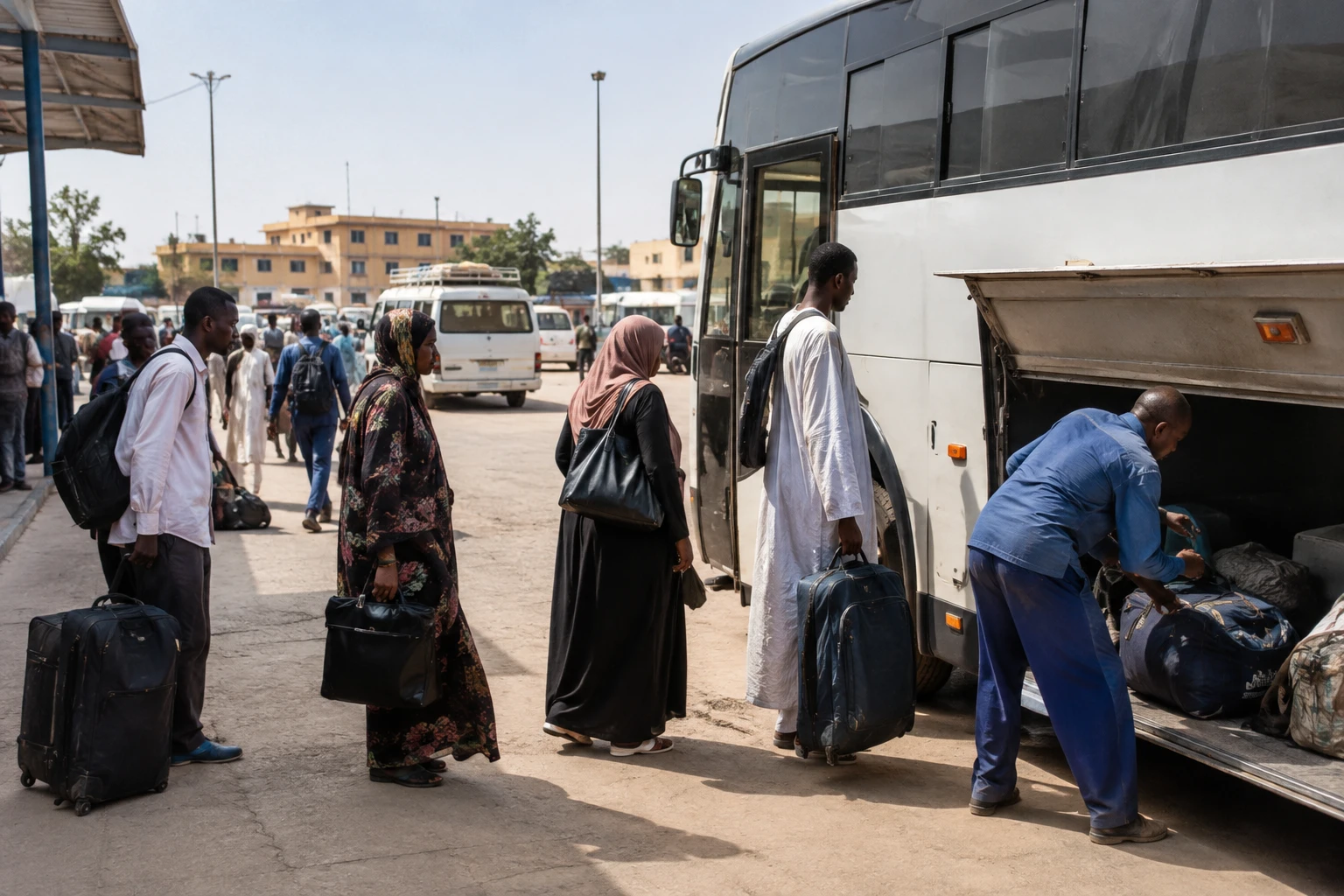
Surviving the offensive in El-Fasher does not mean escaping its consequences. A year after the city fell, accounts from people who have taken refuge in Chad highlight another urgent task: preserving evidence and enabling justice, which also depends on cooperation from neighbouring states.
A besieged city at the heart of Sudan’s war
Since 15 April 2023, the Sudanese Armed Forces and the Rapid Support Forces (RSF), a paramilitary group, have been fighting for power. In Darfur, a region in western Sudan, El-Fasher was the last major urban centre still held by the army. The city endured a prolonged siege, followed by the RSF’s final offensive in late October 2025.
This battle is part of a crisis that extends beyond the front lines. Displaced people are crossing the border into Chad, while humanitarian access remains difficult. The conflict is therefore weighing on displaced Sudanese communities as well as on the capacity of communities in Chad’s border areas to receive them. At the regional level, the Intergovernmental Authority on Development (IGAD), an East African cooperation organisation, is among the diplomatic frameworks involved in efforts to find a way forward.
The international community had already documented violence against civilians in Darfur, including during offensives against the Zamzam and Abu Shouk camps. The Office of the United Nations High Commissioner for Human Rights subsequently gathered accounts from victims and witnesses from El-Fasher, including in eastern Chad.
More than 6,000 deaths documented in three days
In a report published on 13 February 2026, the Office of the High Commissioner says it documented more than 6,000 deaths during the first three days of the RSF offensive in October 2025. It records at least 4,400 people killed in the city and more than 1,600 on escape routes. The organisation says the actual toll from the week-long offensive could be considerably higher. These figures come from the UN investigation and are not a definitive count.
Based on more than 140 interviews with victims and witnesses conducted in late 2025, the report describes killings, attacks on civilians and infrastructure, sexual violence, looting and arrests. It finds reasonable grounds to believe that war crimes were committed and that some acts may amount to crimes against humanity. These classifications are part of a preliminary legal assessment, not a criminal judgment.
A year after the city fell, survivors’ accounts put a human face to the figures. They are also essential to establishing where the violence took place, identifying those who may have been involved and documenting the fate of missing people. But giving evidence guarantees neither lasting protection nor rapid access to justice. Refugees may also fear reprisals or lack the resources to pursue lengthy proceedings.
Chad’s withdrawal raises questions about cooperation
The International Criminal Court (ICC), a court mandated to prosecute people accused of the most serious crimes, has been investigating the situation in Darfur since the UN Security Council referred the case to it in 2005. The ICC nevertheless relies heavily on states to gather evidence, protect witnesses and arrest suspects. Sudan is not a party to the Rome Statute, the treaty that established the Court.
Chad notified its withdrawal from the Rome Statute on 27 July 2026. According to the United Nations Treaty Collection, the withdrawal is due to take effect on 27 July 2027. Until then, the country remains a party to the treaty. Moreover, withdrawal does not automatically remove obligations relating to events that took place before it takes effect. It does not, by itself, mean that investigations into El-Fasher will stop.
The risk is instead that cooperation may become more difficult in the future, particularly if wanted individuals, witnesses or evidence are in Chad. The border is a refuge for Sudanese who have fled the fighting, and investigators may need access to survivors living in the country. The practical consequences will depend on the choices made by the Chadian authorities and on the cooperation mechanisms that remain in place.
This development is also part of an African debate about international justice. Some governments criticise what they see as the ICC’s selective application of justice, while human rights organisations stress the importance of preserving avenues of redress for victims. These positions are not equivalent to proof of guilt or innocence: they reflect a political disagreement over institutions and their legitimacy.
Evidence to preserve, responsibility to establish
For the people of El-Fasher and those displaced, the immediate concerns remain safety, the possibility of returning and the chance of finding loved ones. For investigators, the task is to preserve testimony and evidence that may disappear. For the Sudanese and Chadian authorities, the question is one of practical cooperation, beyond diplomatic statements.
The crisis also poses a question for the African Union and the states of the region: how can they support a credible investigation while addressing criticism of the fairness of international justice? The timeline is now clear. Chad’s withdrawal is due to take effect on 27 July 2027, but its impact will depend on the steps taken before that date and on the willingness of those involved to maintain access to witnesses and evidence.
Reference sources: UN High Commissioner’s report on the El-Fasher offensive, United Nations Security Council, UN Treaty Collection and statement by the Presidency of the Assembly of States Parties to the ICC.