
 Algeria
 Egypt
 Libya
 Morocco
 Sudan
 Tunisia
 Benin
 Burkina Faso
 Cabo Verde
 Côte d'Ivoire
 Ghana
 Guinea
 Guinea-Bissau
 Liberia
 Mali
 Mauritania
 Niger
 Nigeria
 Senegal
 Sierra Leone
 The Gambia
 Togo
 Cameroon
 Central African Republic
 Chad
 Equatorial Guinea
 Gabon
 Republic of the Congo
 São Tomé and Príncipe
 Burundi
 Comoros
 Djibouti
 Eritrea
 Ethiopia
 Kenya
 Madagascar
 Malawi
 Mauritius
 Mozambique
 Rwanda
 Seychelles
 Somalia
 South Sudan
 Tanzania
 Uganda
 Angola
 Botswana
 Eswatini
 Lesotho
 Namibia
 South Africa
 Zambia
 Zimbabwe
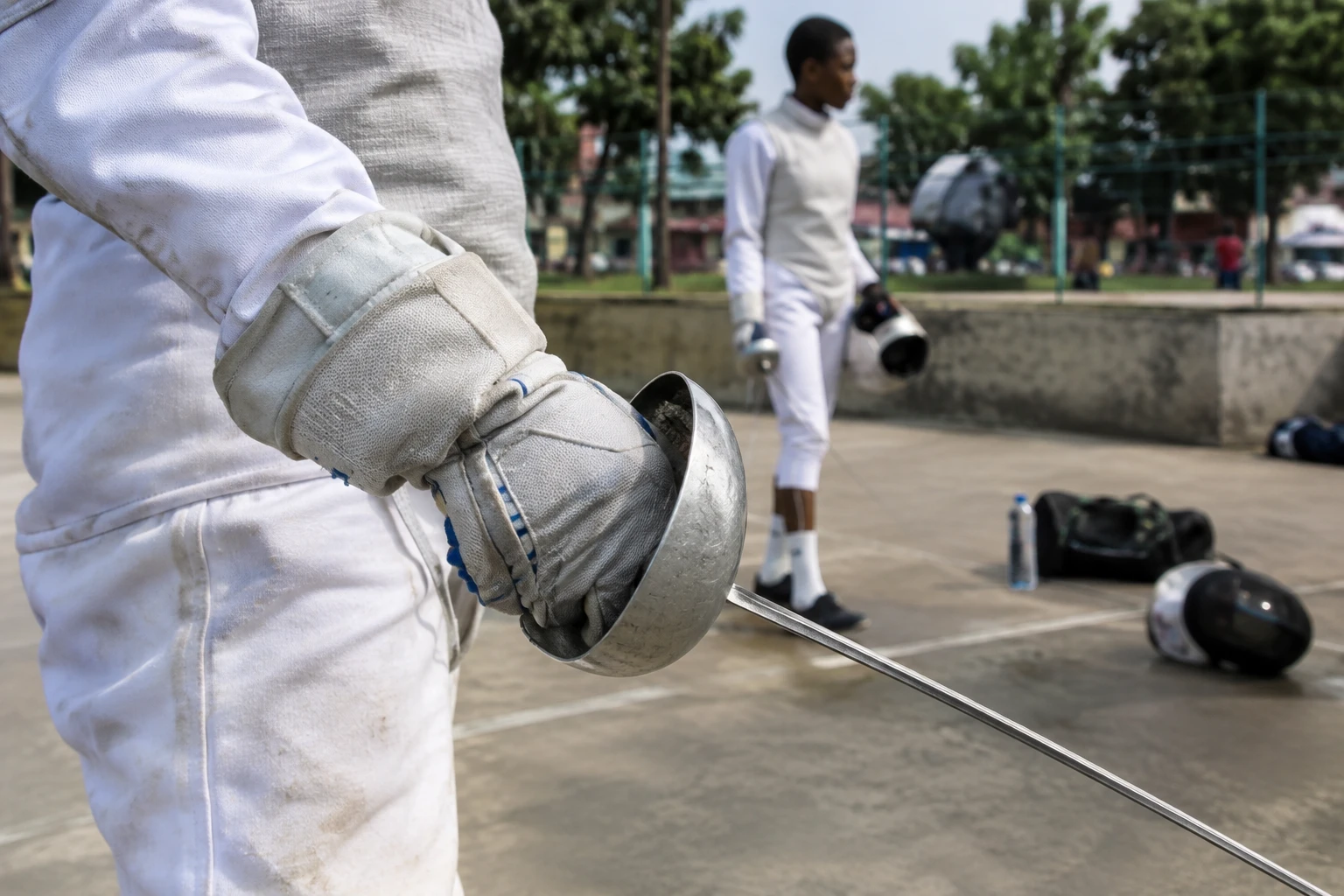
In Lemba, in the Congolese capital, fencing sessions take place outdoors. For Mervie Yembele Tulunga, who trains several times a week, preparing for the Dakar Youth Olympic Games raises a practical question: how can a young athlete’s talent be turned into performance when the federation lacks equipment and facilities?
In Kinshasa, a little-known sport
The sabre is Mervie’s weapon of choice. In an interview conducted before the Games, the young fencer, then aged 16, said he trained in the morning from Monday to Saturday, and resumed on some evenings. In Lemba, athletes work on their footwork, parries and speed on an outdoor pitch.
His first encounter with fencing came at the Rio Games in 2016. He had seen the masks and blades on television, without knowing that the sport was also practised in the Democratic Republic of the Congo. He later joined the Congolese Fencing Federation.
His journey illustrates a challenge of visibility. In DR Congo, where football occupies a prominent place in the sporting landscape, less widely covered disciplines often have to make themselves known to young people, families and partners. Fencing also requires specialist equipment and suitable spaces, which are difficult to replace with a simple multi-purpose pitch.
Nine Congolese athletes expected at the Dakar Games
Mervie is part of the DR Congo delegation of nine athletes announced for the Youth Olympic Games, competing in eight disciplines. The Congolese Olympic Committee officially confirmed the selection in September 2026, according to two Congolese media outlets. The list includes athletics, judo, swimming, taekwondo and beach volleyball. In the latter, the Congolese pair qualified on the field; the other disciplines received universality places allocated by the International Olympic Committee, reports Cœur d’Afrique Media. The size and composition of the delegation were also reported by Cumulard.cd.
The Games are being held in Senegal from 31 October to 13 November 2026. Dakar 2026 is the first Olympic sporting event to be organised on the African continent. Events are taking place in Dakar, Diamniadio and Saly, bringing together athletes aged 15 to 18, according to the International Olympic Committee.
For DR Congo, represented from Kinshasa, the competition offers an international stage to a generation whose training conditions are very different from those of delegations with permanent training facilities. But participation does not erase these disparities. It also makes them visible: preparation, travel, equipment and coaching all affect the ability to compete.
The dream of a medal faces material constraints
In the interview, Mervie said he wanted to seize this opportunity and hoped to bring an Olympic medal back to his country. This is his ambition; it is not a prediction of the result. For a 16-year-old athlete, the Youth Olympic Games are first and foremost an initial experience of high-level competition, with opponents from many countries and a setting unlike daily training sessions in Kinshasa.
Anaël Konga, described as the federation’s vice-president, portrayed difficult training conditions: no venue of its own, limited resources and no sponsors. He said these constraints made it harder to train enough fencers for competitions. These remarks, from the interview, could not be independently corroborated and should therefore be attributed to their author.
The federation is said to have just over a hundred registered members, according to the same report. This gives an indication of the scale, but does not in itself show how practitioners are distributed across the country, their access to equipment or the continuity of their coaching. It nonetheless highlights the vulnerability of a discipline with a limited pool of talent.
The consequences affect athletes unevenly. A selected prospect may benefit from international exposure, while those who remain in clubs face the same day-to-day needs without any guarantee of lasting support. In Kinshasa, the lack of a venue may also limit training slots and the quality of sessions; outside the capital, barriers to accessing a club and equipment may be different, but the available information does not make it possible to measure their scale.
An African event, a test for what comes next
Dakar 2026 gives young African athletes the opportunity to compete on their continent, without reducing the event to a promise of automatic benefits. Hosting these Games in Senegal marks an Olympic milestone, but the benefits for neighbouring federations will also depend on what remains after the competition: coach training, accessible equipment and regular routes into international tournaments.
The result achieved by Mervie will be followed closely, but it will not on its own sum up the state of Congolese fencing. The fundamental question is what resources will enable young fencers to continue after Dakar and the federation to broaden its recruitment. A medal would be a notable individual achievement; more stable coaching, by contrast, would give more talent a chance.
The Youth Olympic Games continue until 13 November. For the DR Congo delegation, the immediate focus is the competition. For Congolese sports officials, the longer-term challenge is to turn this selection into experience that can be passed on, so that the next generation does not depend solely on the personal commitment of a few athletes and coaches.



