Algeria
 Egypt
 Libya
 Morocco
 Sudan
 Tunisia
 Benin
 Burkina Faso
 Cabo Verde
 Côte d'Ivoire
 Ghana
 Guinea
 Guinea-Bissau
 Liberia
 Mali
 Mauritania
 Niger
 Nigeria
 Senegal
 Sierra Leone
 The Gambia
 Togo
 Cameroon
 Central African Republic
 Chad
 Equatorial Guinea
 Gabon
 Republic of the Congo
 São Tomé and Príncipe
 Burundi
 Comoros
 Djibouti
 Eritrea
 Ethiopia
 Kenya
 Madagascar
 Malawi
 Mauritius
 Mozambique
 Rwanda
 Seychelles
 Somalia
 South Sudan
 Tanzania
 Uganda
 Angola
 Botswana
 Eswatini
 Lesotho
 Namibia
 South Africa
 Zambia
 Zimbabwe
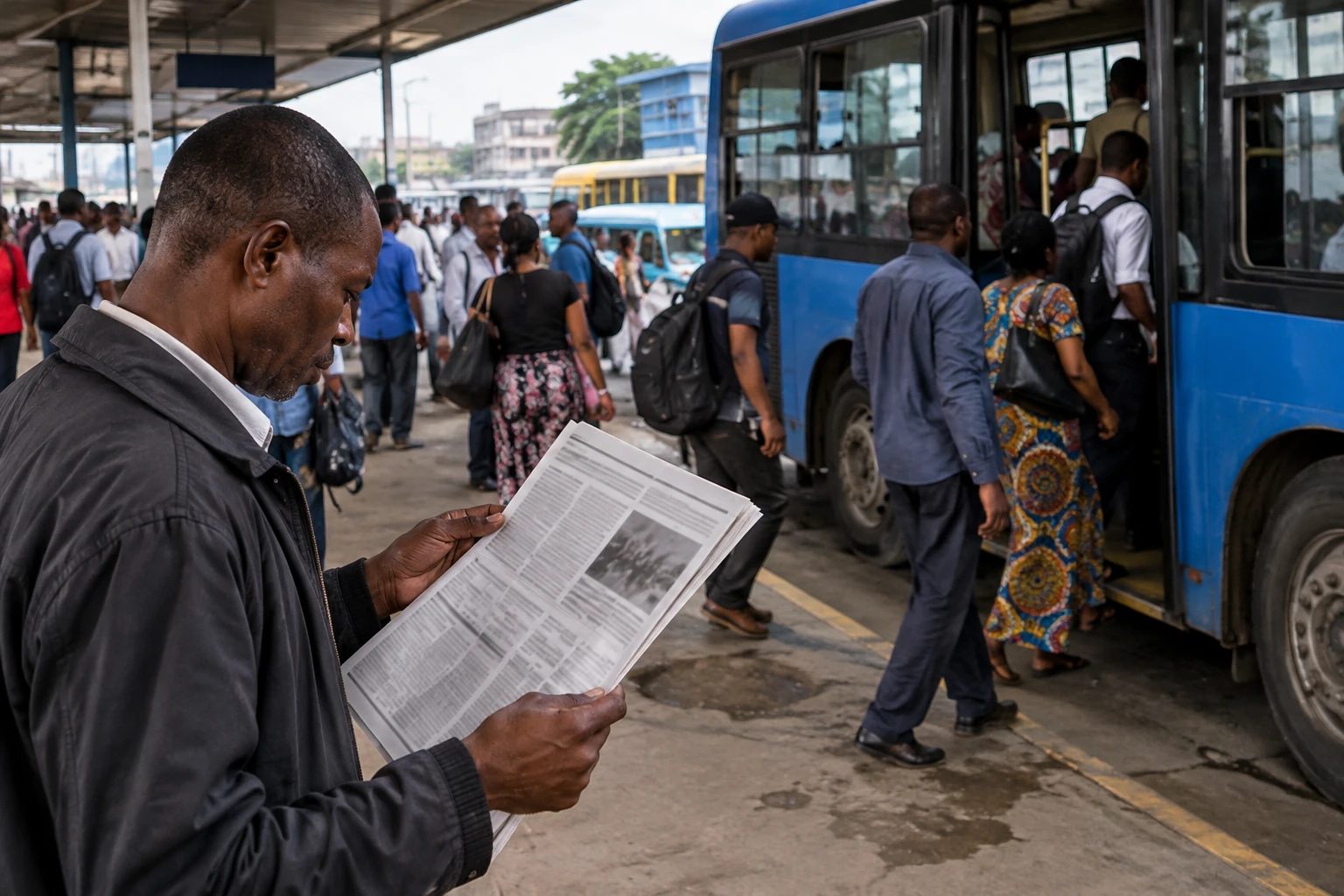
A referendum can give voters a direct say. But in the Democratic Republic of the Congo (DRC), the rules that would allow one to be organised touch on a far more sensitive question: who can amend the Constitution, and how far can they go?
A bill submitted for a fresh reading
On 23 October 2026, the National Assembly re-adopted the law setting out the conditions for organising a referendum. The vote received 346 votes in favour, none against and one abstention, among 347 MPs who took part, according to a statement from the lower house relayed by the Congolese Press Agency (ACP).
This new deliberation follows the Constitutional Court’s examination of the bill. On 28 July, it found the text to be in line with the Constitution, subject to observations concerning 13 of its 44 articles. At the request of President Félix Tshisekedi, MPs therefore reworded these provisions before the new vote, Radio Okapi also reports.
The bill must now return to the Senate for a second reading. It has therefore not yet been promulgated. Its adoption by MPs does not mean that a referendum has been called either: it establishes a legal framework for possible consultations.
The framework for a vote, and the question of limits
The proposal sets out, among other things, how a referendum may be called and held. First adopted by the National Assembly in June, it assigns a role to the Independent National Electoral Commission (CENI), which is responsible for organising elections, and envisages a constituent assembly in the event of a proposed new Constitution. Radio Okapi detailed these mechanisms after the first vote.
It is the possible reach of this procedure that is fuelling controversy. Article 220 of the Congolese Constitution explicitly protects the number and length of presidential terms from any revision. Article 218 sets out the steps for constitutional revision, including approval by referendum or, under certain conditions, by Parliament meeting in Congress. These provisions can be consulted in the text of the Constitution published by the Senate.
The legal question, then, is how to reconcile these rules with the possibility, provided for in the referendum law, of drafting a new Constitution. The 23 October vote does not settle this question on its own. Nor does it prove that Félix Tshisekedi could now stand for a third term.
A controversy extending beyond Parliament
The debate is already political. Christian Mwando, president of the Ensemble parliamentary group, denounced a fait accompli and argued that the bill could circumvent the protections in Article 220. His remarks were reported by Congolese media outlet Actualite.cd. This criticism reflects the opposition’s position; it does not, in itself, constitute a Court ruling on the possibility of a third term.
The disagreement comes as the prospect of constitutional reform is already fuelling tensions in Kinshasa. In June, several opposition groups boycotted the first vote and denounced the proposal. The latest institutional step is therefore likely to reignite a dispute playing out in the chambers, before the courts and in the public sphere.
For political leaders, the issue concerns the rules of power and the legitimacy of revising them. For voters, it also concerns the practical conditions for a national consultation: the timetable, access to voting, information and confidence in the electoral administration. In a vast country, these questions are not confined to the capital. They also affect the provinces, where the organisation of a vote depends on institutions’ ability to reach voters.
An institutional test with regional significance
The next immediate step is in the Senate. The second reading must establish whether the two chambers agree on the revised text. Only then could any promulgation pave the way for its implementation. No date for a referendum has been announced in the information available.
At regional level, the DRC is a member of the Southern African Development Community (SADC), a co-operation organisation for countries in southern Africa. The way Congolese institutions frame a reform of the political rules will be watched in a region where the credibility of elections and respect for constitutional limits weigh on stability. For the African Union, too, the issue raises a matter of principle: how can popular sovereignty, due process and constitutional safeguards be reconciled?
The decisive point, then, will not simply be whether a referendum law exists. It will be necessary to follow the final text, the legal interpretations of its provisions and the conditions under which any consultation is organised. It is in this light that the real significance of the vote in Kinshasa can be assessed.