Egypt
 Libya
 Morocco
 Sudan
 Tunisia
 Benin
 Burkina Faso
 Cabo Verde
 Côte d'Ivoire
 Ghana
 Guinea
 Guinea-Bissau
 Liberia
 Mali
 Mauritania
 Niger
 Nigeria
 Senegal
 Sierra Leone
 The Gambia
 Togo
 Cameroon
 Central African Republic
 Chad
 DR Congo
 Equatorial Guinea
 Gabon
 Republic of the Congo
 São Tomé and Príncipe
 Burundi
 Comoros
 Djibouti
 Eritrea
 Ethiopia
 Kenya
 Madagascar
 Malawi
 Mauritius
 Mozambique
 Rwanda
 Seychelles
 Somalia
 South Sudan
 Tanzania
 Uganda
 Angola
 Botswana
 Eswatini
 Lesotho
 Namibia
 South Africa
 Zambia
 Zimbabwe
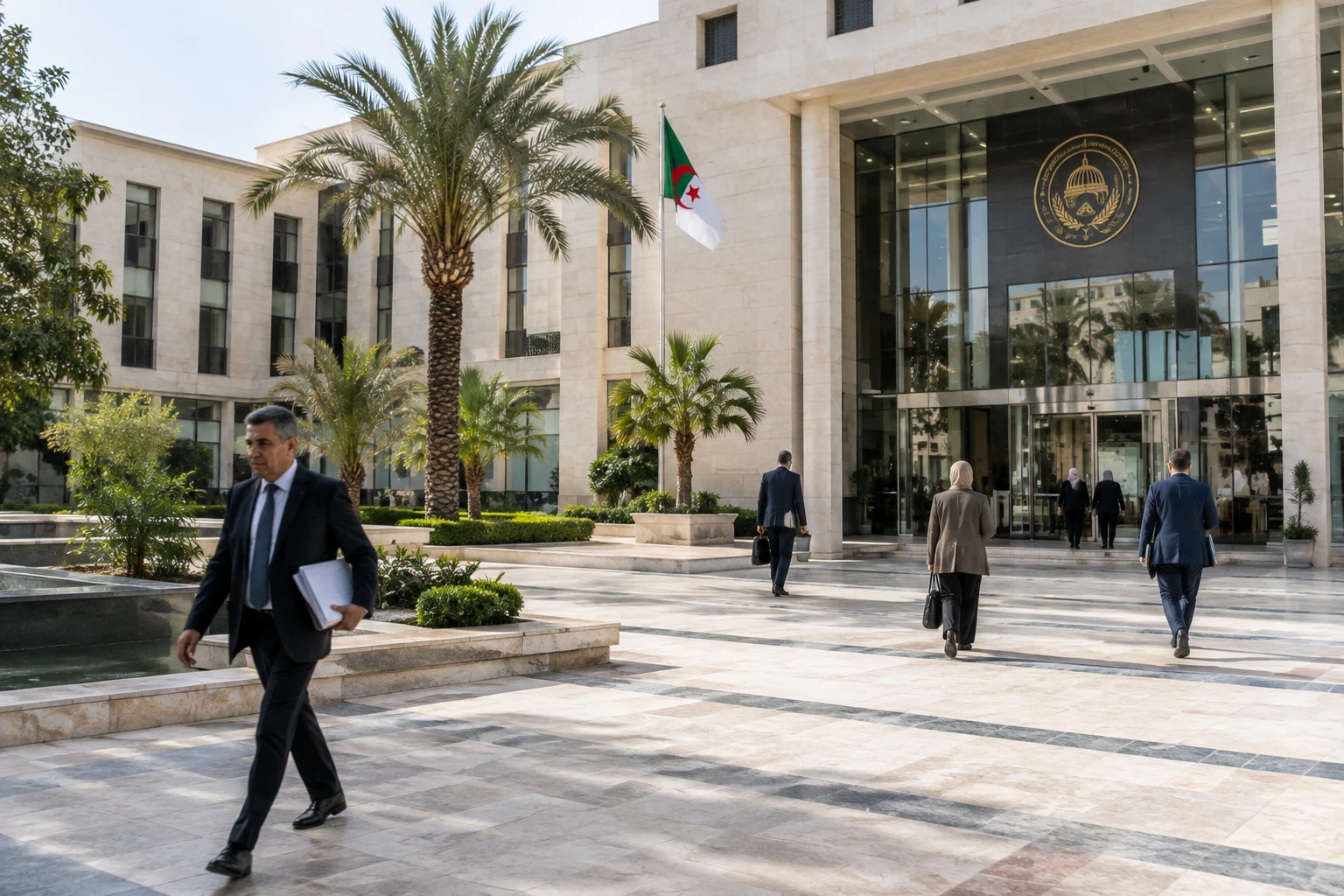
Protecting energy interests in Niger could now lead Algerian troops to operate beyond their own territory. The vote on 25 October 2026 marks an important step for Algiers, but the mission’s scope remains to be defined.
A new framework for Algerian military action
Algeria has long upheld a doctrine of non-intervention abroad. However, the 2020 constitutional revision opened the way to sending units of the People’s National Army beyond the country’s borders, subject to certain conditions. Article 91 requires approval by both houses of parliament by a two-thirds majority. The text of the Algerian Constitution thus provides a framework for a shift that brings the defence of external interests within a formal institutional remit.
Niger has a particular place in this debate. A neighbour to south-eastern Algeria, it lies at the heart of a Sahel region marked by security tensions and diplomatic realignments. The Nigerien authorities have, in particular, strengthened ties with new partners since breaking with several Western partners. For Algeria, the stability of this neighbour has implications for its border security, regional relations and economic projects.
The two countries have also experienced periods of diplomatic coolness. In 2025, relations became strained after a regional crisis involving Mali, among others. The recent rapprochement has involved political and military exchanges. This trajectory explains why the decision goes beyond the protection of oil facilities alone.
What the votes authorise — and what they leave unspecified
On Sunday 25 October, the Council of the Nation, the upper house of Algeria’s parliament, followed by the National People’s Assembly (APN), the lower house, approved the presidential notification concerning the deployment of units to Niger. Algeria’s APS news agency confirmed the APN vote. The Council of the Nation said that 148 participants had voted in favour of the decision. APS reports the assembly’s approval, while Turkey’s Anadolu news agency also reported that both houses had given the green light.
According to parliamentary communications cited by Anadolu, the decision is based on the protection of energy interests and the implementation of a bilateral agreement. The mission would involve a detachment tasked with securing oil projects run by Sonatrach, Algeria’s national oil company. Its international subsidiary, SIPEX, is present in northern Niger. However, the authorities have not made public the size of the force, the deployment timetable or the planned operational rules. It is therefore important to distinguish the parliamentary authorisation from the mission’s details, which remain unknown.
This distinction also matters in relation to the precedent of 1973. Several reports describe the operation as Algeria’s first overseas ground deployment since the October 1973 war. That does not mean the Algerian army has had no role abroad since then: its history includes other engagements in different contexts. The current vote is above all unprecedented for its contemporary constitutional framework and the prospect of a security mission linked to economic interests.
Energy, security and regional influence
For Sonatrach, protecting its facilities would reduce the risks facing investments in an area where security remains fragile. But a foreign military presence can also create political expectations and risks. It ties the security of Algerian projects more closely to developments inside Niger. The authorities have not said whether the troops will be confined to energy sites or take part in other activities.
The potential benefits and costs are not distributed equally. Governments may see it as a sign of co-operation and a way to secure strategic projects. People living near the facilities, meanwhile, are directly affected by security conditions, possible displacement and local economic benefits. At this stage, no public information describes arrangements for consulting communities or safeguards for civilians.
The issue forms part of a broader regional balance of power. Algeria is seeking to maintain its diplomatic role in the Sahel, while Niger is diversifying its defence partnerships. Algiers and Niamey are also pursuing cross-border energy projects, including the proposed Trans-Saharan Gas Pipeline with Nigeria. The project still has major steps to complete before it becomes operational infrastructure. Security is therefore a concern, but it alone cannot guarantee the project’s completion.
A decision to monitor over time
The vote follows a visit to Algiers by Nigerien Defence Minister Salifou Modi and the signing of a military co-operation protocol. Press reports have also placed the decision in the context of unrest in Niger in August. These episodes highlight the fragility of the security environment, but do not, on their own, establish the mandate of the future Algerian detachment.
For both countries, the immediate challenge will be to turn the authorisation into a clearly defined mission: its duration, troop numbers, chain of command and limits on intervention. Publishing these details would help clarify how Algiers intends to reconcile the protection of its interests, Nigerien sovereignty and parliamentary oversight. Across Africa, the development will be watched by African Union states, which are committed to national sovereignty and regional co-operation in response to cross-border crises.
The vote therefore does not, by itself, mean that the Algerian army is adopting a general policy of intervention. It opens a regulated possibility in a specific case where energy, security and diplomacy intersect. The true significance of this shift will depend on the terms of the deployment and how the two states report on it.