
 Algeria
 Egypt
 Libya
 Morocco
 Sudan
 Tunisia
 Benin
 Burkina Faso
 Cabo Verde
 Côte d'Ivoire
 Ghana
 Guinea
 Guinea-Bissau
 Liberia
 Mali
 Mauritania
 Niger
 Nigeria
 Senegal
 Sierra Leone
 The Gambia
 Togo
 Cameroon
 Central African Republic
 Chad
 Equatorial Guinea
 Gabon
 Republic of the Congo
 São Tomé and Príncipe
 Burundi
 Comoros
 Djibouti
 Eritrea
 Ethiopia
 Kenya
 Madagascar
 Malawi
 Mauritius
 Mozambique
 Rwanda
 Seychelles
 Somalia
 South Sudan
 Tanzania
 Uganda
 Angola
 Botswana
 Eswatini
 Lesotho
 Namibia
 South Africa
 Zambia
 Zimbabwe
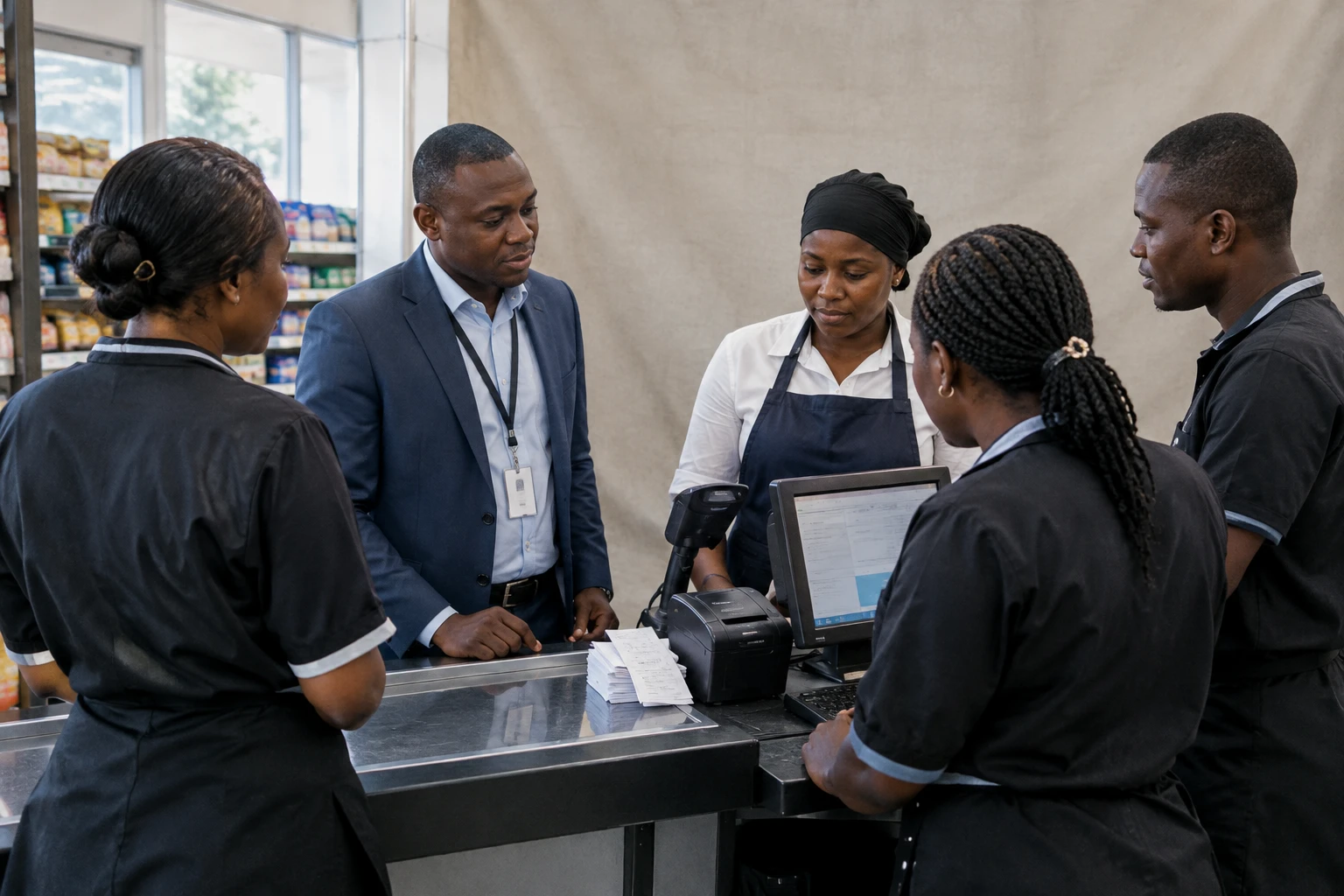
In Kinshasa, the till receipt is becoming a direct point of contact between consumers, businesses and the state. Since standardised invoices became compulsory, the Directorate General of Taxes (DGI) has been seeking to verify whether VAT paid on purchases is properly recorded and remitted to the Treasury.
The checks took concrete form on Thursday 22 October 2026. DGI director general Barnabé Muakadi led an inspection tour of hotels and shops in the capital. At the end of the operation, he denounced what he called “tax rebellion” and announced sanctions for establishments in breach. These are allegations made by the administration; they do not, by themselves, constitute a judicial ruling establishing fraud.
A reform designed to track VAT
In the Democratic Republic of the Congo, VAT is a tax levied on goods and services. Consumers pay it when they make a purchase, after which businesses must declare and remit it under tax rules. Standardised invoices are intended to make this chain more verifiable.
The system relies on invoices issued using an electronic tax system or approved business software. This enables the DGI to check sales data, rather than relying solely on documents produced by individual traders. The administration presents the reform as a way to limit discrepancies between sales made, VAT declared and amounts actually paid.
However, the reform was not introduced overnight. The DGI began a pilot phase in 2024, before rolling it out more widely in 2025. After several delays and adjustments requested by businesses, the requirement took effect on 1 December 2025. The Federation of Congolese Enterprises (FEC), which represents a significant part of the formal private sector, took part in discussions about implementation challenges.
The DGI has provided several technical options, including fiscal devices and an electronic platform. The administration also says some solutions are available to eligible taxpayers free of charge. These arrangements matter: businesses differ in sales volumes, digital infrastructure and capacity to adapt.
Inspections at Kinshasa businesses
During the 22 October tour, inspectors checked eight supermarkets, according to reports from the scene. At a City Market store, the DGI director general reportedly received a standardised invoice after making a purchase, while another checkout visit produced a non-compliant document. The DGI presented this observation as a breach, illustrating the kind of discrepancy the inspections are intended to detect.
Hotels were also visited, including the Fleuve Congo Hotel. The DGI chief threatened sanctions and raised the possibility of closure if non-compliance persisted. Some establishment managers were reportedly absent when inspectors arrived. These findings relate to the sites inspected; on their own, they do not show the level of compliance among all businesses in Kinshasa or the country.
The DGI also highlighted FACNO, a mobile application that allows users to verify the authenticity of a standardised invoice and report irregularities. The tool is intended to involve customers in oversight. Its usefulness will, however, depend on its accessibility, the clarity of the process and whether reports are acted upon. The authorities mentioned a reward for consumers who report anomalies, although the available information about the inspection tour did not set out precise arrangements.
Public revenue and business constraints
For the state, the issue is a budgetary one. Better tracking of sales could help reduce tax revenue losses and fund public services. In July 2025, the finance ministry presented the reform as a means of mobilising revenue. The targets announced by the authorities are projections, however; they do not yet prove that the expected sums will actually be collected.
For consumers, verifiable invoices can make the share of VAT included in the price they pay more transparent. But the system alone does not guarantee that every irregularity will be sanctioned or that additional revenue will directly improve services. That also depends on the quality of inspections, the administration’s effectiveness and how public funds are used.
Businesses, for their part, must adapt their tills and software to detailed technical rules. The FEC called for adjustments during the rollout, particularly to account for operational constraints. These requests do not exempt operators from complying with the law. They nevertheless underline that implementing a nationwide reform requires workable solutions, including for shops that do not have the same resources as major chains.
The Kinshasa tour therefore highlights two distinct responsibilities. Businesses must issue compliant invoices and remit the VAT they collect. The administration, in turn, must apply the rules predictably, explain procedures and allow taxpayers to challenge sanctions through the prescribed channels. An inspection campaign is no substitute for evidence or due process.
A test for tax governance in DR Congo
The issue extends beyond the capital. The DGI has announced a reform for affected taxpayers across the country, while access to equipment and connectivity varies widely between Kinshasa and the provinces. Implementation will therefore need to be monitored beyond large supermarkets and hotels: small businesses, neighbourhood traders and less formal commercial networks may face different obstacles.
Regionally, the Democratic Republic of the Congo is a member of the Southern African Development Community (SADC) and the East African Community (EAC). The reform addresses a challenge shared by several states: documenting transactions more effectively and increasing domestic revenue without making tax compliance an impractical burden for businesses. In economies where trade regularly crosses borders, reliable invoices also matter for trade and customs checks.
The next measure of progress will be not the forcefulness of the warnings but how they are applied in practice: the regularity of inspections, documented sanctions, avenues of appeal and changes in declared revenue. The 22 October tour signals an intention to move from awareness-raising to enforcement. The reform’s credibility will now depend on fair implementation, in Kinshasa and across the other provinces.



