Algeria
 Egypt
 Libya
 Morocco
 Sudan
 Benin
 Burkina Faso
 Cabo Verde
 Côte d'Ivoire
 Ghana
 Guinea
 Guinea-Bissau
 Liberia
 Mali
 Mauritania
 Niger
 Nigeria
 Senegal
 Sierra Leone
 The Gambia
 Togo
 Cameroon
 Central African Republic
 Chad
 DR Congo
 Equatorial Guinea
 Gabon
 Republic of the Congo
 São Tomé and Príncipe
 Burundi
 Comoros
 Djibouti
 Eritrea
 Ethiopia
 Kenya
 Madagascar
 Malawi
 Mauritius
 Mozambique
 Rwanda
 Seychelles
 Somalia
 South Sudan
 Tanzania
 Uganda
 Angola
 Botswana
 Eswatini
 Lesotho
 Namibia
 South Africa
 Zambia
 Zimbabwe
For a foreign supplier, Tunisia already offers industrial access to European markets. But a scouting visit guarantees neither a plant nor new jobs: the challenge now is to turn discussions with local companies into concrete partnerships.
A sector geared towards Europe
On 19 October 2026, a delegation from German group Scherdel met the Tunisian Automotive Association (TAA), which brings together players in the automotive sector. The Tunisian-German Chamber of Industry and Commerce (AHK Tunisia) and German cooperation agency GIZ helped organise the visit. Discussions focused on Tunisia’s production capabilities and opportunities to work with local manufacturers.
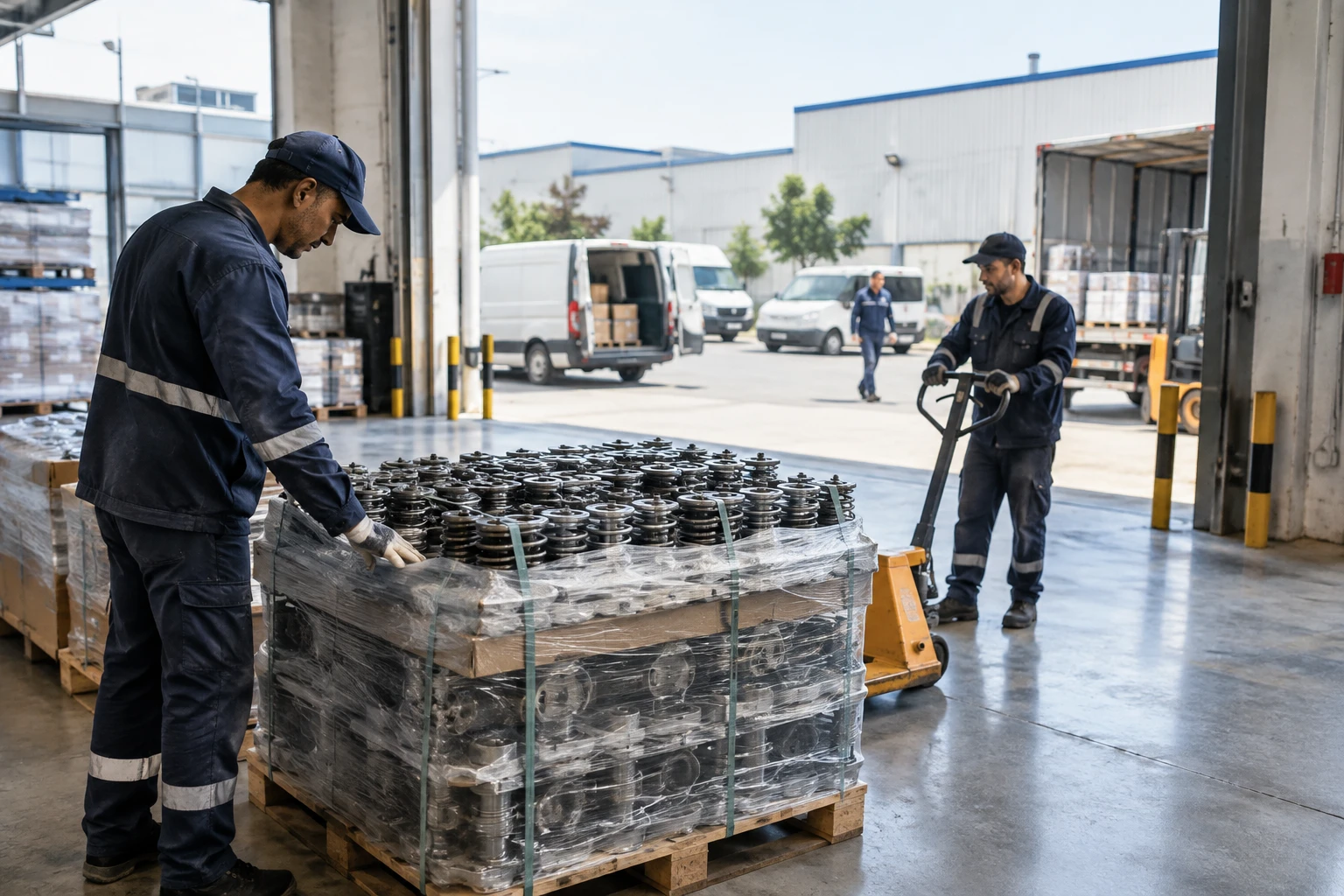
Scherdel manufactures technical springs, precision metal parts and assembly systems, among other products. These components can be used in the automotive industry, but the TAA has announced no order, signed partnership or decision to establish a presence. At this stage, this is an exploratory initiative, not a confirmed investment.
The visit is part of a broader scouting effort. In January 2026, the group met the Foreign Investment Promotion Agency, FIPA-Tunisia, to examine investment opportunities, available skills and conditions for establishing operations. The TAA had also reported an initial visit by Scherdel in April. These steps show sustained interest, but do not mean a project is imminent.
Access to the European market partly explains the sector’s appeal. According to sector figures provided by the TAA and reported by several Tunisian media outlets, automotive exports are estimated to have reached around €3.9 billion in 2025. Germany is said to have received 37%, ahead of France, Romania and Italy. These sector figures are not broken down in the National Institute of Statistics (INS)’s general foreign trade statistics, so they should remain attributed to the TAA.
Strong exports, a dependence to watch
Trade ties extend beyond the automotive industry. In 2025, the European Union accounted for 69.9% of Tunisia’s total exports, according to the INS. Tunisian sales to Germany rose by 10.7% year on year. These figures confirm the importance of the European market, but do not in themselves validate the country-by-country breakdown of automotive exports cited by the TAA.
This concentration has two sides. It gives Tunisian suppliers nearby markets and links them to European production chains. In return, it exposes companies to slowdowns among their main customers and changes in European standards or sourcing strategies. For local suppliers, a new commercial relationship can bring orders and expertise; it does not, however, guarantee that value added, research or industrial property will remain in Tunisia.
The sector is not limited to vehicle assembly. It includes companies specialising in components and equipment, which export a large share of their production. To attract a manufacturer such as Scherdel, the key question will therefore be whether Tunisia can offer qualified partners, reliable lead times, suitable logistics and a workforce trained to meet the specific needs of manufacturers.
Skills and infrastructure at the heart of the plan
Tunisian authorities are seeking to strengthen these conditions for investment. On 23 June 2026, the Ministry of Employment announced agreements with the TAA and six companies in the sector to support the recruitment of around 1,700 jobseekers during the year. This is a stated recruitment target, not a record of hires already made. The authorities are also aiming for 60,000 jobs in the sector by 2030.
Training matters as much as the number of jobs. The needs of a metal components manufacturer differ from those of a company specialising in wiring or electronics. For workers, moving up the value chain can open up more skilled opportunities; for manufacturers, it reduces the risk of being unable to find the skills they need. But training must keep pace with changing processes, and the announced jobs must materialise across several regions, not only around Tunis.
The Automotive Smart City project is part of the same ambition. Presented under the 2022–2027 automotive competitiveness pact, it aims to attract nearly one billion dinars for the manufacture of electric and smart vehicles, as well as 300 million dinars for two component projects. These sums are targets announced during preparatory work, not investments already under way. The distinction is essential to assessing real progress.
The challenge is to turn these targets into operational sites, contracts and lasting jobs. Companies based in industrial hubs can benefit from an ecosystem of suppliers and skills. Areas less well connected to infrastructure risk benefiting more slowly from this momentum. The geographical distribution of activity will therefore be a concrete indicator of the strategy’s social impact.
A Tunisian issue with regional implications
For Tunisia, the stakes go beyond the possible arrival of a single German group. The sector is seeking to advance in value chains where standards, quality and capacity for innovation matter as much as costs. The competitiveness pact signed in 2022 by public authorities and industry professionals provides a framework for cooperation on infrastructure, training, research and development.
Across North Africa, the issue also concerns the ability of countries in the region to attract industrial activity and develop local suppliers. The Arab Maghreb Union, whose members include Tunisia, Algeria, Morocco, Libya and Mauritania, provides a regional framework, although economic exchanges within the Maghreb remain limited. For now, there is no indication that Scherdel’s scouting includes a regional strategy: the immediate priority remains the possible establishment of a partnership in Tunisia.
The next steps to watch are clear: an announcement of a commercial agreement, the creation of a local entity, an investment timetable or recruitment. Until then, the visit signals interest in Tunisia’s industrial ecosystem, not yet a decision to produce there. The distinction between these two stages will show whether the country’s export strengths and industrial ambitions translate into new capacity.
Sources consulted: Tunisian Automotive Association statement on the 19 October meeting, TAA account of Scherdel’s visit in April 2026, FIPA-Tunisia announcement on the January exploratory mission, INS foreign trade statistics for 2025, Express FM interview with TAA leadership on automotive markets, Tunisian report on preparatory work for the Automotive Smart City and World Trade Organization report on Tunisia’s trade policy.