Algeria
 Egypt
 Libya
 Morocco
 Sudan
 Tunisia
 Benin
 Burkina Faso
 Cabo Verde
 Côte d'Ivoire
 Ghana
 Guinea
 Guinea-Bissau
 Liberia
 Mali
 Mauritania
 Niger
 Nigeria
 Sierra Leone
 The Gambia
 Togo
 Cameroon
 Central African Republic
 Chad
 DR Congo
 Equatorial Guinea
 Gabon
 Republic of the Congo
 São Tomé and Príncipe
 Burundi
 Comoros
 Djibouti
 Eritrea
 Ethiopia
 Kenya
 Madagascar
 Malawi
 Mauritius
 Mozambique
 Rwanda
 Seychelles
 Somalia
 South Sudan
 Tanzania
 Uganda
 Angola
 Botswana
 Eswatini
 Lesotho
 Namibia
 South Africa
 Zambia
 Zimbabwe
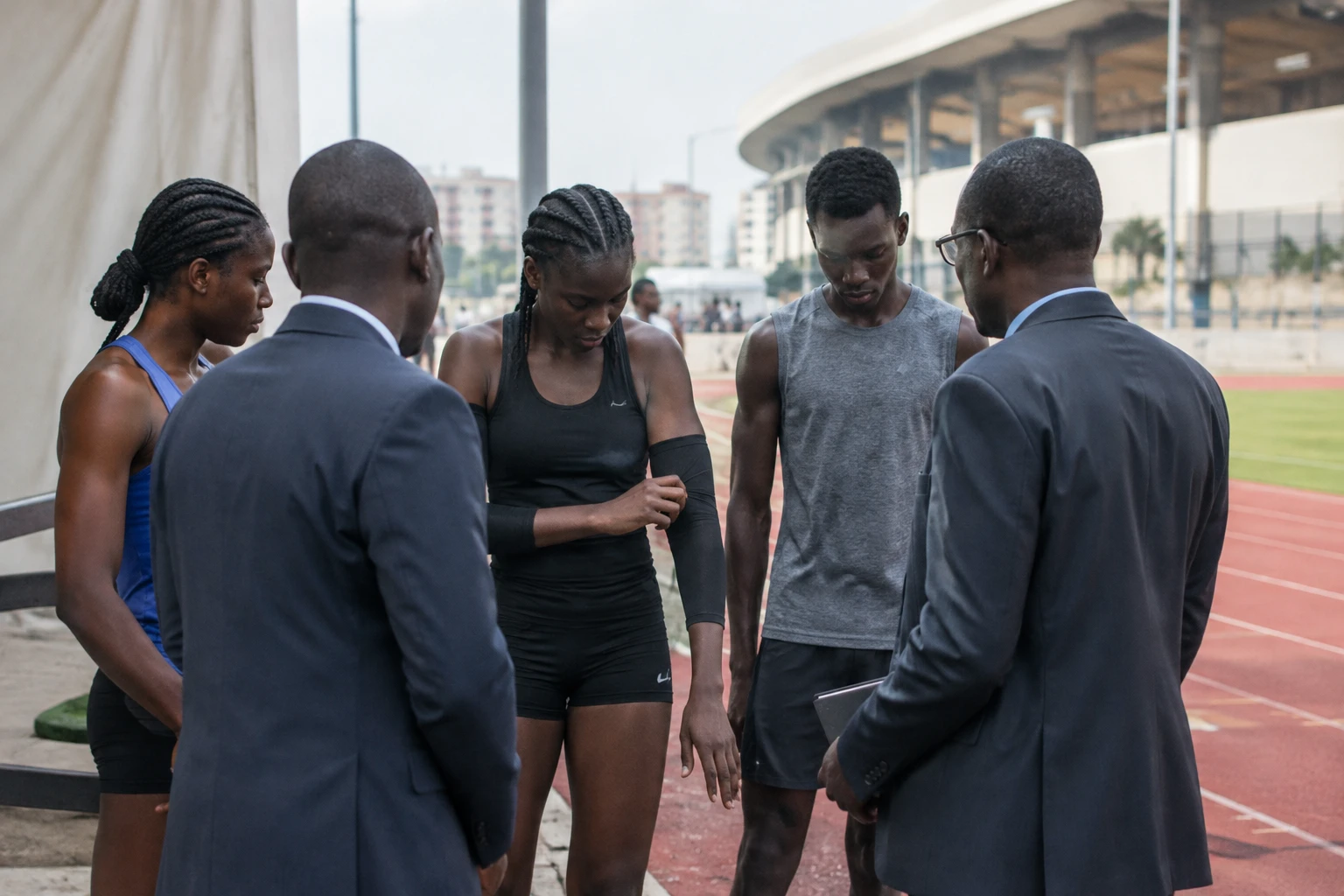
When the Youth Olympic Games (YOG) open in Senegal on 31 October, six young refugees will take part in a first: a dedicated Olympic team of displaced athletes will compete in the event for the first time. Among them are two sprinters from eastern Democratic Republic of the Congo, Florence Masumbe and Rachid Rochene, who will race in the 200 metres.
Their presence brings a story of displacement to an event hosted in Dakar, but neither their experience nor their future on the track is defined solely by exile. It also raises a practical question: what conditions enable young athletes to continue their studies, training and ambitions after fleeing their country?
From Uganda to the track in Dakar
Florence Masumbe, 16, grew up in the Rwamwanja refugee settlement in western Uganda. Rachid Rochene, also a teenager, trains in the country that welcomed his family after they fled eastern Congo. Both have been selected for the 200 metres, in the women’s and men’s events respectively.
In June, the International Olympic Committee (IOC) announced a delegation of six refugee athletes hosted by the National Olympic Committees of Kenya and Uganda. It includes four athletics competitors, as well as representatives in judo and taekwondo. The team comprises three girls and three boys. Radiodiffusion Télévision Sénégalaise also reported that several athletes had been identified through selection events in Kenya and Uganda.
Their preparations took them to the Kaptagat training centre in Kenya, followed by regional competitions. The Uganda Olympic Committee says Masumbe and Rochene competed in the 200 metres at the Zone V Games of the Association of National Olympic Committees of Africa. These stages provide competition experience ahead of Dakar, but do not guarantee either a result or a lasting sporting career.
Sport, and continuity in their lives
In Uganda, their progress is linked to Game Connect, a programme run by the Olympic Refuge Foundation. According to the Uganda Olympic Committee, the initiative brings displaced young people and host communities together in several locations. It uses sport to support psychosocial well-being, social ties and inclusion. The organisation says it reaches more than 10,000 young people.
The programme provides a training framework and opportunities to meet others. But an Olympic selection does not resolve everyday obstacles: access to education, transport, equipment, coaching and continuity of sporting support. For young refugees, the assistance they need therefore extends beyond the competition itself. The source of the information about Masumbe and Rochene also mentions funding for their preparations. As this amount has not been confirmed by a second independent source, it is not included here.
Florence hopes athletics will broaden her prospects, particularly in education, and encourage other young refugees. Rachid says he wants to race against the best. Their ambitions are personal. They should not be reduced to a symbolic role, even if their presence will bring new visibility to displaced young athletes.
The United Nations High Commissioner for Refugees (UNHCR) has welcomed the creation of this first team of young refugees. In its statement, it says the six members live in Kenya or Uganda and come from several African countries. The two Congolese sprinters are therefore part of a diverse delegation, rather than a team representing a single country of origin.
Dakar, a sporting stage and an African gathering
The YOG will take place from 31 October to 13 November 2026 in Dakar, Diamniadio and Saly. Around 2,700 athletes aged 17 and under are expected, according to RTS. It is the first Olympic event to be held on the African continent. For Senegal, the challenge also lies in hosting a competition spread across several venues and bringing the event beyond the capital, to the locations where events will be held.
The event reaches beyond Senegal’s borders. In West Africa, ECOWAS members — the Economic Community of West African States — share concerns around mobility, young people and sporting cooperation. The Games will not solve the difficulties faced by displaced people. They do, however, provide a stage on which African sporting institutions, host countries and international organisations can bring visibility to stories often absent from major competitions.
The IOC and UNHCR describe this participation as a first for the YOG. The Uganda Olympic Committee, meanwhile, highlights the role of local programmes in identifying and supporting athletes. These approaches converge on one point: access to competition depends on partnerships and work that begins well before athletes arrive at the stadium.
In Dakar, Masumbe and Rochene’s times will be measured like those of their fellow competitors. Their participation also serves as a reminder that access to elite sport remains dependent on practical resources: training, education and long-term support. After the Games, the question will be whether this first team opens up lasting opportunities for displaced young athletes, in Senegal and in the countries hosting them.