Algeria
 Egypt
 Libya
 Morocco
 Sudan
 Tunisia
 Benin
 Burkina Faso
 Cabo Verde
 Côte d'Ivoire
 Ghana
 Guinea
 Guinea-Bissau
 Liberia
 Mali
 Mauritania
 Niger
 Nigeria
 Senegal
 Sierra Leone
 The Gambia
 Togo
 Cameroon
 Chad
 DR Congo
 Equatorial Guinea
 Gabon
 Republic of the Congo
 São Tomé and Príncipe
 Burundi
 Comoros
 Djibouti
 Eritrea
 Ethiopia
 Kenya
 Madagascar
 Malawi
 Mauritius
 Mozambique
 Rwanda
 Seychelles
 Somalia
 South Sudan
 Tanzania
 Uganda
 Angola
 Botswana
 Eswatini
 Lesotho
 Namibia
 South Africa
 Zambia
 Zimbabwe
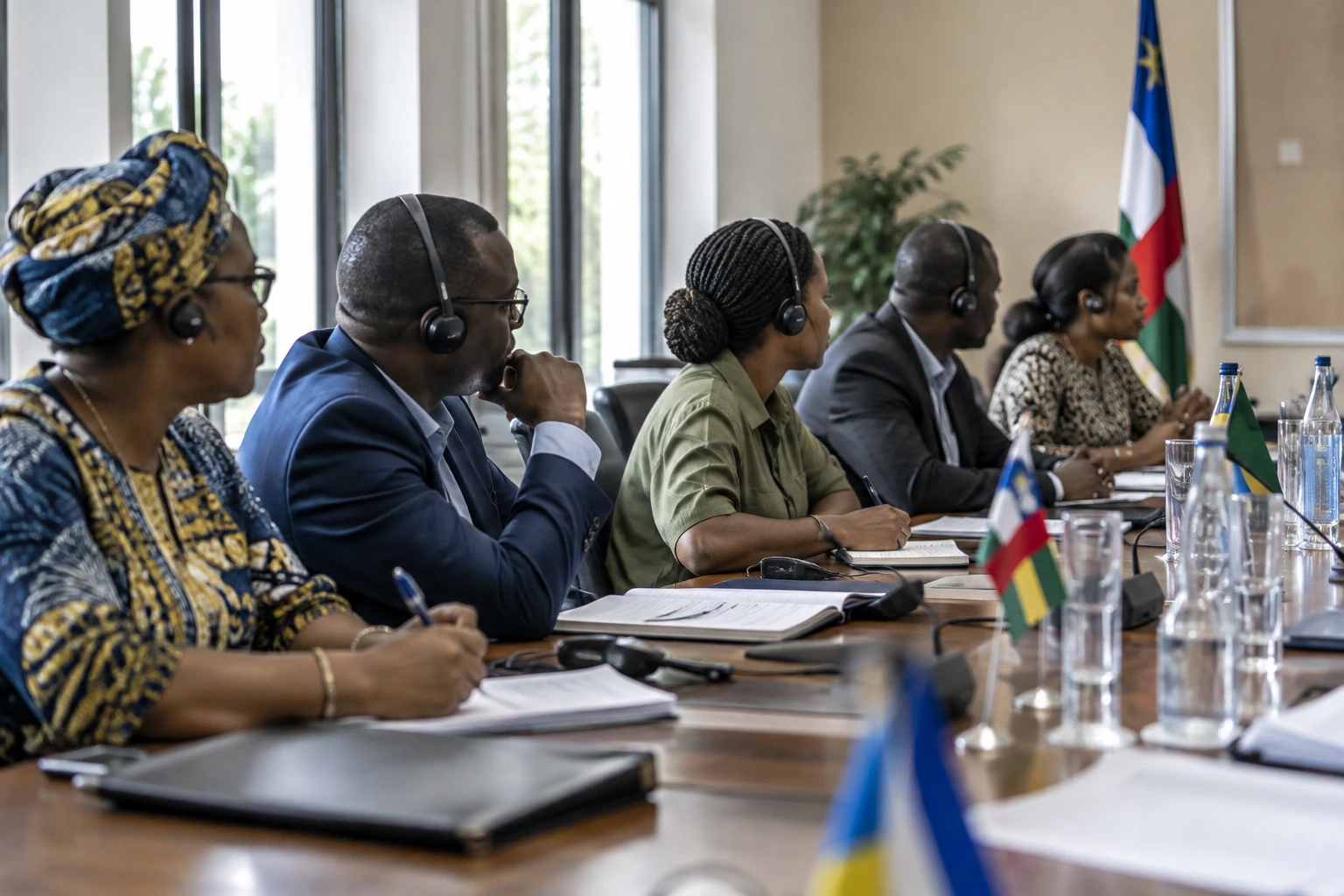
In the streets of Bangui, fuel prices weigh on travel, transport and the cost of goods. The protest against the increase is now testing another balance: that between maintaining public order and freedom of expression in the Central African Republic.
A protest over the cost of living
On 12 October 2026, civil society organisations called for a «dead city» day to denounce the cost of living and rising fuel prices. This form of protest aims to reduce the city’s usual activity in order to make collective discontent visible. It can also disrupt travel and business, particularly for workers who depend on daily earnings.
On 15 October, five civil society leaders were arrested in Bangui. They were subsequently questioned by the Research and Investigation Section (SRI), a gendarmerie unit, according to reports by several media outlets. Civil society organisations are calling for their release and denouncing an infringement of fundamental freedoms. The arrests have prompted calls for their release, including from the Forces vives de la nation, a platform bringing together different sections of Central African society.
The protest is therefore about more than prices at the pump. It also raises the question of the conditions under which citizens can challenge a public decision and call the authorities to account. At this stage, the available information does not publicly establish the details of the charges against the five people.
Head of state refers case to the courts
President Faustin-Archange Touadéra spoke on Wednesday 21 October at a meeting with civil society representatives who had come to seek the release of their colleagues. He said the case was a matter for the courts and that it was not for him to intervene in ongoing proceedings. He invoked the separation of powers and the principle that no one is above the law.
This position now puts the focus on the conduct of the proceedings: access to a lawyer, information about the grounds for detention, appearance before the judicial authorities and a decision on whether detention should continue. The activists’ lawyer, quoted in the available reports, says his clients have begun a hunger strike and are waiting to be received by the public prosecutor. This account remains attributed to their defence.
The president also criticised the use of a «dead city» day, which he considers inappropriate in a country still marked by the 2013 crisis. He said he would have preferred peaceful marches overseen by the security forces. The distinction raises a practical issue: the authorities can regulate gatherings, but their response to a protest must also respect the safeguards provided for by law.
Between national security and civil liberties
Faustin-Archange Touadéra raised the possibility of an attempt to destabilise the country and accused opponents of exploiting civil society, or even acting alongside rebel groups. These allegations, reported without publicly available evidence that would allow them to be independently verified, should be treated as the head of state’s position, not as established facts.
The president also drew a parallel between the call to bring activities to a halt and a rebel incursion at the Chadian border, which he says was repelled by the Central African Armed Forces in Vakaga, as well as fuel supply difficulties linked to a strike by Cameroonian truck drivers. These points do not, in themselves, demonstrate a link between the activists and armed groups. Presenting them as a single sequence could blur the distinction between social protest and a security threat.
This caution is particularly important in a country whose institutions and population have been profoundly affected by the 2013 crisis. Security concerns are real, but they do not relieve the authorities of the obligation to specify the grounds for an arrest and ensure due process. For their part, protest organisers must take account of the consequences their slogans may have for people whose livelihoods depend on daily activity.
An issue extending beyond Bangui
Rising fuel prices affect Central Africans in different ways. In the capital, they increase the cost of journeys and transporting goods. For traders and workers in the informal economy, a day without work can mean an immediate loss of income. Outside Bangui, where distances and supply difficulties make travel more challenging, changes in transport costs can also feed through into the prices of goods.
The Central African Republic belongs to CEMAC, the Economic and Monetary Community of Central Africa, which brings together six states around economic and monetary co-operation. It is also a member of ECCAS, the Economic Community of Central African States, the regional organisation tasked with promoting political, economic and security co-operation. Dependence on regional supply routes, particularly those linked to Cameroon, is a reminder that fuel pressures can have effects beyond national borders.
What happens next will depend on concrete decisions: will the courts specify the grounds for detention and receive the people concerned? Will the authorities address concerns about fuel costs? And will civil society organisations be able to continue their demands without those demands being equated, in the absence of publicly disclosed evidence, with an attempt to destabilise the country? In this case, how these questions are handled will weigh as heavily as the fate of the five activists on trust between the institutions and Central African society.
To understand the regional context, the official presentation of CEMAC describes its six member states and integration objectives. ECCAS, for its part, sets out its co-operation mandate in Central Africa. The arrests and questioning on 19 October were also reported by AllAfrica and Radio Ndeke Luka.