
 Algeria
 Egypt
 Libya
 Morocco
 Sudan
 Tunisia
 Benin
 Burkina Faso
 Cabo Verde
 Côte d'Ivoire
 Ghana
 Guinea
 Guinea-Bissau
 Liberia
 Mali
 Mauritania
 Niger
 Nigeria
 Senegal
 Sierra Leone
 The Gambia
 Togo
 Cameroon
 Central African Republic
 Chad
 Equatorial Guinea
 Gabon
 Republic of the Congo
 São Tomé and Príncipe
 Burundi
 Comoros
 Djibouti
 Eritrea
 Ethiopia
 Kenya
 Madagascar
 Malawi
 Mauritius
 Mozambique
 Rwanda
 Seychelles
 Somalia
 South Sudan
 Tanzania
 Uganda
 Angola
 Botswana
 Eswatini
 Lesotho
 Namibia
 South Africa
 Zambia
 Zimbabwe
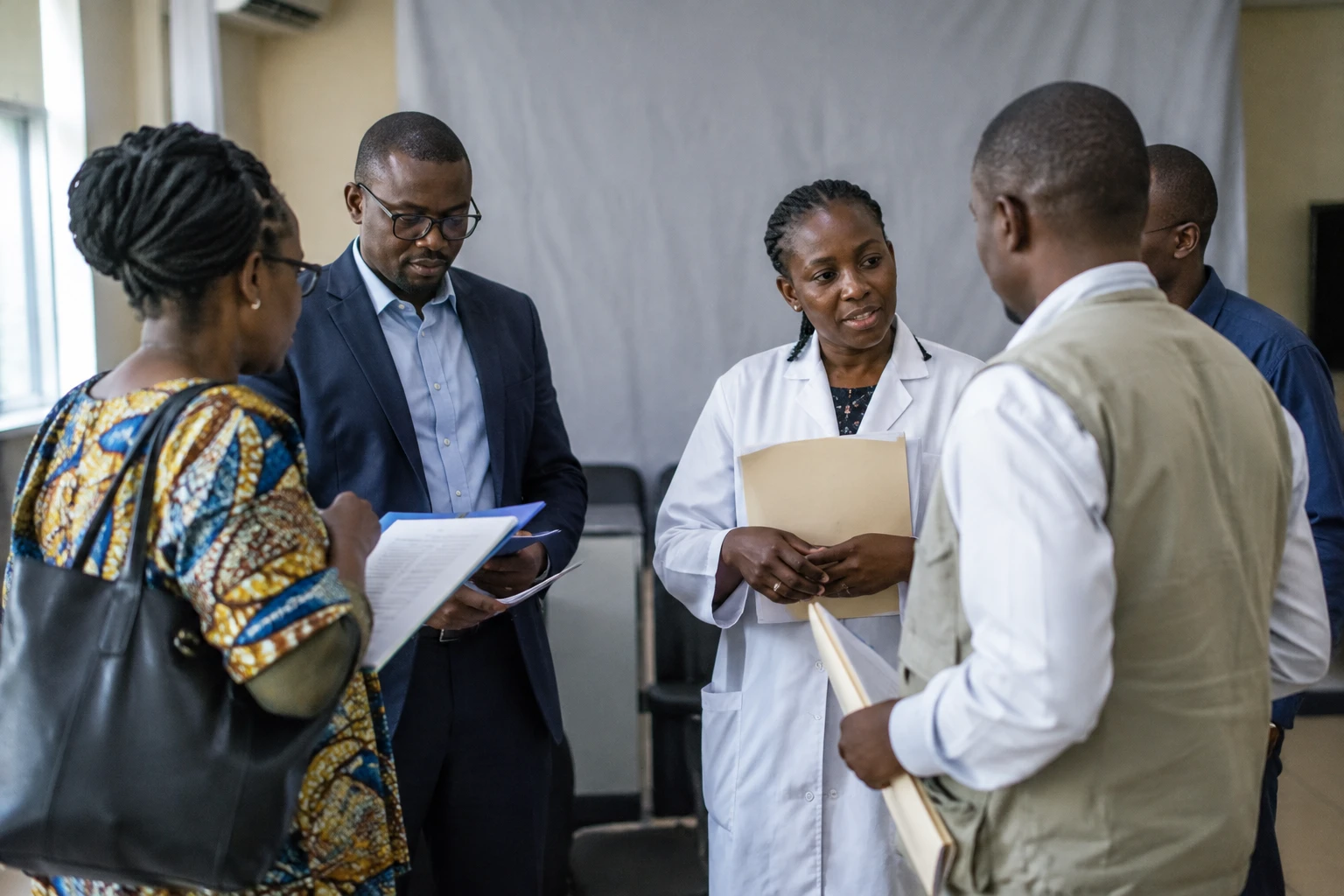
A case detected in Abuja can mobilise health teams thousands of kilometres away. The Bundibugyo Ebola outbreak, which began in eastern Democratic Republic of the Congo (DR Congo), has now reached Nigeria, linking Central, East and West Africa in a matter of months.
An active outbreak in eastern DR Congo
DR Congo remains the main known outbreak site. As of 19 October 2026, the World Health Organization (WHO) had recorded 9,637 confirmed cases and 4,646 deaths in the country, across 66 health zones and eight provinces. These figures change as investigations proceed and may be revised. Ituri accounts for the largest share of cases, while transmission persists notably in North Kivu and Haut-Uélé.
The spread is taking place in areas where insecurity, population displacement and difficult humanitarian access complicate surveillance and care. The effects vary from place to place: people in remote areas may have to travel long distances to seek medical attention, while urban health facilities can be exposed when a case is treated there before being identified.
The outbreak began in May 2026. It is the 17th Ebola epidemic reported in DR Congo, according to the European Centre for Disease Prevention and Control. The country has experienced other outbreaks, including the one in the east in 2018–2020. But the Bundibugyo virus, which is distinct from the Zaire strain, currently has neither an approved vaccine nor an authorised specific treatment. Early detection, isolation and contact tracing therefore remain essential.
One confirmed infection in Abuja, no established transmission yet
Nigeria’s Federal Ministry of Health announced on 20 October that a case had been confirmed by laboratory testing in the Federal Capital Territory, where Abuja is located. The patient, a woman who had recently travelled through Uganda, developed symptoms on 7 October, four days after arriving in Nigeria. She sought care at a private facility on 11 October and is receiving treatment in isolation.
Authorities have identified 44 contacts and are monitoring them. They are still working to reconstruct the patient’s movements and exposures to determine where the infection occurred. The Nigeria Centre for Disease Control and Prevention has activated its incident management mechanism. At the time of the announcement, public information did not report any confirmed secondary transmission in Nigeria.
Nigeria is the fifth country affected by this outbreak, after DR Congo, Uganda, Kenya and France, where an evacuated health worker tested positive in June. Uganda subsequently declared its episode over, after 42 days without a new confirmed case. In Kenya, by contrast, an imported case detected in early October was followed by new infections among relatives and health workers. The WHO report published with data up to 19 October highlights the spread of the outbreak in Kenya.
A response that must track movement
The confirmation in Nigeria puts West African vigilance centre stage. It does not mean an epidemic has taken hold there. It does, however, call for rapid investigations, laboratories able to identify this strain, rigorous contact tracing and preventive measures in health facilities. Border checks can help identify symptoms, but they are no substitute for accessible care or surveillance in communities.
Movement between DR Congo, Uganda and Kenya also shows why a response confined to national borders would be inadequate. Trade, family visits and work create multiple routes. Regional coordination must therefore enable the rapid sharing of alerts, laboratory results and information useful for tracing, without needlessly disrupting exchanges or stigmatising travellers.
The West African experience of 2014–2016 offers useful lessons, though the two situations are not identical. Guinea, Liberia and Sierra Leone experienced a major epidemic at the time. Nigeria and Senegal also detected cases, then contained transmission. That experience underscores the importance of detecting infections early and protecting health workers, while tailoring measures to the current strain and context.
The next continental meeting
The crisis spans several regions: DR Congo is at the centre of concerns in Central and East Africa, while Nigeria plays a major role in West Africa. The African Union has a health coordination mechanism in Africa CDC, its specialised agency. It declared the outbreak a Public Health Emergency of Continental Security on 18 May.
On 21 October, Africa CDC announced a virtual meeting of African health ministers for 28 October. Discussions are expected to cover cross-border coordination, support for affected countries and preparedness in other states. The meeting will provide a concrete indication of governments’ ability to pool alerts and resources, as the epidemic remains active in DR Congo and cases have been reported in several regions of the continent.
For people in DR Congo, the immediate challenge remains containing chains of transmission in affected provinces and ensuring teams can reach communities. For neighbouring countries, it is a matter of detecting any imported case quickly and providing care without delay. The success of the response will depend as much on cooperation between states as on public trust in health services.



