Algeria
 Egypt
 Libya
 Morocco
 Sudan
 Tunisia
 Benin
 Burkina Faso
 Cabo Verde
 Côte d'Ivoire
 Ghana
 Guinea
 Guinea-Bissau
 Liberia
 Mali
 Mauritania
 Niger
 Nigeria
 Sierra Leone
 The Gambia
 Togo
 Cameroon
 Central African Republic
 Chad
 DR Congo
 Equatorial Guinea
 Gabon
 Republic of the Congo
 São Tomé and Príncipe
 Burundi
 Comoros
 Djibouti
 Eritrea
 Ethiopia
 Kenya
 Madagascar
 Malawi
 Mauritius
 Mozambique
 Rwanda
 Seychelles
 Somalia
 South Sudan
 Tanzania
 Uganda
 Angola
 Botswana
 Eswatini
 Lesotho
 Namibia
 South Africa
 Zambia
 Zimbabwe
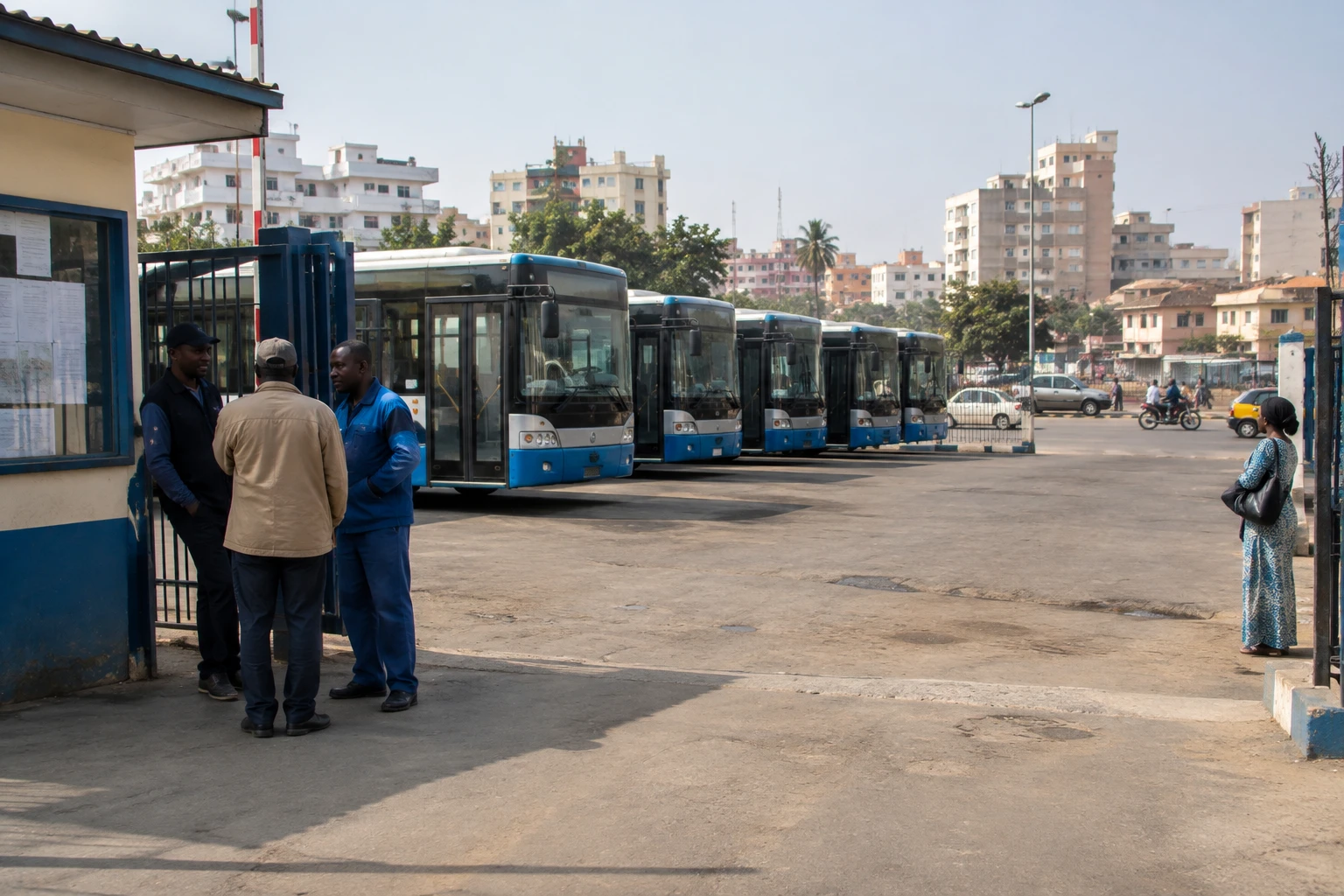
In Dakar, a day of strike action can be measured in the time spent waiting for a bus, the chance of receiving medical care or whether a school is open. The movement launched on Wednesday 21 October is putting two immediate priorities to the test: workers’ demands and the continuity of public services, 10 days before the Youth Olympic Games open.
A movement affecting essential services
The Trade Union Front for the Defence of Workers (FSDT) has called for a three-day stoppage from 21 to 23 October. The action affects several sectors, including education, healthcare, justice and transport. Demands include a housing allowance, purchasing power and the rules governing work.
In Dakar, the initial effects reported vary by activity. Buses operated by the public company Dakar Dem Dikk remained at the depot. At Abass Ndao Hospital, emergency services are continuing to operate, while some operations have been rescheduled. Disruption in schools was not widespread at the start of the movement. The level of participation may therefore change over the three days.
This difference between sectors matters. Transport users and patients feel service stoppages quickly. In schools, the consequences may emerge more gradually, with missed lessons and schedules needing to be rearranged. Workers who cannot stop working, particularly in the informal economy, are not affected in the same way as public-sector employees.
The Senegalese Press Agency reported that the FSDT planned a national mobilisation from 21 to 23 October across the public, private and informal sectors. The front presents the action as a protest against a lack of social dialogue and the effects of new labour provisions. The FSDT’s announcement of the dates and demands provides context for the call, but does not in itself establish the level of participation in each sector.
Social dialogue and a legal standoff
The government has urged unions to call off the strike and has described it as “unlawful”. This is the executive’s assessment; it does not, by itself, settle the legal question. The authorities have also raised the possibility of wage deductions for striking employees. For the households concerned, the cost of the movement could therefore add to the income difficulties that unions have placed at the heart of their demands.
The dispute follows the promulgation, on 3 September 2026, of new laws relating to the Labour Code and Social Security. Unions are challenging, in particular, how the changes were drawn up and their consequences for employees. The ministry responsible for labour publishes the legislation on its portal, making it possible to distinguish the legal text from criticism by trade union organisations. The labour legislation published by the Directorate-General for Labour provides a reference point for following the debate.
The mobilisation also comes amid a round of negotiations. Prime Minister Ahmadou Al Aminou Lô had called on unions to suspend their action and proposed a three-month moratorium under the National Pact for Social Stability, signed in 2025. The appeal did not prevent the strike from starting. This gap highlights the difficulty of turning dialogue meetings into commitments workers consider concrete enough.
On 20 October, the governor of Dakar ordered employees of the National Electricity Company (Senelec) to be requisitioned to maintain functions deemed essential. The measure applies from 21 to 23 October. Senegalese media report that the union concerned considers the requisition excessive, as it would also cover roles it does not regard as essential. The employees concerned must comply with the order. The report on the Senelec requisition order specifies its duration and stated purpose.
The Youth Olympics in the background, not an answer to workers’ demands
The government has also cited the proximity of the Youth Olympic Games, scheduled to take place in Dakar from 31 October to 13 November. The event, which is being held in Africa for the first time, puts Senegal at the centre of international sporting attention. But preparations for the event and workers’ demands are two distinct issues. The imminent Games do not resolve either the debate over the Labour Code or demands for greater purchasing power. The official schedule for the Dakar Youth Olympics places the competition in the context of current events.
For the authorities, continuity in transport, electricity, healthcare and administrative services is particularly visible as the Games approach. For unions, this visibility strengthens the leverage of their mobilisation. Caught between these positions, users risk bearing an immediate share of the cost: delayed journeys, postponed medical appointments or interrupted administrative procedures.
What happens next will depend on the participation rate, the enforcement of requisitions and the resumption of talks. The movement is not confined to the capital: the FSDT’s call targets several sectors nationwide, although the initial effects described are mainly in Dakar. It will therefore be important to distinguish the reach of the union call from actual participation across regions and professions.
Across West Africa, the episode is a reminder that social stability also depends on negotiating labour rules and building trust between public authorities and unions. The Games will give Senegal significant regional and continental visibility. But the immediate test is domestic: whether the government and trade union organisations can resume dialogue without leaving essential services and their users to bear the full burden of the dispute.