Algeria
 Egypt
 Libya
 Morocco
 Sudan
 Tunisia
 Benin
 Burkina Faso
 Cabo Verde
 Côte d'Ivoire
 Ghana
 Guinea
 Guinea-Bissau
 Liberia
 Mali
 Mauritania
 Niger
 Nigeria
 Senegal
 Sierra Leone
 The Gambia
 Togo
 Cameroon
 Chad
 DR Congo
 Equatorial Guinea
 Gabon
 Republic of the Congo
 São Tomé and Príncipe
 Burundi
 Comoros
 Djibouti
 Eritrea
 Ethiopia
 Kenya
 Madagascar
 Malawi
 Mauritius
 Mozambique
 Rwanda
 Seychelles
 Somalia
 South Sudan
 Tanzania
 Uganda
 Angola
 Botswana
 Eswatini
 Lesotho
 Namibia
 South Africa
 Zambia
 Zimbabwe
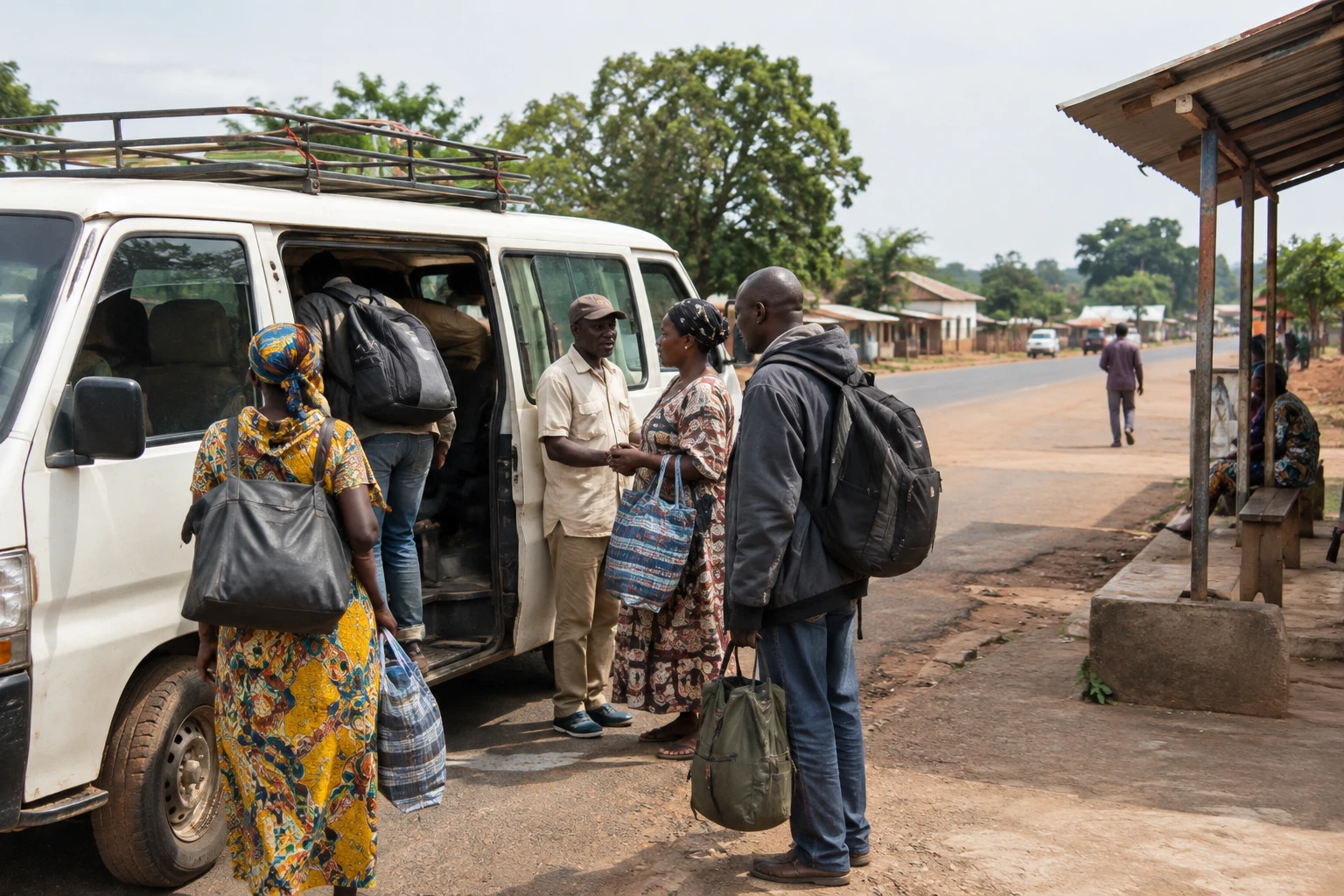
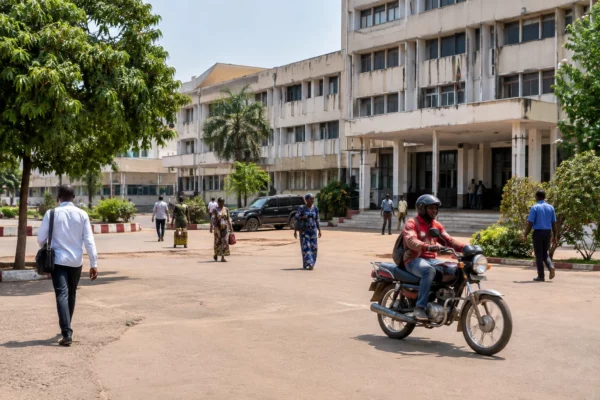
In the north-east of the Central African Republic, an attack can displace thousands of people and put civilian protection and the presence of the state to the test within hours. In Am-Dafock, near Sudan, the violence in June showed how much local security still depends on a fragile balance between national forces, residents and peacekeepers.
At the border, the consequences of an attack persist
Am-Dafock is in Vakaga prefecture, a remote region in the north-east of the Central African Republic, bordering Sudan. The war in the neighbouring country weighs on this border area, where displaced people are on the move and the authorities struggle to maintain their presence. The Sudan crisis therefore does not stop at the border: it increases protection needs and complicates the work of humanitarian organisations.
On 30 June 2026, armed groups attacked the town. In a briefing to the UN Security Council, Valentine Rugwabiza, the Secretary-General’s Special Representative and head of MINUSCA — the UN peacekeeping mission in the Central African Republic — said civilians and members of the national forces had been killed. She also reported that six peacekeepers had been wounded and more than 17,000 people displaced to the vicinity of the mission’s temporary base.
MINUSCA later specified that 17,585 people had taken refuge near the base. The figure describes a changing situation, not a final tally. The mission says it provided a protective presence and facilitated the delivery of aid. Information published in July by the mission and local officials also reported displaced people hosted in Birao, another centre in Vakaga. The concentration of families near a base highlights both the importance of this protection and the shortage of accessible safe shelters in the region.
For residents, displacement disrupts daily life and access to services. Families who have left their homes depend on assistance to meet immediate needs, while local services must continue operating despite damage and insecurity. MINUSCA said it had helped ensure the continuity of the administration in Am-Dafock. This is important: protection is not limited to keeping a threat at bay; it also means ensuring that residents can regain access to services and a public presence.
Hostages released after mediation
Another security issue concerns Bambouti, in Haut-Mbomou, in the south-east of the country. The UN representative told the Security Council that hostages held by the armed group Azandé Ani Kpi Gbé (AAKG) had been released following the attack of 28 December 2025. They included Bambouti’s sub-prefect. According to Rugwabiza, the release, announced on 19 October 2026, followed several months of mediation involving local officials and MINUSCA.
Central African media outlet Ndjoni Sango also reported the release of the sub-prefect and other people abducted in Bambouti. However, the accounts consulted do not fully agree on the date of the attack or the precise circumstances of the detention. It is therefore more prudent to rely on the corroborated fact — the announced release — and attribute the details to those who provided them. Mediation can help free captives from a dangerous situation, but on its own it does not address the causes of insecurity in Haut-Mbomou.
The two episodes, hundreds of kilometres apart, are a reminder that the challenges are not the same everywhere. In the east, proximity to Sudan and population movements weigh on Vakaga. In the south-east, tensions around Bambouti involve armed groups and local authorities. A response designed solely from Bangui risks overlooking the realities of these areas: needs, actors and access routes differ from one prefecture to another.
International presence and national responsibility
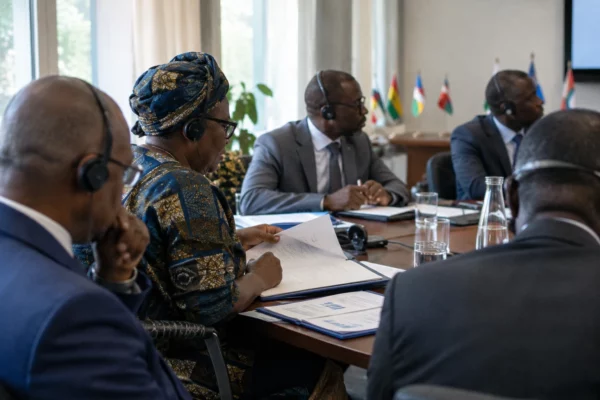
MINUSCA is back in focus as the Security Council prepares to renew its mandate, in November. In his report submitted on 13 October, the UN Secretary-General recommends extending the mission for one year, with a ceiling of 12,000 military personnel. The current authorised ceiling is 14,046 military personnel; 10,292 are deployed, according to figures presented to the Council. These numbers refer to authorised and deployed personnel, two different measures that should not be confused.
The debate concerns the pace at which the mission can reduce or transfer certain responsibilities. Supporters of an international presence argue that a withdrawal that is too rapid could create protection gaps in remote areas. By contrast, the Central African government and several Council members point to the need to strengthen national capacity and prepare the transition. The challenge is to increase the responsibility of the country’s institutions without further exposing civilians while local resources remain limited.
The head of MINUSCA also discussed the establishment of local institutions following the elections. As of 1 October, 127 of 177 municipalities had installed their elected officials, according to figures she provided. She stressed the need to strengthen the capacity of the new authorities. For residents, these administrations provide a practical link between national decisions and local services. But their formal establishment alone does not guarantee that they have the resources or security needed to act.
The Central African representative to the UN, Marius Aristide Hoja Nzessioué, defended the progress made by the country while recalling the weight of past crises. He cited World Bank data indicating that about 67% of the population lives in extreme poverty, a proportion that reaches 78% in rural areas. These figures, cited in his remarks, shed light on the constraints faced by families and communities, but should not obscure differences between regions or local reconstruction efforts.
A stability issue for Central Africa
For the Central African Republic, a member of the Central African Economic and Monetary Community (CEMAC), border areas are both places of movement and spaces where neighbouring crises can have direct effects. The situation in Sudan thus gives the humanitarian needs in Vakaga a regional dimension. It is also a reminder that stability is not measured only in the capital: it depends on institutions’ ability to protect residents in remote prefectures.
The next developments to watch are the renewal of MINUSCA’s mandate in November and the implementation of the Secretary-General’s recommendations. The Council’s decision will need to specify the mission’s resources and the role of a gradual transfer of responsibilities. In Am-Dafock and Bambouti alike, the practical test will remain the same: reduce risks to civilians and enable local authorities to function, without a security transition creating new gaps.
Sources consulted: MINUSCA humanitarian update on Am-Dafock ; information on displaced people and local administration ; Central African report on the release in Bambouti ; analysis of the Security Council meeting and report ; background on MINUSCA’s current mandate.