
 Algeria
 Egypt
 Libya
 Morocco
 Sudan
 Tunisia
 Benin
 Burkina Faso
 Cabo Verde
 Côte d'Ivoire
 Ghana
 Guinea
 Guinea-Bissau
 Liberia
 Mali
 Mauritania
 Niger
 Nigeria
 Senegal
 Sierra Leone
 The Gambia
 Togo
 Cameroon
 Central African Republic
 Chad
 Equatorial Guinea
 Gabon
 Republic of the Congo
 São Tomé and Príncipe
 Burundi
 Comoros
 Djibouti
 Eritrea
 Ethiopia
 Kenya
 Madagascar
 Malawi
 Mauritius
 Mozambique
 Rwanda
 Seychelles
 Somalia
 South Sudan
 Tanzania
 Uganda
 Angola
 Botswana
 Eswatini
 Lesotho
 Namibia
 South Africa
 Zambia
 Zimbabwe
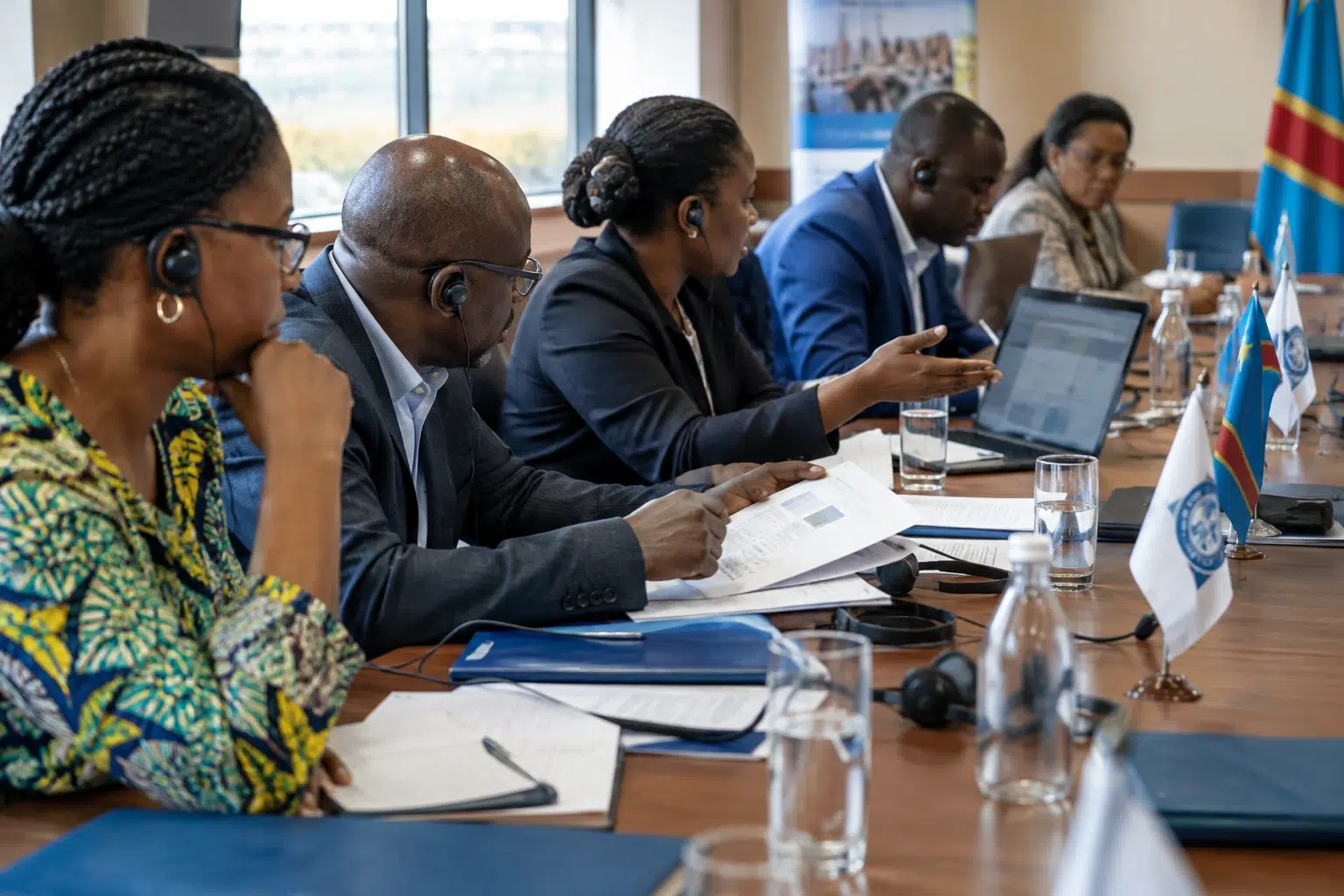
Nearly $1 billion announced to fight Ebola in the Democratic Republic of the Congo: the gap between the sums declared and those for which spending is documented raises an immediate question. Where was the funding sent, and how can we know whether it reached the teams and populations concerned? At this stage, an amount that cannot be traced is not, by itself, proof of misappropriation.
Funding went to implementing partners, not necessarily the Treasury
The debate concerns the outbreak declared in May 2026 in eastern DR Congo. On 14 October in Kinshasa, Jean Kaseya, director-general of Africa CDC — the African Union’s public health agency — referred to $962 million that donors had reportedly disbursed to organisations tasked with carrying out the response. According to his remarks, as reported by several Congolese media outlets, only a little over $200 million could then be traced in information collected from partners.
The distinction matters: the sums were reportedly paid to implementing organisations, and not necessarily to the Congolese government. The figure described as “untraceable” therefore primarily points to a shortfall in the reporting or reconciliation of accounts. Without an audit or detailed data, it does not allow us to conclude that the money has disappeared or been misappropriated.
Reports by the Congolese Press Agency, Radio Okapi and local media confirm the date of the alert and the broad scale of the figure cited by Kaseya. The figures nevertheless remain those he presented: they do not yet constitute an audited financial statement published line by line.
A monitoring mechanism, but reports remain incomplete
The World Health Organization says the funds can be traced and that work is under way. Catherine Smallwood, the WHO’s incident management lead in DR Congo, explains that the organisation, Africa CDC, the Congolese government and partners are using a financial monitoring mechanism, the Financial Tracking Mechanism (FTM). The tool asks organisations to report the sums received and the extent to which they have been used.
In remarks reported in the material provided, Smallwood says that not all partners have yet responded. The WHO therefore presents the problem as an unfinished exercise in collecting and consolidating information, not as an inability to track the funds. This response does not resolve the question raised by Africa CDC: as long as reports are missing, the authorities do not have a complete picture of the funding, its spending and the activities it has enabled.
Monitoring should make it possible to distinguish several stages: a donor’s announced commitment, actual disbursement, transfer to an organisation, then spending and its results on the ground. These categories are not interchangeable. Without a breakdown by period, partner, province and activity, comparing two totals can create a misleading impression of “missing” funds.
Transparency also matters for the effectiveness of the health response
For the Congolese authorities, the issue is one of coordination and accountability: they need to know which resources are supporting health centres, laboratories, contact tracing and local teams. For partners, publishing consistent information makes it possible to account for spending while protecting sensitive data and avoiding double-counting between donors and implementing organisations.
The tangible impact is felt far from financial spreadsheets. Health teams need resources to be available on time, logistical support and predictable remuneration. In affected areas, residents need clear information and accessible services. If announced sums cannot be linked to verifiable actions, trust may erode. Conversely, a general accusation of misappropriation without supporting evidence risks discrediting all the actors involved indiscriminately.
DR Congo regularly faces health emergencies across a vast territory, where travel and access to services vary considerably from one province to another. The 2026 outbreak is the 17th recorded in the country since the virus was discovered. The WHO and Africa CDC report its spread across several provinces; epidemiological figures change rapidly and should be read as of the date of each report.
A question of regional governance
The response is not a matter for Kinshasa alone. DR Congo is a member of the East African Community (EAC) and the Southern African Development Community (SADC). Cross-border movements and the exchange of health information make regional coordination essential, while Africa CDC can help bring national authorities and partners together. Funding traceability is part of this cooperation: resources mobilised must be linked to public health priorities, without confusing announcements, transfers and spending.
The next expected step is to consolidate partners’ reports in the financial mechanism, then reconcile them with data from the Congolese authorities. To clarify the debate, it will be necessary to know the periods covered, the organisations that have responded, the amounts received and spent, and the remaining discrepancies to be explained. Transparency will not be measured by another overall estimate, but by the ability to document flows and results without presuming guilt.



