Algeria
 Egypt
 Morocco
 Sudan
 Tunisia
 Benin
 Burkina Faso
 Cabo Verde
 Côte d'Ivoire
 Ghana
 Guinea
 Guinea-Bissau
 Liberia
 Mali
 Mauritania
 Niger
 Nigeria
 Senegal
 Sierra Leone
 The Gambia
 Togo
 Cameroon
 Central African Republic
 Chad
 DR Congo
 Equatorial Guinea
 Gabon
 Republic of the Congo
 São Tomé and Príncipe
 Burundi
 Comoros
 Djibouti
 Eritrea
 Ethiopia
 Kenya
 Madagascar
 Malawi
 Mauritius
 Mozambique
 Rwanda
 Seychelles
 Somalia
 South Sudan
 Tanzania
 Uganda
 Angola
 Botswana
 Eswatini
 Lesotho
 Namibia
 South Africa
 Zambia
 Zimbabwe
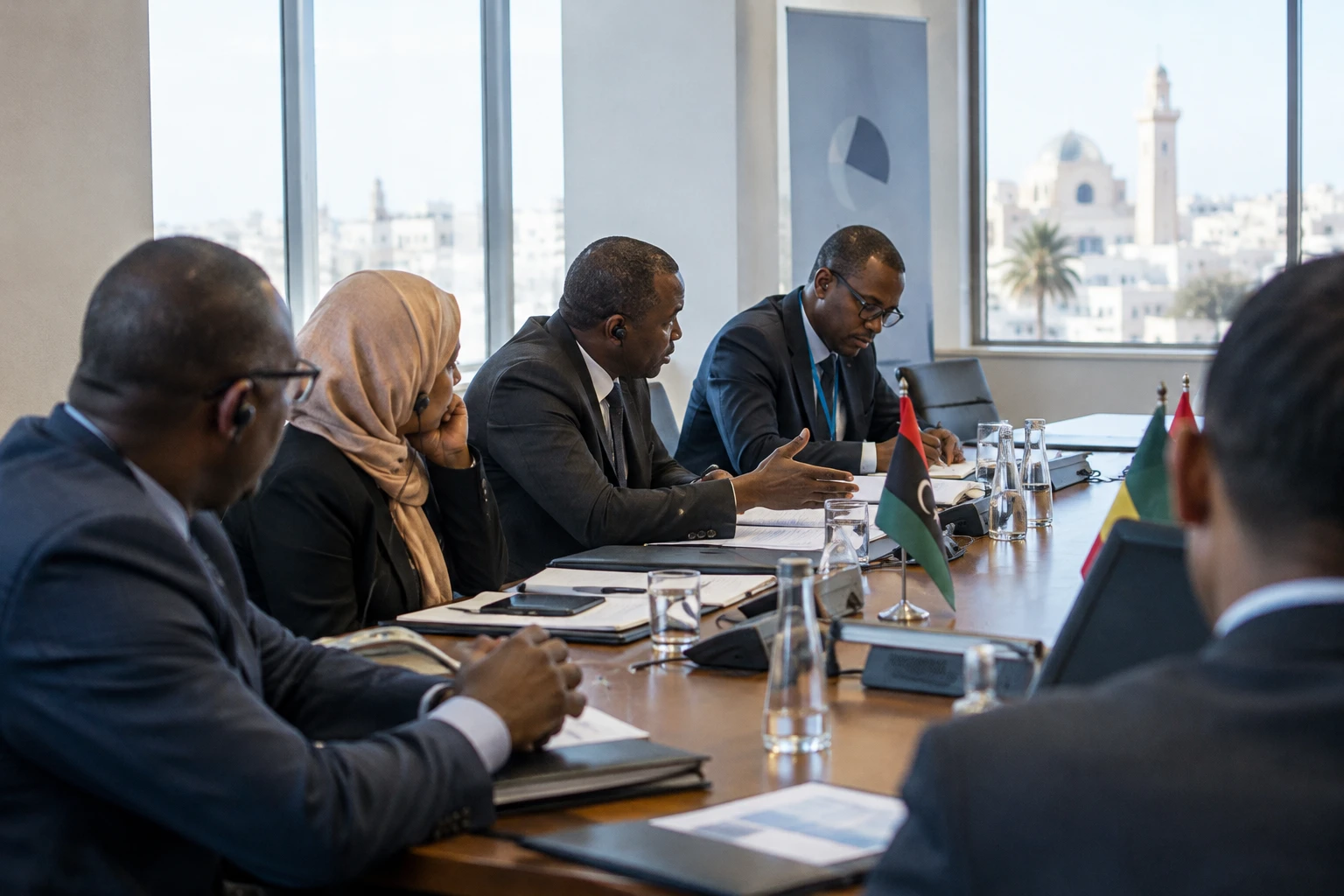
In Libya, subsidised fuel is meant to ease household expenses. Yet when some of the supply disappears before reaching filling stations, public support feeds clandestine networks, leaving motorists facing shortages or the parallel market.
Public aid that fails to reach its beneficiaries
The system is based on a significant price gap. The Libyan state keeps petrol and diesel prices very low, while their resale in neighbouring countries or through informal channels can generate large profits. The International Monetary Fund (IMF), drawing in particular on estimates by the Libyan authorities, says that around 30% of imported fuel may have been smuggled. This is an estimate, not a comprehensive count.
The public cost goes beyond the fuel diverted. Imports of petroleum products reached $9 billion in 2024, compared with an annual average of $3 billion between 2016 and 2019, according to data from the Libyan Audit Bureau cited by the IMF. This figure represents the import bill, not a direct measure of losses caused by trafficking.
An investigation published in November 2025 by the organisation The Sentry estimates, for its part, that petrol and diesel smuggling cost Libya $6.7 billion in 2024. This is a separate estimate, based on a different methodology. It therefore does not, on its own, confirm a single figure for annual losses.
Both analyses, however, describe the same vulnerability: products bought or distributed in the name of national supply can leave official channels. The IMF notes that weak controls across the distribution chain facilitate diversion to the domestic black market or neighbouring countries.
Multiple routes, from the coast to the Sahel
The trade relies on land and maritime networks. Products may be transported by tanker trucks, transferred between ships or moved through opaque distribution channels. Destinations mentioned in investigations and reports include Sudan, Chad and Niger. Routes and actors are not uniform: they vary by region and according to local power dynamics.
Libya’s political geography complicates oversight. Since the fall of Muammar Gaddafi in 2011, institutions and security forces have remained fragmented. The government based in Tripoli has no effective, unified authority across the entire country. In the east, rival authorities and forces linked to Field Marshal Khalifa Haftar exercise power. This division makes coordinated monitoring of ports, depots and borders difficult.
Oil nevertheless remains at the heart of public finances. The National Oil Corporation (NOC) organises production and supply, while the Central Bank plays a role in financing imports and managing revenues. Institutional disagreements and armed networks complicate the tracking of volumes, but the available reports do not make it possible to attribute each diversion to a specific actor.
Shortages are another measure of the cost
For the authorities, smuggling means public resources are spent without guaranteeing supply for Libyans. For residents, the consequences are more immediate: erratic availability in some areas, more expensive purchases on the parallel market and possible disruption to services that depend on diesel, particularly electricity generation.
Households are not the only ones affected. Transport businesses and informal activities, which depend on fuel every day, are particularly exposed to shortages and unregulated prices. By contrast, networks able to organise transport and resale capture some of the profits. This unequal distribution explains why a substantial subsidy on paper does not guarantee equal access in practice.
Cutting subsidies without first strengthening controls also carries a social risk. Some people see cheap fuel as a share of the country’s oil wealth. The IMF points out that any price reform could increase transport and electricity costs, which could then feed through to the prices of goods. The issue is therefore not merely a budgetary one: it concerns trust and how national revenues are redistributed.
A Libyan issue with regional consequences
The estimates differ, but they point to the same scale of weaknesses in oversight. The IMF documents the rapid rise in imports and the limits of traceability. The Sentry describes resale routes across borders. These findings shed light on the problem without establishing that every cargo or operator is involved in an illicit network.
The impact extends beyond Libya’s borders. Flows to the Sahel and Sudan can supply markets where needs are high and controls are difficult. For neighbouring countries, smuggling weakens tax revenues and complicates supply regulation. For Libya, it links the management of oil wealth to border security and the balance of power between rival groups.
At the level of the African Union and the Arab Maghreb Union, the issue is a reminder that an administrative border alone cannot contain transnational networks. Monitoring oil flows, customs cooperation and transparency in procurement are shared concerns, without replacing the responsibility of Libyan institutions.
What happens next will depend less on an announced reform than on verifiable measures: tracking volumes from importation to filling stations, publishing supply data and ensuring that any savings benefit services and households. In a divided country, these changes also require political agreement on resource management. Without oversight and trust, raising prices could make consumers pay for reform without dismantling the networks that profit from diversion.
For further reading, see the IMF’s analysis of energy subsidies in Libya, The Sentry’s report on fuel-smuggling networks and the UN special representative’s address to the Security Council.