
 Algeria
 Egypt
 Libya
 Morocco
 Sudan
 Tunisia
 Benin
 Burkina Faso
 Cabo Verde
 Côte d'Ivoire
 Ghana
 Guinea
 Guinea-Bissau
 Liberia
 Mali
 Mauritania
 Niger
 Nigeria
 Senegal
 Sierra Leone
 The Gambia
 Togo
 Cameroon
 Central African Republic
 Chad
 Equatorial Guinea
 Gabon
 Republic of the Congo
 São Tomé and Príncipe
 Burundi
 Comoros
 Djibouti
 Eritrea
 Ethiopia
 Kenya
 Madagascar
 Malawi
 Mauritius
 Mozambique
 Rwanda
 Seychelles
 Somalia
 South Sudan
 Tanzania
 Uganda
 Angola
 Botswana
 Eswatini
 Lesotho
 Namibia
 South Africa
 Zambia
 Zimbabwe
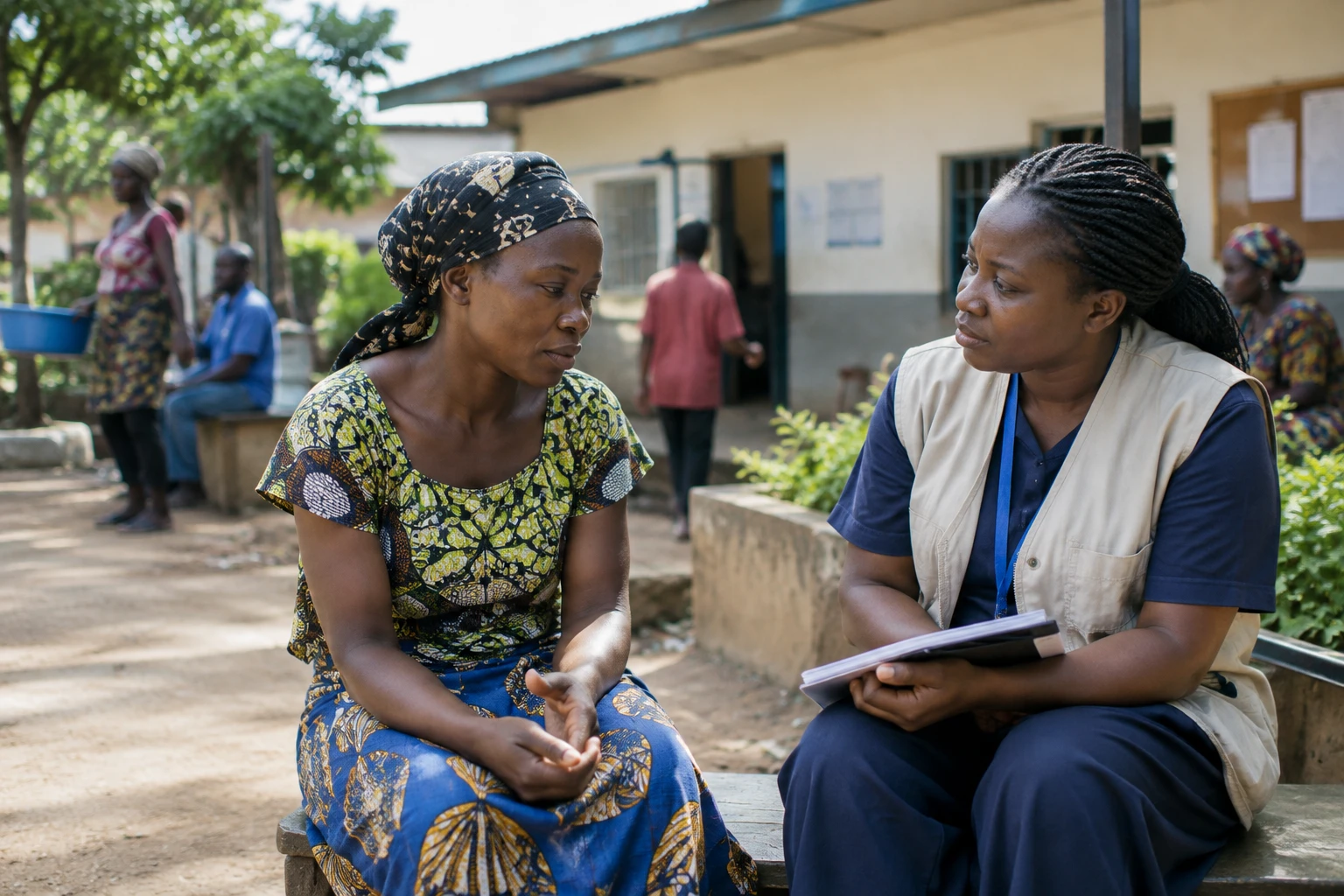
Treating Ebola is not just about tackling an infection. For patients and their relatives, the disease can also disrupt family ties, fuel fear and isolate entire neighbourhoods. In the east of the Democratic Republic of the Congo (DR Congo), this psychological impact adds to a deadly outbreak and years of insecurity.
In the east, fear compounds the health emergency
Bunia, the capital of Ituri province, is at the heart of the response. The city and its surroundings are living under the threat of Ebola, while armed conflict is already weakening services and restricting movement. In this context, a health alert can have consequences that extend beyond treatment centres.
The current outbreak is linked to the Bundibugyo virus, a strain distinct from those behind previous major outbreaks in the Congo. The World Health Organization (WHO) declared the event a public health emergency of international concern in May 2026 because of its spread in DR Congo and Uganda. This designation calls for coordination between countries; it does not mean that a global pandemic has been declared. The WHO’s monitoring of the outbreak highlights, in particular, the importance of surveillance and work with communities.
The figures have risen sharply since the first reports. As of 7 October, the WHO reported 8,787 cases and 4,242 confirmed deaths. The Congolese health ministry reported 9,066 confirmed cases and 4,381 deaths in a tally published on 13 October. These are figures for specific dates and may change as investigations continue and cases are confirmed in laboratories. The WHO update as of 7 October and the ministry’s tally reported on 13 October both point to the scale of the crisis.
Treatment does not end isolation
A woman from Bunia, whose name has not been made public to protect her privacy, lost several family members after the virus reached her neighbourhood. She is receiving psychological support at the Lobiko mental health centre. She says her relatives’ fear and the distance kept by neighbours have intensified her sense of loneliness.
Her experience highlights a less visible effect of the outbreak: stigma. When a family is associated with Ebola, neighbours may avoid all contact, including after recovery or when there is no longer a risk of transmission. This exclusion makes it harder to return to everyday life and may deter some people from seeking care promptly.
In Bunia, nurse Anicet Katembo Vyaluva describes suffering that affects patients, survivors and healthcare teams. Health professionals face the fear of falling ill, the burden of deaths and, at times, suspicion from those around them. First-hand accounts are no substitute for a representative survey of the population, but they show why psychological support is part of the public health response.
Médecins Sans Frontières says it has integrated mental health and psychosocial support into its Ebola activities. The organisation describes isolation and stigma as challenges faced by patients. The Congolese health ministry and the WHO also report that this support is included at different stages of care. MSF’s work on psychosocial support and the account gathered by the WHO in Bunia document this dimension.
Conflict, trust and access to care
The war in the east is not the cause of Ebola. However, it makes the response more difficult: insecurity can hamper movement, disrupt care and keep teams away from communities. It also weighs on residents already facing displacement and the loss of loved ones. Ebola thus becomes an additional ordeal, without erasing the distinct causes of these crises.
Trust matters as much as medical equipment. Rumours or experiences of care perceived as opaque can lead families to hide symptoms or refuse isolation. Attacks on awareness-raising workers illustrate the risks facing the response: the Congolese Press Agency reported that a political figure died in Butembo after being assaulted following a programme about Ebola. The attribution of the motive is based on a statement by his party, as reported by the agency. The ACP report describes the circumstances as announced.
For the authorities and their partners, the challenge is therefore twofold: to contain transmission and explain measures clearly, with the help of local networks. Psychological support can help patients and their families through isolation. It is no substitute for prevention or accessible care, but it can limit the social harm that persists after the illness.
A response that crosses borders
Ituri is close to borders and regional corridors. The movement of people requires health cooperation with neighbouring countries, particularly Uganda, as well as the rapid sharing of alerts. For DR Congo, a member of the East African Community and the Southern African Development Community, the outbreak is a reminder that regional coordination must bring together surveillance, access to care and communication at community level.
What happens next will depend on the course of new cases, the ability to reach affected areas and residents’ trust in the measures on offer. Epidemiological figures are essential, but they do not capture the human cost on their own. In Bunia, care must also take account of what happens after discharge from the centre: returning to loved ones, ending exclusion and being able to ask for help without being reduced to the disease.



