
 Algeria
 Egypt
 Libya
 Morocco
 Sudan
 Tunisia
 Benin
 Burkina Faso
 Cabo Verde
 Côte d'Ivoire
 Ghana
 Guinea
 Guinea-Bissau
 Liberia
 Mali
 Mauritania
 Niger
 Nigeria
 Senegal
 Sierra Leone
 The Gambia
 Togo
 Cameroon
 Chad
 DR Congo
 Equatorial Guinea
 Gabon
 Republic of the Congo
 São Tomé and Príncipe
 Burundi
 Comoros
 Djibouti
 Eritrea
 Ethiopia
 Kenya
 Madagascar
 Malawi
 Mauritius
 Mozambique
 Rwanda
 Seychelles
 Somalia
 South Sudan
 Tanzania
 Uganda
 Angola
 Botswana
 Eswatini
 Lesotho
 Namibia
 South Africa
 Zambia
 Zimbabwe
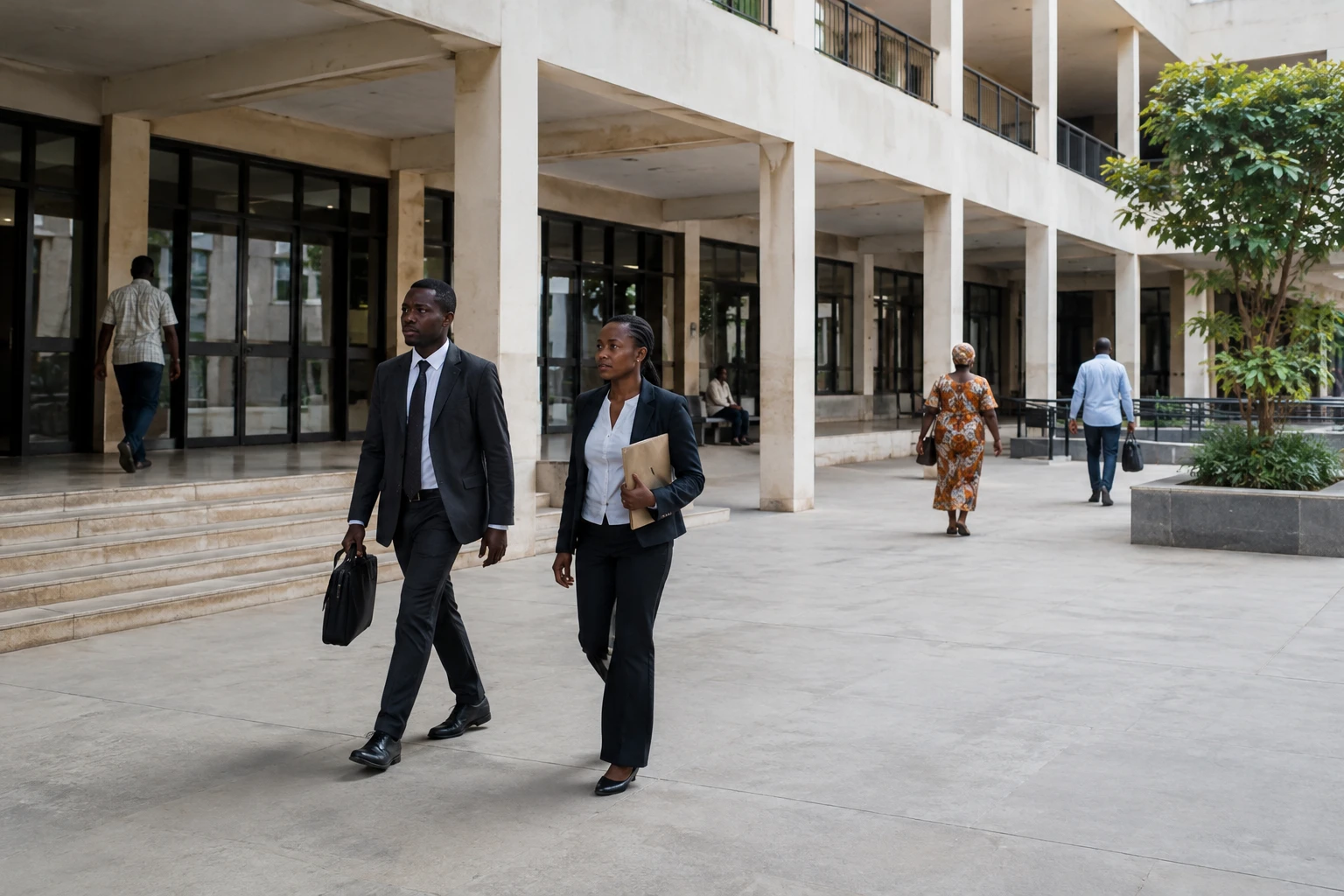
In Bangui, the fuel price rise is also measured in the cost of journeys and goods. But the protest against the increase is now playing out on another front: the freedom to assemble and demonstrate, and to access a lawyer while in detention.
From pump prices to civil liberties
On 12 October 2026, civil society organisations called for a « dead city » day in the Central African capital. Their slogan protested against the fuel price increases introduced at the start of the month and their impact on the cost of living. Such a mobilisation seeks to slow activity by urging residents and traders to stay at home or close their businesses. It can make discontent visible, but also weighs on the income of small businesses and day workers.
The protest does not have the unanimous support of local organisations. The Coordination of Trade Union Organisations for the Consolidation of Social Gains (COSCAS) had criticised the plan for a dead city, saying it risked worsening economic hardship. Other civil society actors, by contrast, backed the call. The disagreement is a reminder that the country’s « forces vives » do not speak with one voice on the means of protest.
The Central African Republic is a member of the Economic and Monetary Community of Central Africa (CEMAC), which brings together six states under common economic and monetary institutions. For households, however, the impact of a pump price rise is first felt locally: in transport costs in Bangui, but also in the delivery of goods to neighbourhoods and remote regions. People dependent on daily transport and small traders have less room to absorb these costs than economic players able to pass them on.
Contested arrests, disputed access to lawyers
On 15 October, several leaders of the mobilisation were arrested in Bangui as they were preparing to hold a news conference. Accounts differ on their number: Radio Ndeke Luka reported the arrest of four leaders, while civil society organisations later referred to five people in detention. It is therefore more prudent not to present the figure of five as definitively established.
The organisations involved have denounced the arrests and called for the release of those held. Their lawyers say they were unable to meet them during an attempted visit on 17 October. Me Nicolas Tiangaye, cited in information made public about the case, says the lawyers had written to the prosecutor to notify him that they were representing the detainees and wanted to question their clients about the alleged offences. The defence is therefore challenging restrictions on access and believes they are hindering the preparation of the case.
Police sources cited in reports on the case, for their part, say the people arrested are well and justify the restrictions on security grounds. Their lawyers were not convinced by this explanation. At this stage, the allegations against the activists and the precise conditions of their detention should be reported with attribution: the available information does not allow these points to be independently established.
On 17 October, the public prosecutor at the Bangui High Court announced an investigation targeting those behind a new call for a dead city day. He accuses them of inciting civil disobedience. Published accounts differ over the date planned for this new action — 19 or 20 October — and do not make it possible to establish with certainty whether the schedule changed. The prosecutor’s office also asked the public to report those involved, according to an account of his statement.
A case that will be watched beyond Bangui
What happens next will depend in particular on whether the detainees are brought before the prosecutor and on decisions concerning their access to legal representation. An investigation is not a conviction. For the authorities, the issue is enforcing the law and maintaining public order; for the organisations denouncing the arrests, the question is whether a demand concerning fuel prices can be voiced without hindrance. Verifiable facts — the legal grounds for the arrests, the length of police custody, access to lawyers and any formal charges — will help shed more light on the debate.
The case also affects daily economic life. Fuel is used to transport people and goods. A price rise can therefore feed through into journeys, the supply of shops and the price of goods delivered by road. In the capital, drivers and sellers may adjust their prices or cut back on activity; outside Bangui, the distance to markets may make transport costs even more significant. The scale of these effects varies by location and occupation: the information cross-checked here does not establish any precise figures for how they have changed.
The episode also puts national institutions responsible for safeguarding both public order and the rights of the defence to the test. The disagreement between trade unions and mobilised organisations also shows that the social response is not limited to a stand-off between the government and its opponents. In a CEMAC member state, national decisions on prices and the authorities’ handling of protest are watched by people and civic actors across the region. The next judicial steps, as well as the response to the pump price rise, will show whether this crisis remains a one-off mobilisation or opens a broader dialogue on purchasing power and civil liberties.



