Algeria
 Egypt
 Libya
 Morocco
 Sudan
 Benin
 Burkina Faso
 Cabo Verde
 Côte d'Ivoire
 Ghana
 Guinea
 Guinea-Bissau
 Liberia
 Mali
 Mauritania
 Niger
 Nigeria
 Senegal
 Sierra Leone
 The Gambia
 Togo
 Cameroon
 Central African Republic
 Chad
 DR Congo
 Equatorial Guinea
 Gabon
 Republic of the Congo
 São Tomé and Príncipe
 Burundi
 Comoros
 Djibouti
 Eritrea
 Ethiopia
 Kenya
 Madagascar
 Malawi
 Mauritius
 Mozambique
 Rwanda
 Seychelles
 Somalia
 South Sudan
 Tanzania
 Uganda
 Angola
 Botswana
 Eswatini
 Lesotho
 Namibia
 South Africa
 Zambia
 Zimbabwe
In Tunis, everyday hardships and concerns over freedoms came together in a single march. The mobilisation on Saturday 17 October showed social and political demands converging, without erasing the differences between the organisations advancing them.
Trade union and civic coalition takes to the streets of Tunis
Several thousand people marched through the centre of the Tunisian capital, responding to a call by the Tunisian General Labour Union (UGTT) and professional and rights organisations. Estimates vary: some reports put attendance at at least 3,000, while other assessments suggest the figure may have reached 6,000. In the absence of a common independent count, these figures remain attributed estimates.
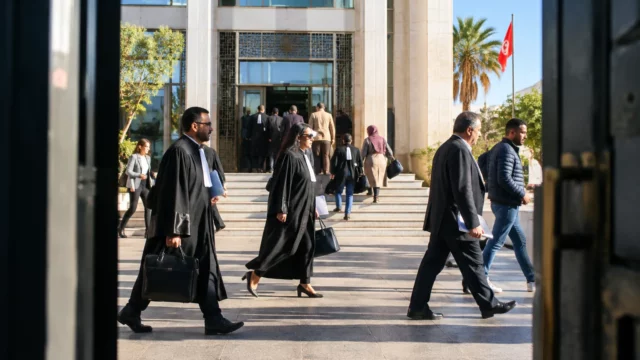
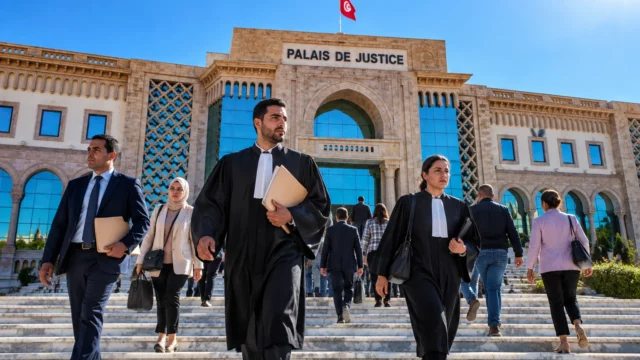
The Tunisian Human Rights League, the National Bar Association, the Tunisian National Journalists’ Union and the Tunisian Forum for Economic and Social Rights were among the organisations taking part. Groups representing doctors, students, women and unemployed graduates also participated. Their calls brought together purchasing power, social justice, freedom of expression and judicial independence.
The rally took place in a city centre under police surveillance. Demonstrators denounced the rising cost of living and called for public freedoms to be respected. Slogans also targeted President Kaïs Saïed and his handling of the country. The march, reported by several Tunisian and international media outlets, was described as one of the largest demonstrations critical of the authorities in several years.
Since 2021, a reshaped balance of power
The protest is part of a political trajectory that began on 25 July 2021, when Kaïs Saïed suspended parliament and concentrated executive powers. The constitution adopted in 2022 strengthened the presidency. Rights groups and opposition figures have since denounced a shrinking of political space and freedoms. The president, for his part, presents his decisions as a response to institutional deadlock and corruption.
This history shapes the role of the UGTT. A major trade union confederation, it has long taken part in social negotiations and remains an influential interlocutor for workers. Its presence alongside associations, lawyers and journalists gives the march significance beyond pay demands alone. But this convergence does not mean that these groups share a single political strategy.
Saturday’s calls echo the 2011 revolution, which began with demands for dignity, jobs and freedoms. The reference is powerful, but the context has changed: the political scene is more fragmented, and civil society organisations operate in a space that several observers describe as severely restricted. The mobilisation is a signal of discontent, but is not in itself proof of a political shift.
The cost of living, a pressure felt unevenly
For households, rising prices are squeezing the money available for food, transport and healthcare. Employees in the formal sector can put forward their demands through trade unions. Self-employed workers and people dependent on irregular incomes have fewer collective channels. Difficulties accessing some essential services, also reported in recent months, are adding to a sense of vulnerability.
Tensions are not confined to Tunis. Disparities in access to jobs and services between inland regions and coastal areas have long been an issue in Tunisian politics. A march in the capital makes national demands visible, but cannot by itself measure the situation in smaller cities and rural areas.
Social dialogue will be decisive in what happens next. The UGTT can influence negotiations on wages and working conditions, but the organisations present are also calling for institutional safeguards. Bringing these issues together without conflating them is a challenge: an economic response does not resolve the question of freedoms, and political opening does not automatically lower household expenses.
A Tunisian issue with a Maghreb-wide reach
Tunisia is a member of the Arab Maghreb Union, alongside Algeria, Libya, Morocco and Mauritania. The regional organisation aims, among other things, to promote economic cooperation, although Maghreb integration remains limited. Tunisian debates over jobs, purchasing power and political representation echo concerns elsewhere in the Maghreb, though national trajectories are not identical.
At the continental level, the issue is whether institutions and social organisations can maintain spaces for dialogue. The 17 October mobilisation does not foreshadow either the authorities’ response or how the balance of power will evolve. The next signs to watch will be whether talks with trade unions resume, the conditions in which freedoms can be exercised, and concrete measures to address economic hardship.
Sources consulted: report on the 17 October demonstration, Webdo information on the participating organisations, Tunisian report on the march, 2026 report on governance in Tunisia, overview of the Arab Maghreb Union member states.