Algeria
 Egypt
 Libya
 Morocco
 Sudan
 Tunisia
 Benin
 Burkina Faso
 Cabo Verde
 Côte d'Ivoire
 Ghana
 Guinea
 Guinea-Bissau
 Liberia
 Mali
 Mauritania
 Niger
 Nigeria
 Sierra Leone
 The Gambia
 Togo
 Cameroon
 Central African Republic
 Chad
 DR Congo
 Equatorial Guinea
 Gabon
 Republic of the Congo
 São Tomé and Príncipe
 Burundi
 Comoros
 Djibouti
 Eritrea
 Ethiopia
 Kenya
 Madagascar
 Malawi
 Mauritius
 Mozambique
 Rwanda
 Seychelles
 Somalia
 South Sudan
 Tanzania
 Uganda
 Angola
 Botswana
 Eswatini
 Lesotho
 Namibia
 South Africa
 Zambia
 Zimbabwe
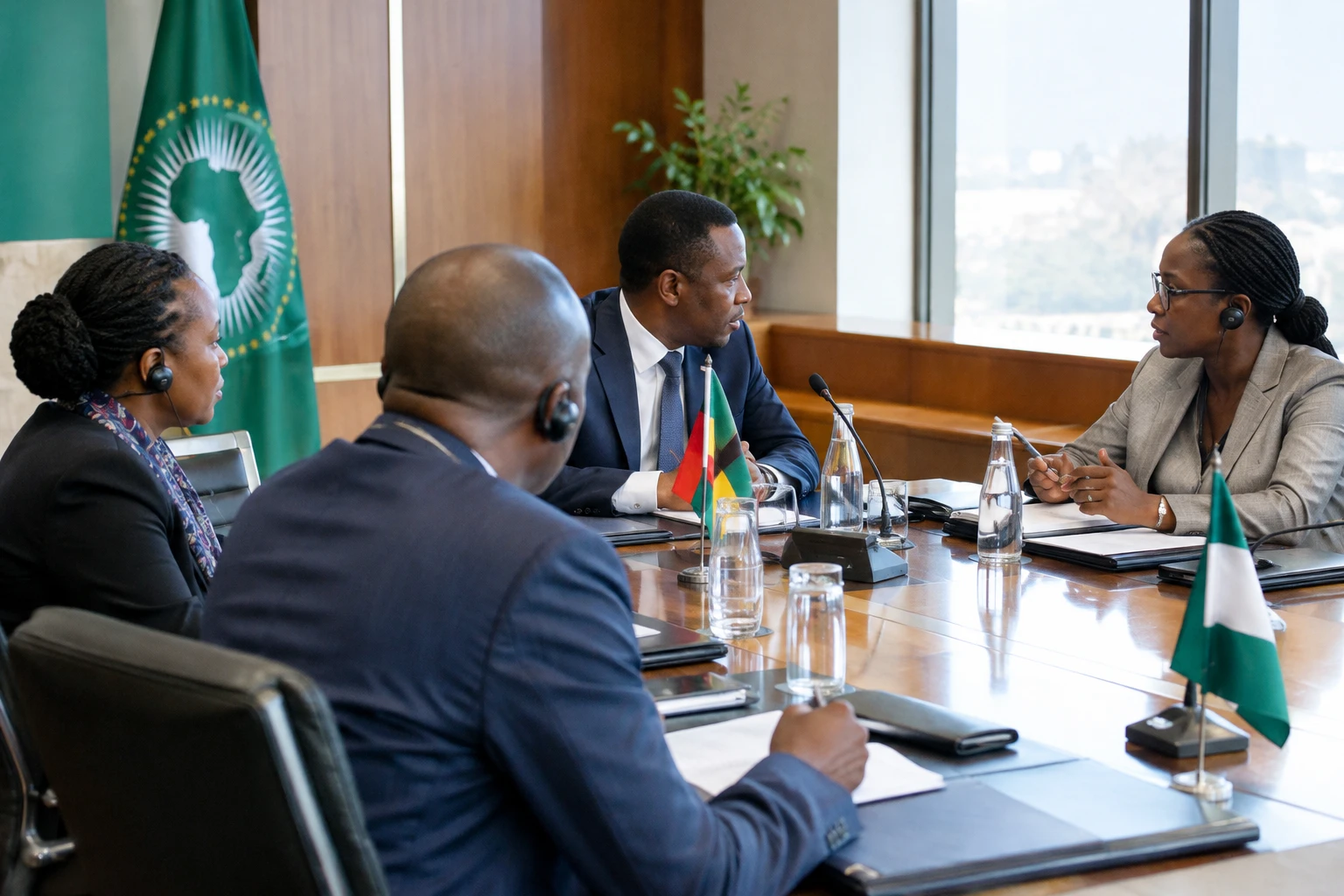
A bid to lead the United Nations depends not only on a candidate’s experience. It also hinges on the balance between major powers, regional backing and the ability to win support in the Security Council. Macky Sall’s withdrawal, announced on 17 October 2026, thus closes a diplomatic chapter that exposed divisions over his candidacy, both in Senegal and within the African Union.
Withdrawal after a new informal ballot
The former Senegalese president announced that he was leaving the race after the informal ballot held by the Security Council on 16 October. He said he had made the decision after consultations with Évariste Ndayishimiye, president of Burundi and current chairperson of the African Union, and Bassirou Diomaye Faye, president of Senegal and current chairperson of ECOWAS, the West African regional organisation.
In his statement, Macky Sall said he wanted to “contribute to the emergence of a consensus candidate”. He added that, in his view, the previous rounds of voting suggested a preference for a candidate from Latin America and the Caribbean, possibly a woman. That is his interpretation: informal ballots are secret and do not officially identify a frontrunner.
Initial accounts of the 16 October ballot indicate that none of the candidates still in the running had secured the support of all five permanent members of the Council, each of which has veto power. The Associated Press, citing two diplomats briefed on the confidential vote, reported that Macky Sall received ten “discourage” votes. The result sheds light on the timing of his withdrawal, but does not reveal the individual positions of delegations.
The selection process begins in the Security Council, which recommends a candidate for the General Assembly to appoint. Informal polls, sometimes called “straw polls”, help Council members gauge support and opposition, but are not a final election. The next secretary-general is due to succeed António Guterres, whose term ends in late 2026.
A bid backed by Dakar, but without African consensus
Macky Sall’s candidacy was submitted by Burundi on 2 March 2026. Senegal, his country of origin, did not put him forward initially. Dakar gave him its official backing in July, after a meeting between the former head of state and Bassirou Diomaye Faye. The timeline fuelled debate about Senegal’s role in an initiative initially driven by Bujumbura.
Continental backing, however, was not secured. In March, an African Union process intended to support the candidacy failed after 20 member states voiced their opposition. The Senegalese Press Agency reported the failure of the effort to establish a common position. The division did not prevent Macky Sall from remaining a candidate, but it highlighted the absence of a united African front behind him.
The contrast is significant. Burundi sponsored the candidacy and Senegal eventually backed it, but the African Union could not turn that support into a collective position. For African diplomats, the stakes went beyond the prospects of a former president: the question was also whether the continent could agree on a candidate and exert collective influence in a selection in which the Security Council retains the decisive role.
In Senegal, the diplomatic debate remains tied to his political record
The candidacy faced strong opposition in Senegal’s public debate. Human rights groups and political figures argued that a former leader should not seek the post without the violence at protests between 2021 and 2024, and calls for justice, being addressed. Amnesty International called for truth, justice and reparations to be guaranteed to victims. These criticisms are part of a political and human rights debate; they do not, in themselves, amount to a judicial ruling establishing Macky Sall’s personal criminal responsibility.
The number of victims varies according to the periods considered and the sources used. Amnesty International has cited more than 60 people killed over the entire period of protests from March 2021 to February 2024. In an article published in 2022 with Senegalese human rights organisations, the group recorded 14 deaths during the events of March 2021. These figures should not be conflated or presented as definitive judicial findings.
The issue therefore touches on both diplomacy and domestic politics. In Dakar, supporters of the former president defended his experience and his ability to represent Senegal internationally. His critics put the memory of the victims and the accountability of institutions at the forefront. The withdrawal ends the candidacy, but does not resolve these disagreements or the questions of justice they raise.
Regional significance, but no guarantee of an African successor
The episode also highlights the limits of regional solidarity when it runs up against national interests and the rules of the Security Council. ECOWAS, which brings together West African countries, is involved here through the diplomatic role of its current chairperson, but it does not choose the UN secretary-general. Similarly, the African Union can seek to coordinate its members, but cannot replace the United Nations’ bodies.
Macky Sall’s withdrawal opens up a place in the race, but guarantees neither the emergence of another African candidate nor a swift agreement among the permanent members. The next informal ballots and discussions in the Security Council will show whether the remaining candidates can overcome opposition, particularly from the veto-wielding powers. For Senegal, the episode leaves a mixed legacy: a candidacy put forward on the world stage, but also domestic controversy and a lack of continental consensus that limited its reach.
Sources consulted: Senegalese Press Agency on the withdrawal ; Associated Press on the Security Council’s informal ballot ; official UN procedure ; Burundi’s nomination letter ; RTS on Senegal’s official backing ; APS on the African Union’s failure to adopt a common position ; Amnesty International on calls for justice related to the protests ; Amnesty International and Senegalese organisations on the events of March 2021.