Algeria
 Egypt
 Libya
 Morocco
 Sudan
 Tunisia
 Benin
 Burkina Faso
 Cabo Verde
 Côte d'Ivoire
 Ghana
 Guinea
 Guinea-Bissau
 Liberia
 Mali
 Mauritania
 Niger
 Nigeria
 Sierra Leone
 The Gambia
 Togo
 Cameroon
 Central African Republic
 Chad
 DR Congo
 Equatorial Guinea
 Gabon
 Republic of the Congo
 São Tomé and Príncipe
 Burundi
 Comoros
 Djibouti
 Eritrea
 Ethiopia
 Kenya
 Madagascar
 Malawi
 Mauritius
 Mozambique
 Rwanda
 Seychelles
 Somalia
 South Sudan
 Tanzania
 Uganda
 Angola
 Botswana
 Eswatini
 Lesotho
 Namibia
 South Africa
 Zambia
 Zimbabwe
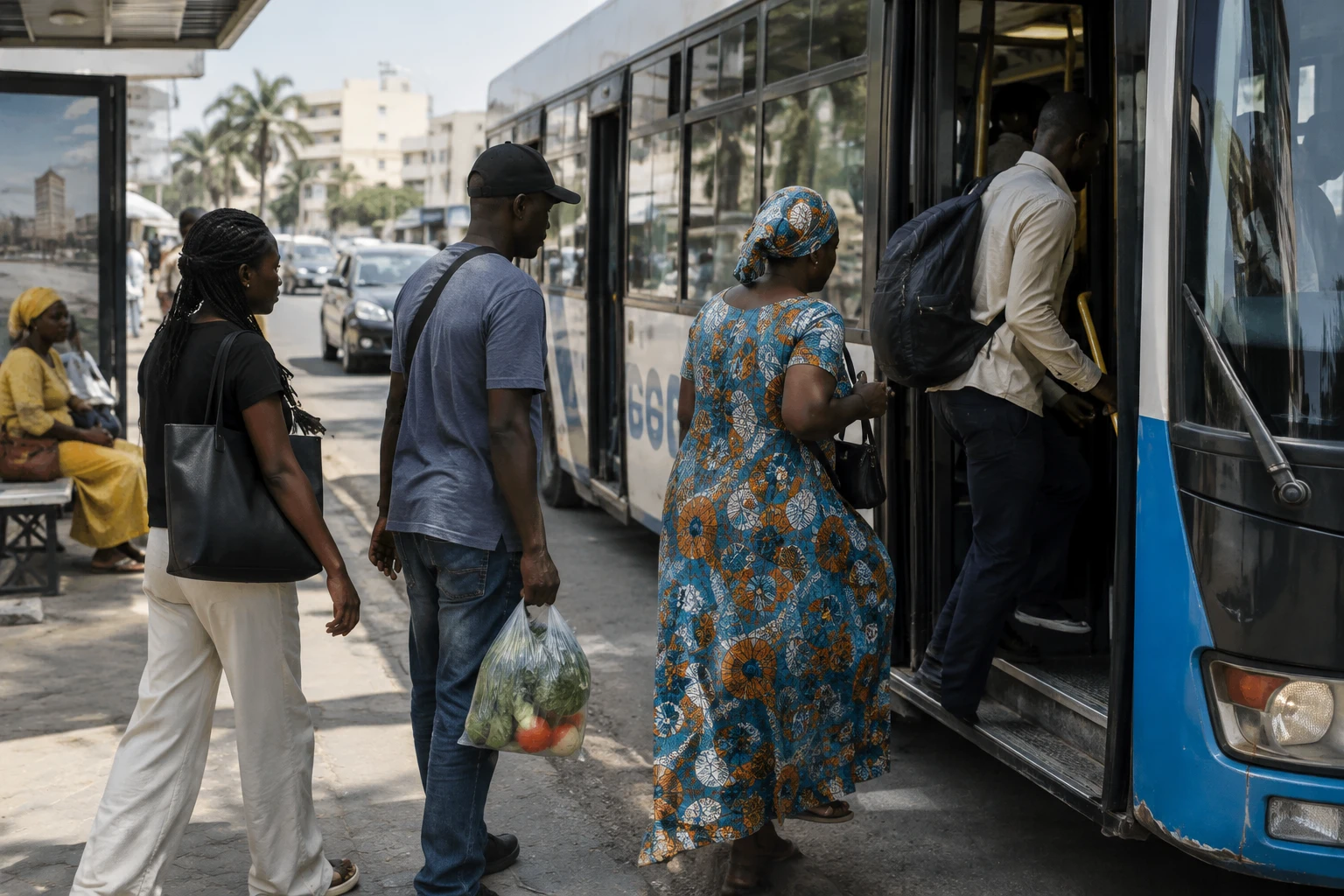
Moderate annual inflation does not mean that the cost of the shopping basket has fallen. In Senegal, prices rose again in September, particularly month on month, with notable increases in food, electricity and fuel. The national average thus masks expenses that weigh differently on households and regions.
Calm annual average, marked monthly rise
The Harmonised Index of Consumer Prices (IHPC), which tracks the cost of goods and services bought by households, rose by 1% between September 2025 and September 2026. In August, the annual increase stood at 1.2%. But from one month to the next, prices rose by 1.1% in September, according to data from the National Agency of Statistics and Demography (ANSD), published on 9 October.
The monthly movement was concentrated in essential items. Prices for food and non-alcoholic beverages rose by 2%. Housing, water, electricity, gas and other fuels increased by 1%. Within this group, electricity became 3.8% more expensive. Fuel prices, meanwhile, rose by 4.4%. These figures coexist with moderate annual inflation: they describe different periods and should not be confused.
Fresh produce also saw contrasting changes. Fresh leafy vegetables rose by 23.9% in a month, while citrus fruit fell by 10.1%. These fluctuations can quickly be felt in daily shopping, particularly by households that spend a large share of their income on food.
Over the year, price increases were also unevenly distributed. Prices for locally produced goods rose by 1.4%, while those for imported goods fell by 0.2%. Services increased by 1.3%. Durable goods recorded a rise of 1.6%, compared with 0.8% for non-durable goods. Core inflation, which excludes energy and fresh produce to give a clearer picture of the general trend, stood at 1%.
Purchasing power is also shaped beyond the averages
The fall in the annual rate does not therefore guarantee immediate relief for family budgets. A household that buys more vegetables or relies on motorised transport may feel greater pressure than the overall index suggests. Likewise, increases in services or electricity affect urban and rural spending in different ways. The IHPC tracks a national average: on its own, it does not describe the basket of any particular household.
This distinction matters as several Senegalese departments are going through the lean season, between the depletion of reserves and the next harvests. On 6 August, Prime Minister Ahmadou Al Aminou Mouhamed Lo announced the mobilisation of 7.2 billion CFA francs for food, nutrition and livestock assistance. The plan includes cash transfers, food kits and support for livestock. The Senegalese Press Agency and Senegalese Radio and Television reported the allocation and its aims.
This assistance addresses a targeted emergency, while price and subsidy measures seek to have a broader impact. The government notably announced an adjustment to fuel prices from 15 August 2026. In September, the executive also highlighted better targeting of energy support and the resumption of family security grants. Their effectiveness will depend on reaching the households concerned and limiting the gap between national decisions and local realities.
Economic conditions monitored across WAEMU
Senegal shares the West African Economic and Monetary Union (WAEMU), a bloc with a common currency and economic surveillance rules, with seven other countries. Senegalese inflation is therefore part of a regional trend, although prices vary by country and product. Senegal’s 2026-2028 budget document forecasts average inflation of 1.7%, measured by the gross domestic product deflator. This macroeconomic measure differs from the IHPC, which tracks household consumption spending.
The 3% threshold cited in WAEMU’s multilateral surveillance provides a common benchmark, but does not sum up either the cost of living or families’ ability to absorb price rises. On 9 September, the Central Bank of West African States (BCEAO) kept its main policy rate at 3%. This rate influences the terms on which banks obtain funding and, indirectly, the cost of credit. It does not directly set food prices or the tariffs charged to households.
For the authorities, the challenge is now twofold: to preserve price stability over time and to prevent occasional rises in essential goods from eroding disposable income. For households, changes in food, electricity and transport prices will remain more tangible than the annual figure alone. The next IHPC release, scheduled by the ANSD for 10 November 2026, will show whether September’s monthly surge continues.