Algeria
 Egypt
 Libya
 Morocco
 Sudan
 Tunisia
 Benin
 Burkina Faso
 Cabo Verde
 Côte d'Ivoire
 Guinea
 Guinea-Bissau
 Liberia
 Mali
 Mauritania
 Niger
 Nigeria
 Senegal
 Sierra Leone
 The Gambia
 Togo
 Cameroon
 Central African Republic
 Chad
 DR Congo
 Equatorial Guinea
 Gabon
 Republic of the Congo
 São Tomé and Príncipe
 Burundi
 Comoros
 Djibouti
 Eritrea
 Ethiopia
 Kenya
 Madagascar
 Malawi
 Mauritius
 Mozambique
 Rwanda
 Seychelles
 Somalia
 South Sudan
 Tanzania
 Uganda
 Angola
 Botswana
 Eswatini
 Lesotho
 Namibia
 South Africa
 Zambia
 Zimbabwe

A monthly figure can tell two stories at once: an economy that is accelerating and sectors moving at different speeds. In Ghana, activity grew in July 2026, but services accounted for most of the increase, while agriculture slowed.
A monthly indicator, not yet a quarterly assessment
The Ghana Statistical Service (GSS), the national statistics agency, published its monthly indicator of economic growth, known as MIEG, on 15 October. It estimates changes in activity compared with the same month a year earlier. It therefore provides a more frequent signal than gross domestic product, which is published quarterly.
The year-on-year comparison limits the effects of seasonal differences, but does not make this indicator a complete measure of household income or employment. July’s results are provisional and have not been seasonally adjusted, according to details given when they were presented in Accra. Month-to-month movements should therefore be interpreted with caution.
For Ghana, a West African country and member of the Economic Community of West African States (ECOWAS), the data shed light on an economy with diverse activities: services, agriculture, extractive industries and regional trade. However, on their own, they do not show how growth is distributed among regions, businesses and households.
Services drive the increase as industry regains momentum
According to the GSS, economic activity increased by 7.4% year on year in July 2026, compared with 4.9% in July 2025. The MIEG index rose from 113.2 to 121.6. These figures were also reported by several Ghanaian media outlets, including 3News and Graphic Online.
Services were the main driver. The sector grew by 12.2%, compared with 6.7% a year earlier, and accounted for 63.8% of measured growth. Information and communication activities contributed to this performance. Services also include areas essential to everyday life, such as transport, trade and financial services.
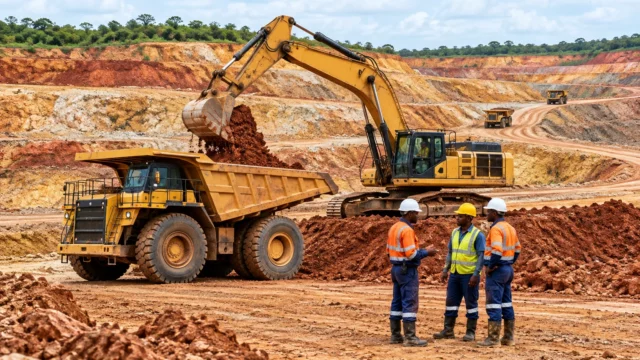
Industry grew by 5.4%, after a rise of just 0.4% in July 2025. Mining and quarrying supported the improvement. This rebound matters for businesses and workers connected to mining, but on its own it does not point to a broader transformation of industrial production or a sustained increase in jobs.
Agriculture grew by 3.7%. The sector continued to expand, but at a slower pace than the 8.2% recorded a year earlier. Crops and livestock supported agricultural activity. The difference between these rates does not mean that agricultural output contracted; it indicates slower growth than in the comparison period.
The sectors’ contributions to the overall increase reflect their weight in measured growth, not their share of national output. In addition to services, industry accounted for 20.5% of growth and agriculture for 14.1%. Net taxes on products made up the remaining 1.6%, according to data reported by Graphic Online.
Aggregate growth does not describe everyone’s daily reality
The prominent role of services in the result highlights their growing importance in Ghanaian economic activity. But growth in a sector does not automatically mean that all workers, traders or businesses benefit in the same way. A national indicator aggregates different realities, from the capital, Accra, to other regions, and from the formal sector to informal activities.
The same caution applies to agriculture. Its slowdown warrants attention because the sector is linked to rural incomes, food supplies and local value chains. However, July’s figure does not make it possible to attribute changes in food prices or incomes to any one factor. That would require examining other data, including prices, harvests and employment.
The contrast with industry also bears watching. Its improvement compared with July 2025 is clear in the indicator, but the measure alone does not show whether this momentum is translating into more local processing, contracts for Ghanaian suppliers or lasting jobs. Those questions require additional statistics.
The next reference point will be the November release
The GSS describes MIEG as a monthly snapshot intended to provide an early indication of trends before the quarterly accounts. July’s data are therefore a useful signal, not a definitive verdict on the economic year. The next release was scheduled for the second week of November 2026, according to comments by the national statistician reported by 3News.
At regional level, Ghana’s performance is also of interest to its ECOWAS partners, because trade, transport and supply chains cross national borders. But rising activity in Ghana alone does not allow conclusions to be drawn about West Africa as a whole. The next data will show whether the acceleration continues and extends beyond services.
The central message is therefore twofold: activity accelerated year on year and industry performed better than in July 2025, but services accounted for nearly two-thirds of recorded growth. The next step will be to compare this signal with the quarterly accounts and indicators for the following months, without conflating rising activity with a uniform improvement in living conditions.