
 Algeria
 Egypt
 Libya
 Morocco
 Sudan
 Tunisia
 Benin
 Burkina Faso
 Cabo Verde
 Côte d'Ivoire
 Ghana
 Guinea
 Guinea-Bissau
 Liberia
 Mali
 Mauritania
 Niger
 Nigeria
 Senegal
 Sierra Leone
 The Gambia
 Togo
 Cameroon
 Central African Republic
 Chad
 DR Congo
 Equatorial Guinea
 Gabon
 Republic of the Congo
 São Tomé and Príncipe
 Burundi
 Comoros
 Djibouti
 Eritrea
 Ethiopia
 Kenya
 Madagascar
 Malawi
 Mauritius
 Mozambique
 Rwanda
 Seychelles
 Somalia
 South Sudan
 Tanzania
 Uganda
 Angola
 Botswana
 Eswatini
 Lesotho
 Namibia
 Zambia
 Zimbabwe
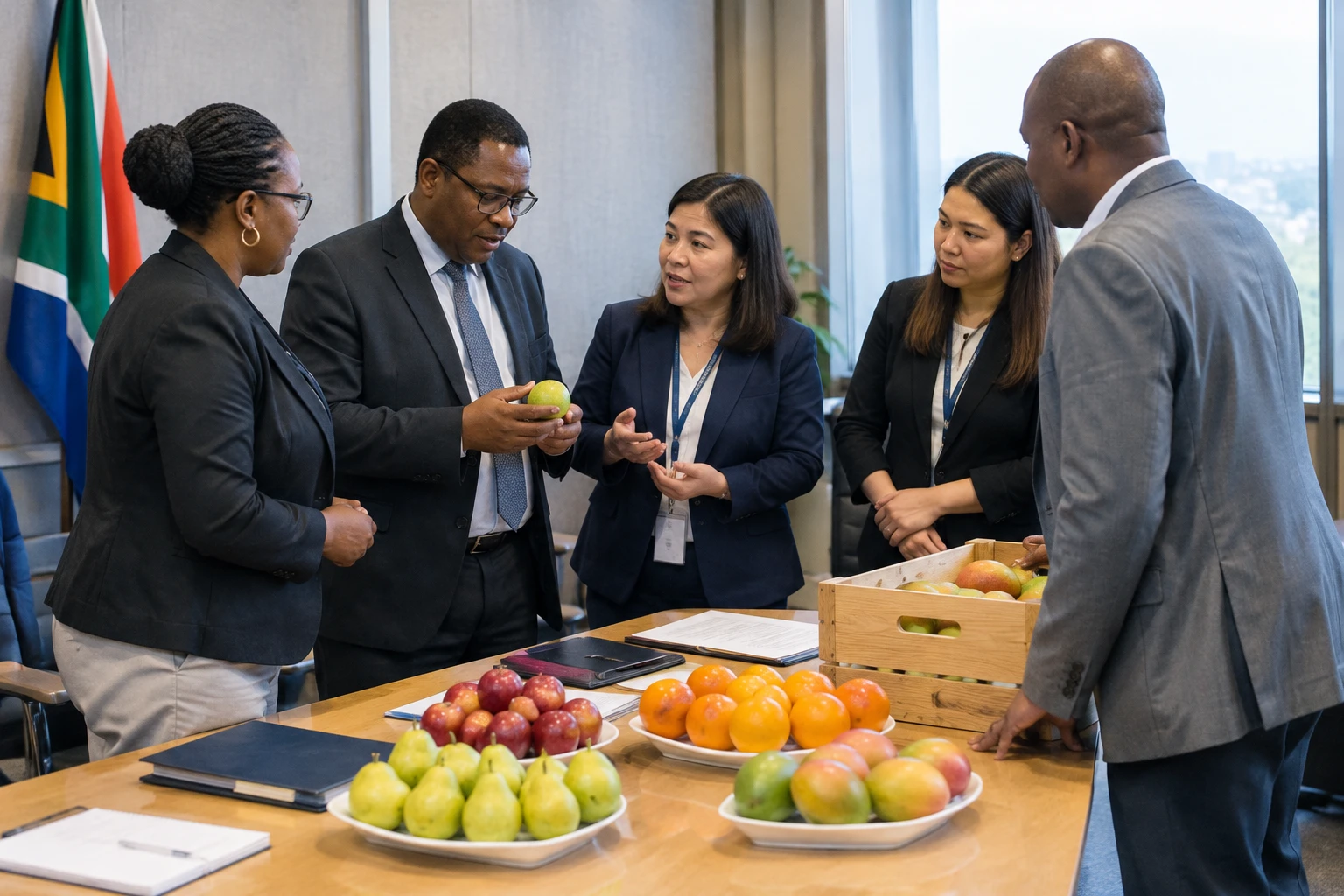
For an apple or pear grower in the Western Cape, opening a market is not measured by a diplomatic handshake. It depends on detailed health protocols, inspections and the ability to deliver compliant fruit. This is the practical stage reached by discussions between South Africa and the Philippines.
Health procedures at the heart of talks
On 12 October 2026, a South African delegation led by Ambassador Bartinah Radebe-Netshitenzhe met officials from the Philippine Bureau of Plant Industry, or BPI. According to information released about the meeting, discussions focused on access for South African apples and pears to the Philippine market, as well as a revision of citrus import conditions.
Manila also wants to sell mangoes to South African consumers. Their access depends in part on a phytosanitary risk assessment, meaning an assessment of the risk that insects or plant diseases could accompany the fruit. The authorities have announced neither a new trade agreement nor a date for market opening. The discussions signal progress in the process, not its completion.
These steps are primarily the responsibility of the two countries’ health and agricultural authorities. A protocol can set out treatments, inspections, certificates and exporters’ responsibilities. Regulatory approval is necessary for businesses, but it guarantees neither orders nor profitability: transport, the cold chain and distribution must also be organised.
An Asian market opening in stages
The case is part of a trade relationship built product by product. In September 2020, Pretoria announced the conclusion of an agreement authorising citrus exports to the Philippines. Technical discussions had begun in 2009. This timeline shows why phytosanitary negotiations can stretch over several years.
Market access for table grapes was granted in February 2025. The first official South African shipment arrived in the Philippines in March 2026, according to the South African government. The experience offers a useful precedent: authorisation to export marks the start of a market opportunity, while regular shipments then depend on meeting requirements and on demand.
Apples and pears are therefore following their own regulatory path. The steps mentioned in the available material also include a technical visit, postponed in March 2026 at the request of the Philippine authorities. The October meeting falls within this sequence, but it does not mean that a decision on the fruit concerned is imminent.
An export sector, with uneven benefits
South Africa’s interest is explained by the importance of fruit in national exports. AgriSA, a South African agricultural organisation, estimates that agricultural sales abroad reached 266.3 billion rand in 2025. Horticulture accounted for 143.4 billion rand, including 44.9 billion rand for citrus. Grapes, apples and pears were also among the products exported.
These figures illustrate the economic importance of market access, but the benefits are not automatically shared among all players. Producers already equipped for export and large packing facilities are often best placed to meet the initial requirements. Smaller farms could benefit from additional markets if they gain access to infrastructure, certification schemes and commercial networks.
Workers in orchards, sorting facilities and packing are affected by the continuity of seasonal orders. But a new destination alone does not guarantee higher incomes or employment. The volumes actually shipped, prices, logistics costs and competition from other countries will determine the impact. Philippine importers, for their part, assess the reliability of supply and the landed cost in their market.
The South African government and industry groups present diversification as a way to reduce dependence on a handful of destinations. The effort extends beyond the Philippines: Pretoria is also seeking to consolidate or open access in Asia. However, this strategy faces health risks, port constraints and changes to trade rules. A precise protocol protects local crops while imposing compliance costs on exporters.
Bilateral opening within a regional framework
The initiative is bilateral: it does not fall under an agreement of SADC, the Southern African Development Community, or the African Continental Free Trade Area. SADC nevertheless remains important to the South African economy, as it organises some regional trade and supply chains. Access to an Asian market complements these ties without replacing them.
For the Philippines, a South-East Asian country, the issue is also about diversifying sources of supply and securing recognition for its own agricultural products. The mango case puts the two countries in a two-way relationship: Pretoria is seeking new buyers for its fruit, while Manila wants access to the South African market. The health assessments apply to both requests.
The next step to watch is therefore technical: publication or approval of import conditions, assessment results and a possible resumption of inspection visits. Until these decisions are confirmed, apples, pears and mangoes remain prospective market-access cases. Grapes and citrus, meanwhile, show that regulatory opening can eventually translate into shipments, but only after several years of work between authorities and industry groups.
Sources: phytosanitary agreement on citrus, opening of the Philippine market to South African grapes, arrival of the first grape shipment and AgriSA’s 2025 agricultural trade data.



