Algeria
 Egypt
 Libya
 Morocco
 Sudan
 Tunisia
 Benin
 Burkina Faso
 Cabo Verde
 Ghana
 Guinea
 Guinea-Bissau
 Liberia
 Mali
 Mauritania
 Niger
 Nigeria
 Senegal
 Sierra Leone
 The Gambia
 Togo
 Cameroon
 Central African Republic
 Chad
 DR Congo
 Equatorial Guinea
 Gabon
 Republic of the Congo
 São Tomé and Príncipe
 Burundi
 Comoros
 Djibouti
 Eritrea
 Ethiopia
 Kenya
 Madagascar
 Malawi
 Mauritius
 Mozambique
 Rwanda
 Seychelles
 Somalia
 South Sudan
 Tanzania
 Uganda
 Angola
 Botswana
 Eswatini
 Lesotho
 Namibia
 South Africa
 Zambia
 Zimbabwe
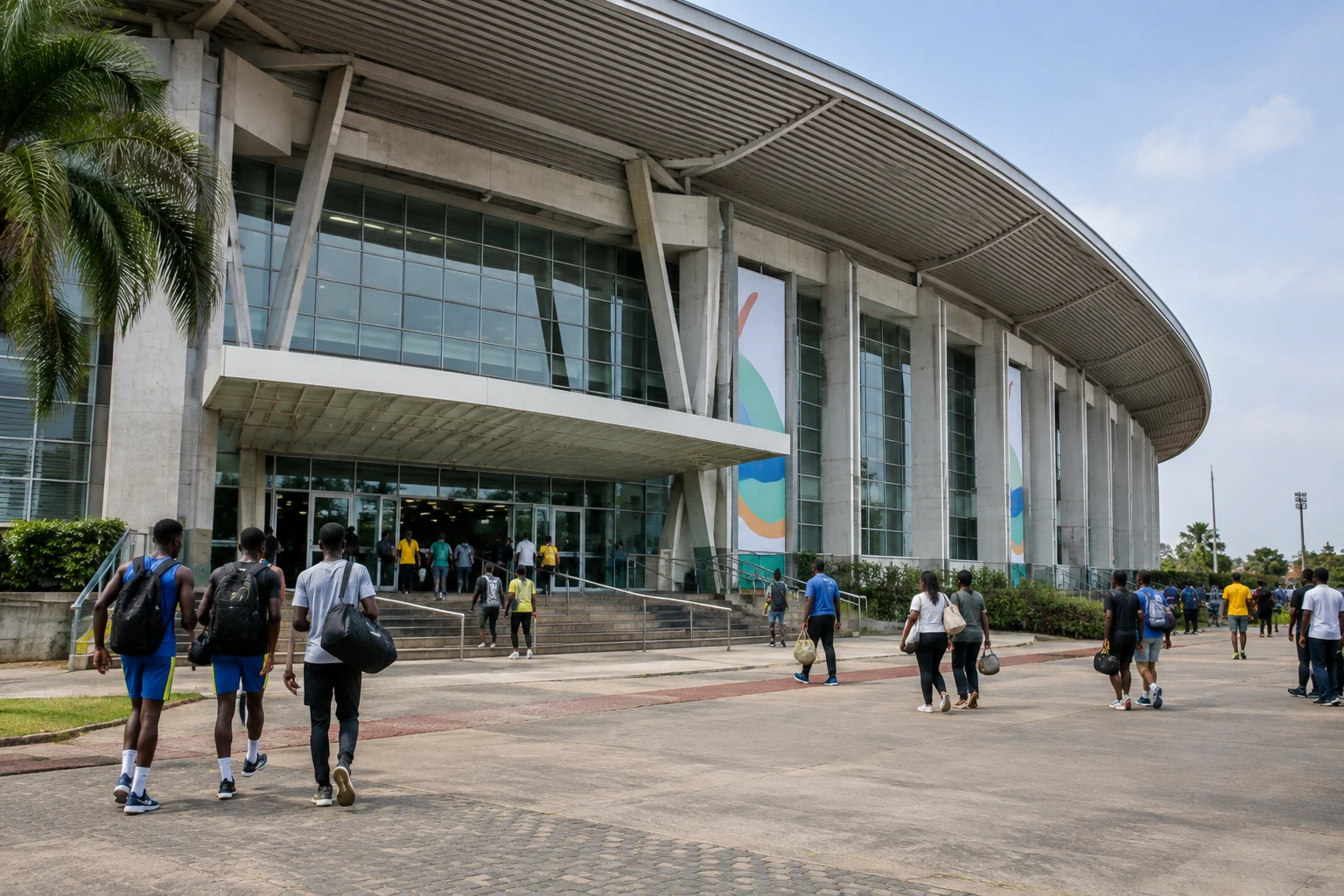
In Abidjan, the fights are not taking place only inside the cage. For Ivorian athletes and their counterparts from across the continent, the championship held in October is also testing federations’ ability to build lasting pathways, from amateur participation to the elite level.
A continental event in Abidjan
From 13 to 15 October 2026, the Palais des Sports de Treichville hosted the African MMA Championship, organised by the Ivorian MMA Federation (FIAMM) under the aegis of GAMMA, an international federation dedicated to the sport. The event took place in Abidjan, Côte d’Ivoire’s economic capital, and was presented as the first amateur continental MMA championship to be held on the continent.
Participation figures varied according to announcements and the stage of the organisation. Before the opening, FIAMM referred to around 20 countries expected. The report published after the event began recorded 14 delegations present, while GAMMA had announced 15 confirmed national federations. These figures do not necessarily refer to the same thing: registrations announced in advance and delegations actually counted at the start of the competition. The international federation dates the event from 12 to 16 October, covering the entire gathering, while the Ivorian organisers say the fights took place from 13 to 15 October.
According to the report published at the opening, the countries represented included Algeria, Benin, Burkina Faso, Cameroon, Côte d’Ivoire, Ghana, Guinea, Mali, Morocco, Nigeria, Rwanda, Senegal, Sudan and Togo. GAMMA had also named Egypt, Tunisia and Uganda among the federations registered. The sources consulted do not allow independent confirmation of the figure of more than 150 athletes cited in the initial presentation.
The competition is part of a wider programme than the fights alone. GAMMA announced the creation of AFCOMMA in Abidjan on 13 October, an African confederation intended to bring national federations closer together. Its work is expected to include supporting the organisation of tournaments, training coaches and referees, and establishing governance and safety rules.
Growing the sport beyond medals
MMA, or mixed martial arts, combines several combat techniques, including wrestling and striking sports. Its growth in Côte d’Ivoire depends on clubs, coaches and federations working to structure a sport that is still young. Hosting a continental competition gives athletes an international platform and allows local officials to work with counterparts from other countries.
But a tournament alone does not resolve the difficulties cited by those in the sector: a lack of resources, training needs and limited career opportunities. FIAMM president Jackson Tapé said before the event that the results could contribute to fighters’ progression towards the professional level. That possibility, however, is distinct from a guarantee of employment or income: it also depends on clubs, promoters, contracts and continuity of competition.
For athletes, the challenge is therefore twofold. They represent their countries, but also seek to gain experience, attract attention and progress within a regulated framework. For federations, the quality of coaching matters as much as medals: physical preparation, refereeing, medical supervision and the protection of participants determine the credibility of a contact sport. The Ivorian organisers emphasised the need to develop training, safety and professionalisation.
The increase in female participation, noted in the competition’s presentation, is another indicator to monitor. Without detailed figures by country or category, it is difficult to assess its scale. It nevertheless raises a practical question for federations: do women fighters have access to suitable training, regular competitions and support comparable to that of men?
The benefits are not the same for everyone. Sports officials and delegations benefit directly from institutional exchanges. Fighters can gain visibility, while local clubs and coaches can make contacts. For the public in Abidjan and neighbouring municipalities, the event brings a still little-established sport closer to spectators. But these effects will remain concentrated around the tournament unless accompanied by regular activities in clubs and regions.
A test for African sports co-operation
The creation of AFCOMMA gives this edition institutional significance. The confederation says it aims to co-ordinate federations, expand the continental calendar and improve training for coaches, referees and officials. Its inaugural leadership is headed by Jackson Tapé of Côte d’Ivoire, alongside officials from Ghana, the Democratic Republic of the Congo, Algeria and Rwanda. This African framework could facilitate exchanges between countries, provided its resources and operating rules are defined.
The issue falls under sport and federations rather than a decision by ECOWAS, the regional organisation for co-operation in West Africa. It nevertheless resonates in a region where cross-border competitions allow athletes to test themselves and national bodies to build links. The presence of countries from North, West and East Africa also gives the event a continental dimension.
Progress will be measured less by declarations than by events actually organised: new championships, certified training, common rules and prospects for young fighters. For Côte d’Ivoire, hosting the event raises its sporting profile. For African MMA, the challenge is now to turn that visibility into accessible structures and safe pathways, including for women and participants far from major centres.